Measuring nonwhiteness: remembering Toni Morrison and Nina Simone Premium
The Hindu
Explore the legacies of Toni Morrison and Nina Simone, examining race, memory, and the complexities of Black womanhood in America.
What does it mean when a mother of three can be shot down in broad daylight by a federal agent meant to protect communities? Renée Good was a poet. She was white and she was an American citizen. Even if the first attribute could be construed as a threat, in the larger American imagination, the latter two should have functioned as guarantees. They should have insulated her from harm. But they did not.
Good’s killing compels a more rigorous question: what is being guaranteed, and for whose protection does that guarantee exist? As the sociologist, Saida Grundy reminds us, the promise to safeguard white women in America has never been unconditional. It is honoured only so long as it serves the structure that sustains it, a structure that is at once patriarchal and white. When that order is threatened, the promise is broken. The alliance between white womanhood and white supremacy, we are reminded, is an arrangement. And arrangements, as we now see, may be withdrawn.
Power may solicit criticism, even stage it as proof of its own openness, but it does not endure it unconditionally. After Good’s murder, the state moved quickly to defend itself. Both, the Department of Justice and Homeland Security framed the incident as necessary and inevitable. But some voices intervened. Minnesota congresswoman Ilhan Omar refused the state’s narrative, while the Minneapolis mayor, Jacob Frey, rejected the official script. Their outrage unsettled the serene vocabulary of compliance, and the state’s inhumanity stood exposed. By now, however, inhumanity has become a familiar refrain.
Only a few days back, in the I.C.E. (Immigration and Customs Enforcement) facility in Baltimore, U.S. Representative, Jamie Raskin, saw non-white detainees, crowded into holding rooms, in the most demeaning of conditions. The account was shocking because it was conceivable within the state’s logic of governance. Dignity is elusive in a system that reduces non-whites into units to be managed. Cornel West called this the “niggerisation” of America. In the United States, the Black body has long functioned as the site upon which discipline is practised and paraded. However, the Black female body bears an additional weight, racialised and gendered at once, exposed to scrutiny, repression, and erasure.
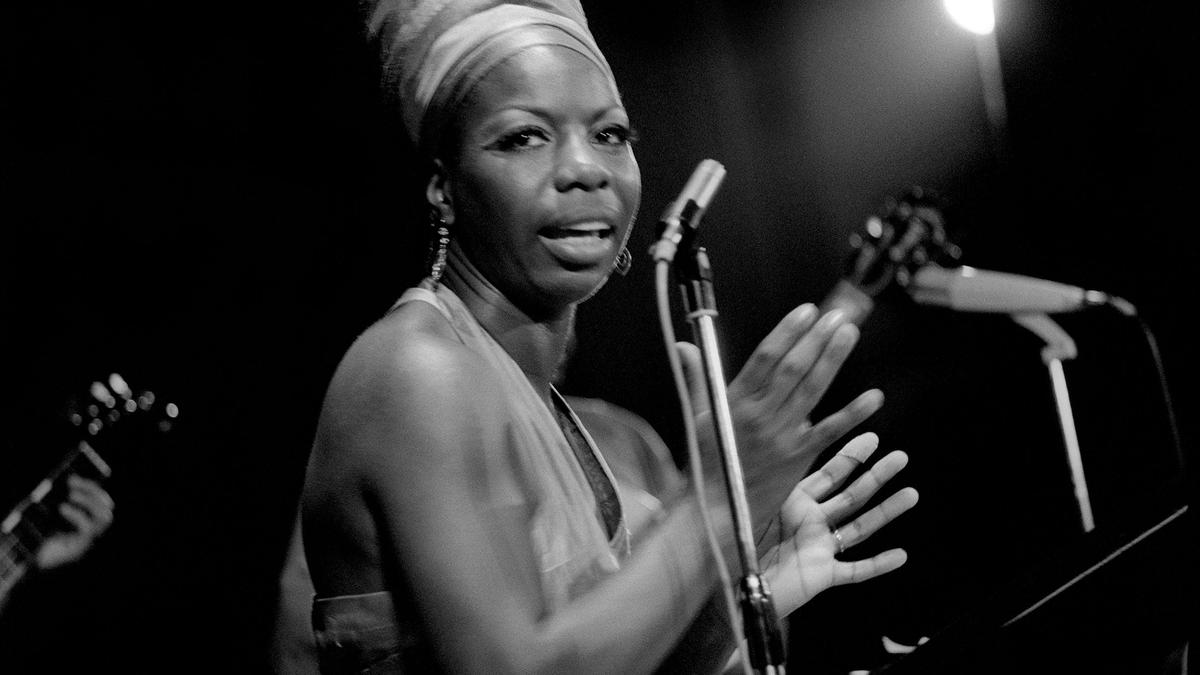
Both Nina Simone (February 18) and Toni Morrison (February 21) were born this month. In simpler times, that fact might have invited a conventional tribute. Now it asks for something more exacting. Both were women. Both Black. Both of them knew what dehumanisation in America entailed. And for that, their works insist on a more precise form of remembrance.
In 1978, decades before I.C.E., Nina Simone sang of Baltimore. Her lyrics traced the weariness of a place where dignity was in shambles. To Simone, Baltimore was no longer a city in Maryland, but an index of exhaustion, a signifier of the human condition, a refrain. She listed the routine fatigue of a city, and the slow unravelling of the American dream. The song was political, but without the blunt force of “Mississippi Goddam” (1964). The latter marked Simone’s first unequivocal protest, written in the aftermath of the September 1963 bombing in Birmingham, when a white supremacist’s attack killed four young Black girls.


Scientists in Kashmir develop early-maturing wheat varieties to enhance crop cycles and boost food production for local farmers.

Karnataka to introduce 10% women’s quota in firefighter recruitment, promoting gender neutrality in the Fire and Emergency Services Department.

Venezuela's legislature approves an amnesty bill, potentially releasing hundreds detained for political reasons amid ongoing human rights concerns.

Explore the challenges and potential revival of India's sandalwood industry amidst high demand and economic shifts.

Here are the top news for the day from The Hindu's Morning Digest, on February 20, 2026

Student groups demand Delhi University reverse its protest ban, calling it undemocratic and harmful to campus dialogue.

Supreme Court questions a pharma firm over cough syrup deaths, highlighting significant damage to India's image and legal violations.

Discover captivating mysteries and haunting tales in February 2026's top book recommendations for thrilling reads this month.

Explore Udhagamandalam's Charing Cross, its historical significance, and the amusing London connection that confuses visitors.

Kishtwar's regulation of Ramadan charity sparks criticism from political leaders, citing concerns over religious freedom and government interference.

PSMO College hosts a historic reunion of 57 alumni serving as political leaders, celebrating their contributions to public service.

Explore Periyar's controversial views on Tamil as a "barbaric language" and their implications for cultural identity and progress.

Explore the importance of early dental visits in preventing tooth decay and fostering lifelong oral health in children.