Kashmir scientists develop wheat varieties to solve crop cycle issue Premium
The Hindu
Scientists in Kashmir develop early-maturing wheat varieties to enhance crop cycles and boost food production for local farmers.
Scientists at the Sher-e-Kashmir University of Agricultural Sciences and Technology, Kashmir (SKUAST-K) have developed two new wheat varieties that could help farmers harvest on time and thus boost the total food grain production of the Union Territory.
To introduce a successful rice-wheat cropping system in Kashmir has been a more than decade old research target. The idea was conceived in the early 2000s when the evaluation of plant varieties began under the All India Coordinated project on Wheat & Barley, funded by the Indian Council of Agricultural Research.
“One of the major challenges with earlier wheat varieties was that most of the planting material came from sub-tropical regions such as Haryana and Delhi,” Asif Bashir Shikari, professor of genetics and plant breeding at SKUAST-K, said. “In Kashmir’s climatic conditions, these varieties tended to mature late, often around June or July.”
Wheat, a rabi crop, is sown in October and typically harvested in early summer. In Kashmir, however, where rice is the dominant kharif crop, the timing is critical. Farmers need to vacate their fields by May-June to transplant paddy. When wheat stays in the field until June, the rice-wheat rotation, a mainstay of food security and livelihoods, breaks down.
“Although those varieties were high-yielding, they affected the cropping cycle,” Dr. Shikari explained. “That is why plant breeders in Kashmir prioritised developing early-maturing wheat varieties that could be harvested by end May.”
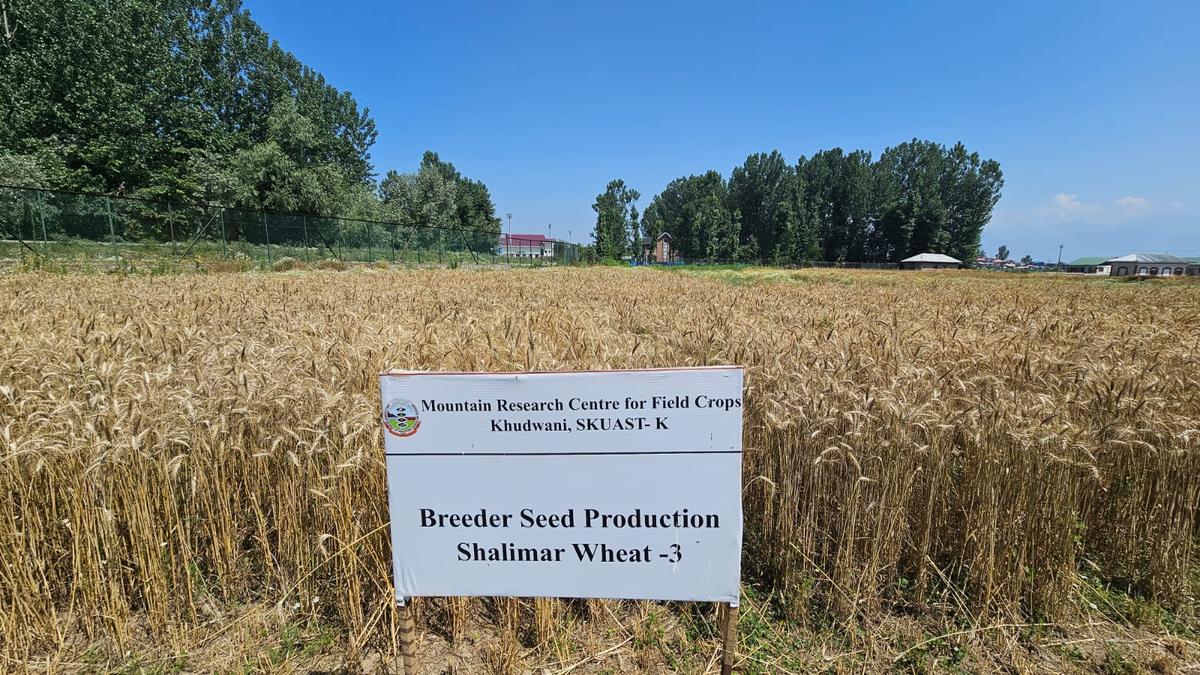
After nearly a decade of breeding and testing, researchers at SKUAST-K developed two new wheat varieties, called Shalimar Wheat-4 (SW-4), which matures by the last week of May, and Shalimar Wheat-3 (SW-3), which matures in the first week of June. Both are designed to fit the rice-wheat rotation.


Scientists in Kashmir develop early-maturing wheat varieties to enhance crop cycles and boost food production for local farmers.

Karnataka to introduce 10% women’s quota in firefighter recruitment, promoting gender neutrality in the Fire and Emergency Services Department.

Venezuela's legislature approves an amnesty bill, potentially releasing hundreds detained for political reasons amid ongoing human rights concerns.

Explore the challenges and potential revival of India's sandalwood industry amidst high demand and economic shifts.

Here are the top news for the day from The Hindu's Morning Digest, on February 20, 2026

Student groups demand Delhi University reverse its protest ban, calling it undemocratic and harmful to campus dialogue.

Supreme Court questions a pharma firm over cough syrup deaths, highlighting significant damage to India's image and legal violations.

Discover captivating mysteries and haunting tales in February 2026's top book recommendations for thrilling reads this month.

Explore Udhagamandalam's Charing Cross, its historical significance, and the amusing London connection that confuses visitors.

Kishtwar's regulation of Ramadan charity sparks criticism from political leaders, citing concerns over religious freedom and government interference.

PSMO College hosts a historic reunion of 57 alumni serving as political leaders, celebrating their contributions to public service.

Explore Periyar's controversial views on Tamil as a "barbaric language" and their implications for cultural identity and progress.

Explore the importance of early dental visits in preventing tooth decay and fostering lifelong oral health in children.