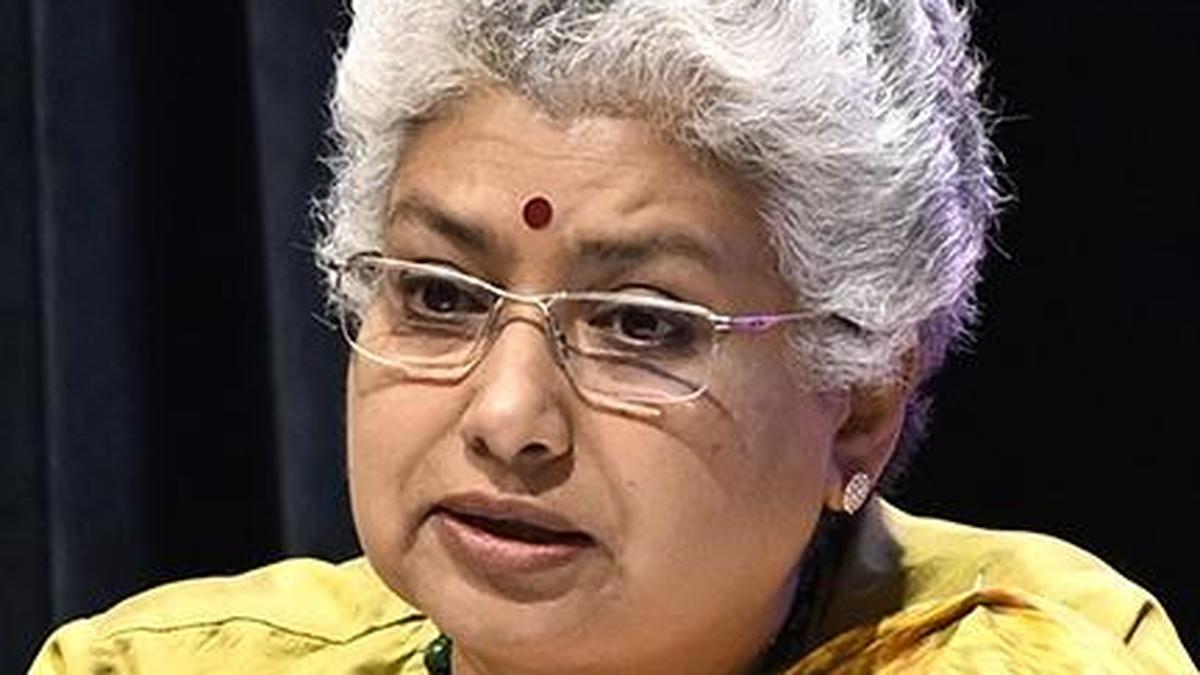
Justice Nagarathna calls for making fragile, sensitive ecosystems absolute no-go zones
The Hindu
Justice Nagarathna urges strict protections for fragile ecosystems, emphasizing judicial responsibility in environmental governance amid rising tourism pressures.
Highlighting the stress on fragile ecosystems placed by unchecked tourism, Supreme Court judge, Justice B.V. Nagarathna, on Saturday (March 28, 2026) said governments must refrain from approving wildlife safaris in forest sanctuaries and make critical habitats absolute no-go zones.
“There is a need to seriously consider declaring certain areas as inviolable. Regions such as biologically significant areas, heritage sites, bio-corridors, and eco-sensitive zones play a critical role in harbouring biodiversity, regulating local ecosystems, and mitigating climate change through carbon sequestration,” Justice Nagarathna said.
The Supreme Court judge was delivering the Justice S.B. Sinha 4th Endowment Memorial Lecture at Ranchi on ‘Environmental Justice and Climate Change: How courts can lead the way forward’.
Specifically pointing to the environmental perils of tourism, the judge indicated that governments must categorically deny permission to human pleasure activities in sensitive zones.
“While public demand, for instance, for tourism continues to increase, unchecked tourism can place severe stress on fragile ecosystems and disrupt wildlife habitats. Governments must therefore refrain from approving them altogether. I mean tourism such as wildlife safaris in forest sanctuaries,” Justice Nagarathna said.
The top court judge said the impacts of environmental degradation, like climate change, affect different strata of society differently. Environmental issues are deeply intertwined with questions of social, economic, and political justice. Environmental harms are rarely distributed evenly; instead, they tend to disproportionately affect the poor and the marginalised, Justice Nagarathna pointed out.


Three arrested in Hyderabad for producing and selling adulterated food products during coordinated police raids.

DMK banks on veterans, fields fresh faces in Thoothukudi district

Join the grand procession of pearls at Sri Kodanda Rama Swamy temple in Tirupati, commemorating Lord Rama and Sita's celestial wedding.

West Corporation unveils its largest budget yet, focusing on mobility, governance, healthcare, and environmental enhancements for 2026-27.

NMC introduces an anonymous online feedback system for medical students to evaluate college infrastructure, teaching quality, and training.

Egg prices in Namakkal drop to ₹3.85 due to reduced consumption and export disruptions amid global conflicts.

Two Ministers to fight from Madurai

Tribals in Anakapalli protest for road connectivity, highlighting hardships faced by remote villages due to lack of proper roads.

CM launches breakfast scheme for anganwadi children

Stating that the High Court of Karnataka has stayed two of the four conditions imposed by the Dakshina Kannada Regional Transport Authority regrading permits to operate electric autorickshaws in Mangaluru, Youth Electrical Auto Chalakara Sangha, Mangaluru, on Saturday, urged the RTA to extend the March 31 deadline to apply for permits.

Revanth launches legislators’ sports and cultural meet

Sri Venkateswara Veterinary University hosts its 13th Convocation on March 30, 2026, honouring 415 graduates and distinguished achievements.

Kerala increases hydel power generation to ensure electricity supply during elections as dam levels drop to 44%.