Iran war disrupts global ocean freight and air cargo supply chains beyond oil
The Hindu
The Iran war disrupts global supply chains, affecting oil, pharmaceuticals, and electronics, leading to potential shortages and price increases.
The Iran war has effectively halted oil tanker movement in the key Strait of Hormuz. But it's also disrupting the wider global supply chain beyond oil, affecting everything from pharmaceuticals from India, semiconductors from Asia and oil-derived products like fertilisers that come from the West Asia.
Cargo ships are stuck in the Gulf or making a much longer detour around the southern tip of Africa. Planes carrying air cargo out of the West Asia are grounded. And the longer the war drags on, the more likely it is that there will be shortages and price increases on a wide range of goods.
“This is really causing some major impacts within the global supply chain,” said Patrick Penfield, professor of supply chain practice at Syracuse University. “As this conflict keeps progressing, you'll start to see some shortages, you'll see some major price increases.”
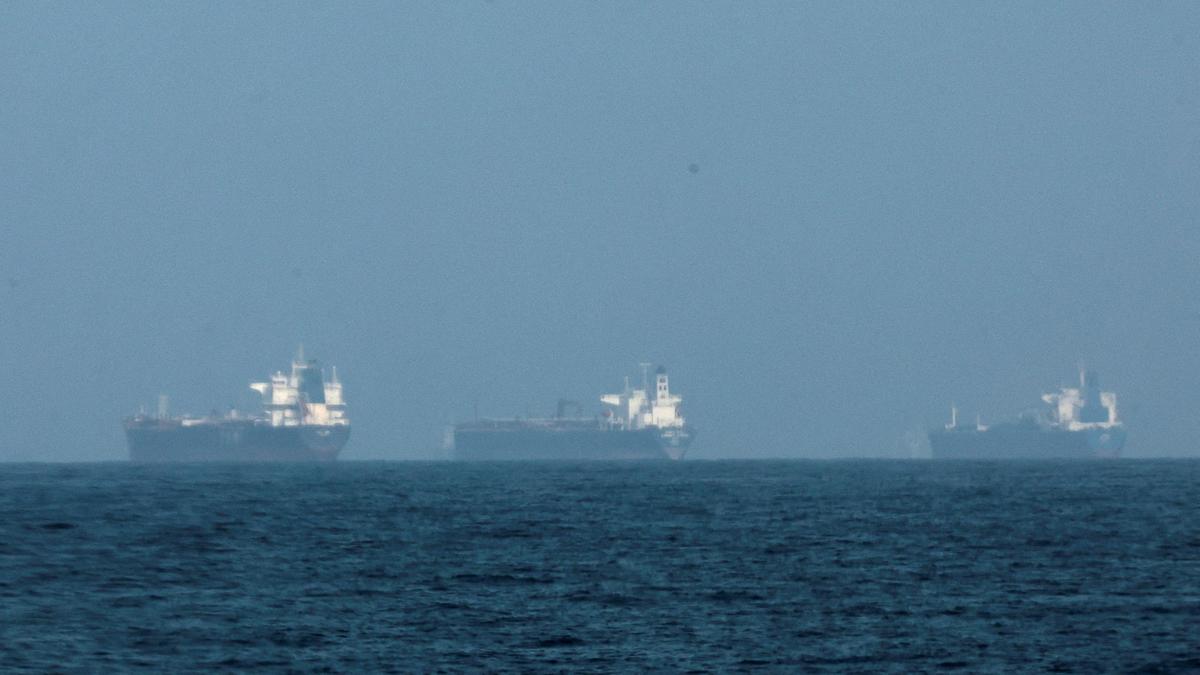
Clarksons Research, which tracks shipping data, estimates that about 3,200 ships, or about 4% of global ship tonnage, are idle inside the Persian Gulf, but that includes about 1,231 that likely only operate within the Gulf. About 500 ships, or 1% of global tonnage, are currently “waiting” outside the Gulf in ports off the coast of the United Arab Emirates and Oman, according to the firm.
“The supply chain is kind of like a long train with many cars, and each car represents, let's say, a port in the world. Well, if one car gets derailed, it can very often have a domino effect on many other cars behind it or in front of it,” he said. “So, although we only have a small number of ports affected by this military action, it can really have a big effect on the total supply chain.” On Tuesday (March 3, 2026), President Donald Trump pitched a plan aimed at getting oil and trade moving again through the Strait.
Mr. Trump said on social media he ordered the U.S. International Development Finance Corp. to provide political risk insurance for tankers carrying oil and other goods through the Persian Gulf “at a very reasonable price.” Political risk insurance is a type of coverage intended to protect firms against financial losses caused by unstable political conditions, government actions, or violence. Marine insurers had been cancelling or raising rates for insurance in the region.


Farmer Rajeev dies in Wayanad, Kerala, suspected elephant attack; locals demand better protection and compensation for wildlife-related incidents.

A 33-year-old software employee was found dead in his car alongside ORR, prompting a police investigation in Hyderabad.

Negotiations continue in Maharashtra as MVA seeks consensus on Rajya Sabha candidate amid BJP's announcement of four nominees.

Join the 'Shakti' exhibition at Alliance Française Madras on March 7, celebrating female power through textile art and workshops.

Barpeta’s Dol Jatra reveals how theology, ecology and shared labour can reimagine community in an age of fragmentation.

The Iran war disrupts global supply chains, affecting oil, pharmaceuticals, and electronics, leading to potential shortages and price increases.

South Western Railway reports ₹8,550 crore revenue, with freight and passenger earnings showing significant growth in February 2026.

Klook’s Spring Readiness Index shows how Asia’s travelers are preparing for spring travel across Japan, South Korea, and Mainland China

NIA court seeks China's legal aid to trace GoPro linked to Pahalgam terror attack, uncovering critical evidence for investigation.

Vigilance court grants statutory bail to former TDB president A. Padmakumar in Sabarimala gold misappropriation case.

State-level training on creating a child-friendly society begins at Central University of Karnataka with 55 participants from across the state.

164 stranded Maharashtra tourists return home from West Asia on flights arranged by Deputy Chief Minister Eknath Shinde amid conflict.

Vaishnavi Adkar advances to the second round of the ITF W35 tennis tournament in Kalaburagi after a dominant victory.