Iran War Ceasefire: Counting India's Stranded LPG and Oil Cargo in Hormuz
India Today
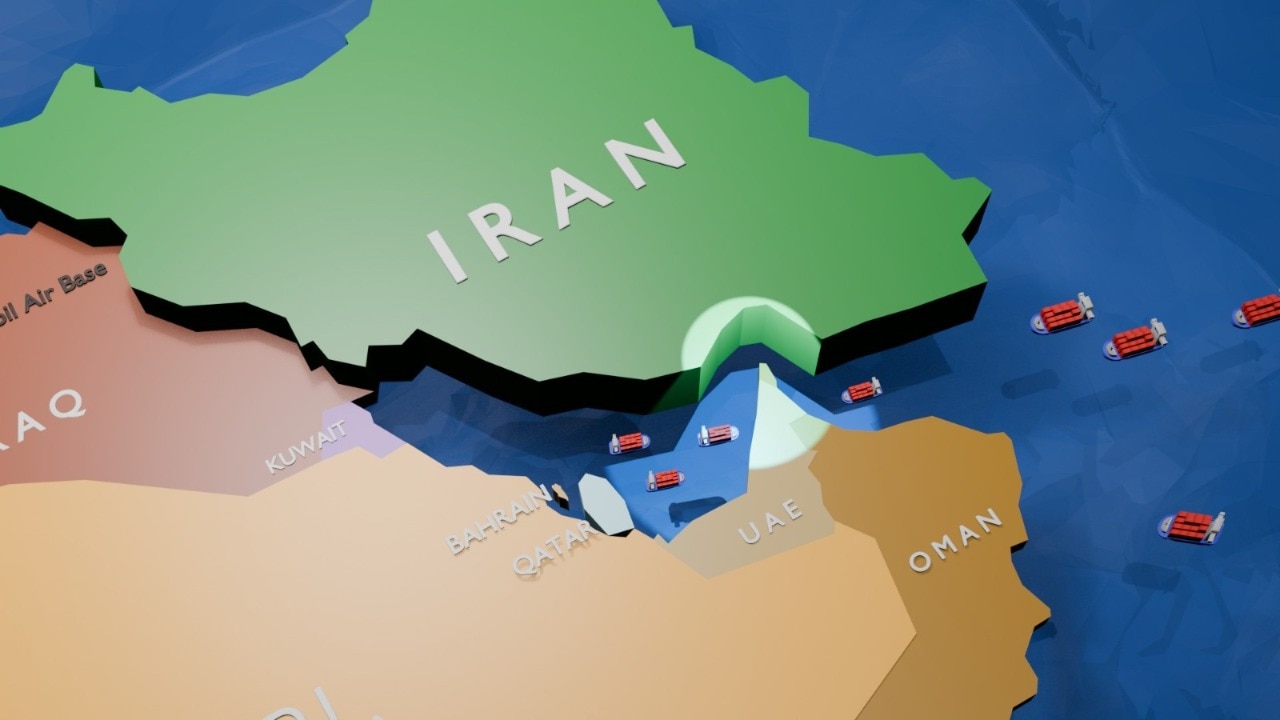
As US-Iran talks continue over the Strait of Hormuz, India Today tracked at least 20 Indian vessels west of the chokepoint, including two LPG tankers and four crude carriers. The LPG ships alone could fill nearly 48 lakh cylinders.
The United States and Iran agreed to a two-week ceasefire on Tuesday, less than an hour before President Donald Trump’s deadline to Iran was due to expire, as Tehran agreed to temporarily reopen the Strait of Hormuz. Trump has said Iran’s 10 point proposal offers a “workable” basis for talks, but the contours of any deal are likely to become clearer only when the two sides meet in Islamabad later this week.Yet the most important question remains: whether the waterway is truly open again. In the hours after the ceasefire, traffic through the chokepoint showed little sign of returning to its pre-war pace. Vessel paths showing movement relative to their previously observed positions on March 12
India Today tracked exactly how much of India’s oil and gas is still stuck in the perilous waters. At least 20 Indian-flagged vessels including 2 LPG tankers and 4 crude oil tankers are still in the west of the Hormuz, as per India Today’s analysis.A comparison of vessel positions between March 12 and April 8 indicates that several Indian vessels have gradually repositioned eastward from the western Persian Gulf toward the Strait of Hormuz. Many now appear to be in a loose holding pattern off Khasab, forming a dispersed cluster that suggests they may be awaiting transit clearance before crossing the chokepoint. Estimated LPG on the two tankers could fill nearly 48 lakh cylinders
The two LPG tankers still near Hormuz, BW Loyalty and Jag Vikram, have deadweight capacities of 55,056 tonnes and 26,427 tonnes. The four crude oil tankers, Desh Vaibhav, Desh Suraksha, Desh Vibhor and Desh Garima, have capacities of 316,409 tonnes, 114,783 tonnes, 316,635 tonnes and 114,790 tonnes, respectively.India Today made a rough estimate of the LPG and crude oil still held up near Hormuz, expressing the likely volumes in LPG cylinders and barrels of oil. For LPG, the estimate is based on the carrying pattern observed in the case of Indian tanker Shivalik, which has a deadweight of 55,056 tonnes and was carrying roughly 46,000 MT of LPG when it arrived in India on March 16. Using that as a reference point, India Today estimated the likely cargo on the two LPG tankers still waiting near Hormuz.Deadweight refers to the maximum weight a vessel can carry, including cargo, fuel, stores and crew, so the actual cargo on board is typically lower than the ship’s full deadweight capacity.BW Loyalty, which has the same deadweight as Shivalik of 55,056 tonnes, is estimated to be carrying about 46,000 MT of LPG, or 46 million kg, enough to fill roughly 32.4 lakh domestic cylinders at 14.2 kg per cylinder. Jag Vikram, with a deadweight of 26,427 tonnes, is estimated to be carrying around 22,080 MT of LPG, or 22.08 million kg, enough to fill about 15.5 lakh domestic cylinders.Taken together, the two vessels could supply enough LPG to fill nearly 48 lakh domestic cylinders. Barrel estimates use a rough conversion of 1 metric tonne of crude to 7.33 barrels
For crude oil, India Today used the carrying pattern observed in oil tanker Jag Laadki as the reference point. The tanker, which has a deadweight of 164,716 tonnes, was carrying roughly 80,800 MT of crude, showing that the actual cargo on board was significantly lower than the vessel’s maximum capacity. Using that loading ratio, India Today estimated the likely crude cargo and barrel equivalent for the four crude tankers still holding near Hormuz.Desh Vaibhav, with a deadweight of 316,409 tonnes, is estimated to be carrying about 155,212 MT of crude, equivalent to roughly 11.38 lakh barrels. These barrel estimates assume the standard rough conversion of 1 metric tonne of crude to 7.33 barrels.On the same basis, Desh Suraksha is estimated at 56,306 MT or 4.13 lakh barrels, Desh Vibhor at 155,323 MT or 11.39 lakh barrels, and Desh Garima at 56,309 MT or 4.13 lakh barrels.Unlike LPG, crude oil is not a consumer end product that goes directly into Indian homes. It is a raw input that must first be refined at processing plants into usable petroleum products such as petrol, diesel, aviation turbine fuel, kerosene, naphtha, LPG, and other petrochemicals. In other words, the crude carried by these tankers would not be consumed as it is, but would feed refineries that turn it into the fuels and industrial products used across homes, transport networks and factories.
On transit of vessels through the Strait of Hormuz in view of the ceasefire, MEA spokesperson Randhir Jaiswal said on Wednesday that several ships have already crossed Hormuz and communication is on with all partner stakeholders in the Gulf countries. "We are trying to bring back our ships as soon as possible," he added.A total of eight LPG tankers — Nanda Devi, Jag Vasant, BW Elm, Shivalik, Green Sanvi, BW Tyr, Pine Gas and Green Asha — have already transited the chokepoint after negotiations between the Indian government and its Iranian counterpart. In addition, at least three crude oil tankers and three other vessels have also crossed the Strait.Beyond these, two vessels were observed heading towards the Iranian checkpoint between Qeshm and Larak Islands: a 37,000 tonne St Kitts and Nevis flagged bulk carrier bound for India after loading at Bushehr, and Tour 2, a 159,000 tonne Iranian crude tanker that loaded at Kharg Island with no clear destination. Since both are tied directly to Iranian trade, their passage does not indicate conclusively a broader reopening of the Strait.


India has issued a new advisory for Iran to leave Iran quickly after the Middle East ceasefire agreed on Wednesday.

The incident occurred when the 13-year-old girl was on her way to work at a care home and decided to take shelter at the construction site due to the rain.

A seven-minute meeting between TMC leaders and the Election Commission has sparked a political storm, with explosive claims, counter-allegations, and an impeachment push set to intensify the confrontation.

The veteran BJP leader said her act was in protest against an anti-encroachment drive that removed street vendors from key areas of Madhya Pradesh's Tikamgarh town.

Head Constable Revathi's courageous testimony, defying threats and institutional pressure, proved pivotal in securing death sentences for nine Tamil Nadu police personnel five years after a father and son died in custodial torture.

Can abusive language alone be a crime? The Supreme Court's latest ruling draws a sharp line between vulgarity and obscenity, potentially reshaping how everyday altercations are treated under criminal law.

The alleged gold smuggling syndicate was busted by the Directorate of Revenue Intelligence (DRI). The arrests came as a result of what the central agency described as a 'well-coordinated surveillance operation.'

Due to the shortage of staff in the municipal corporation, the civic body is managing arrangements through double shifts and increased workload. In some areas, extra labourers are being hired at daily wages ranging from Rs 1,000 to Rs 1,500 to lift garbage.

A Delhi court granted bail to conman Sukesh Chandrasekhar in a money laundering case tied to the AIADMK's "two leaves" symbol bribery row. He will remain in jail due to 31 other pending cases against him.

It is also alleged that when the survivor approached the police station, pressure was exerted by influential individuals to settle the matter and avoid registering a case. Later, both parties reportedly reached a compromise at the police station on Monday evening.

Hyderabad Police have registered a case against a hotel operator for allegedly selling stale biryani through a food delivery app. The accused is said to have stored food for days in unhygienic conditions and reheated it before sale.

According to sources, the incident happened when the catering vehicle lurched forward on being started up.

The Congress had alleged at a press conference on Sunday that Assam CM's wife, Riniki Bhuyan Sharma, holds passports of the United Arab Emirates (UAE), Antigua-Barbuda and Egypt.