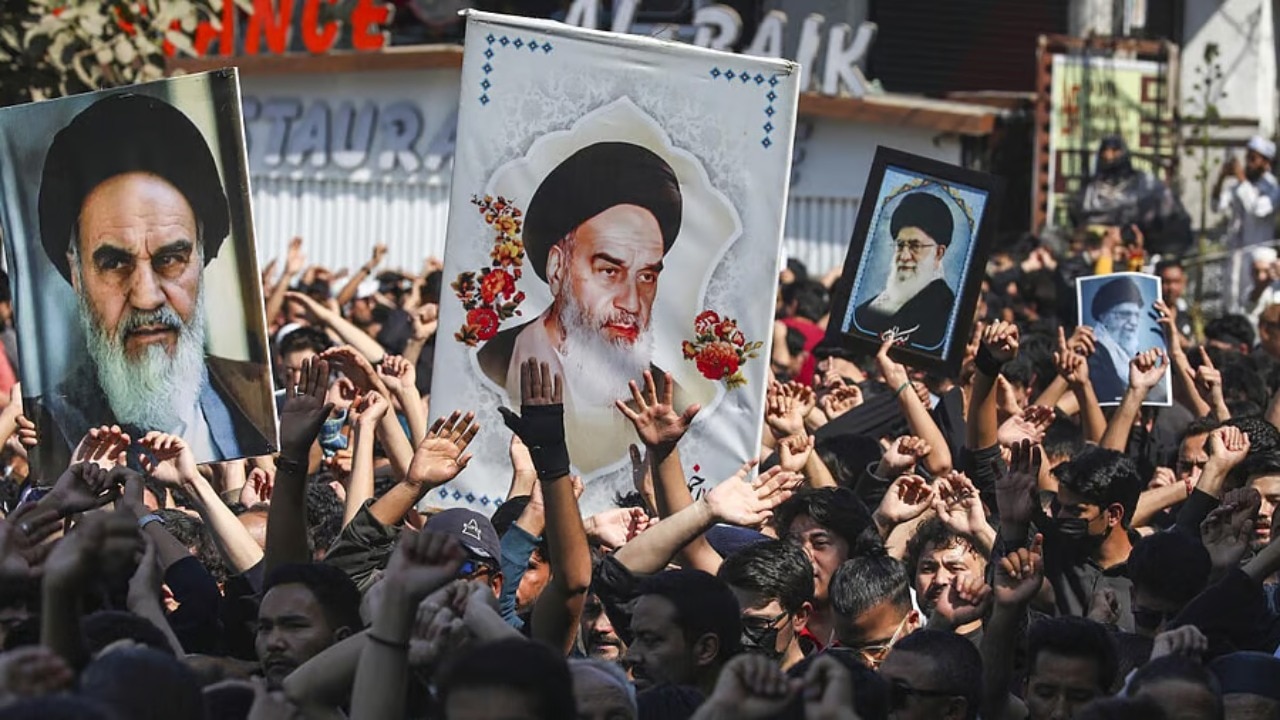
Iran embassy fund appeal draws big India response; cash sought amid transfer issue
India Today
The Iranian embassy thanked Indian citizens who had expressed interest in sending humanitarian assistance to people affected by the conflict, but said technical issues had made it difficult to receive donations through online transfers to its bank account.
The war waged by Israel and the United States against Iran continues to escalate across West Asia. Israeli forces and the US are carrying out strikes on Iranian targets. At the same time, Iran is launching retaliatory attacks across the Gulf region, targeting US and Israeli military assets. As the conflict deepens, the Iranian embassy in New Delhi has requested cash donations directly at the mission, saying it is facing difficulties receiving funds through regular banking transfers.
In a post on X, the embassy thanked people of India who had expressed interest in sending humanitarian assistance to Iranians affected by the conflict. However, the embassy said technical issues had made it difficult to receive donations through online transfers to its bank account.
"Due to some reported difficulties in transferring funds to the Embassy’s account, we would like to express our sincere gratitude to our dear Indian brothers and sisters for their continued support," the embassy wrote on X.
It added that officials are working to resolve the issue but advised donors not to use GP (GPay) for now. "Cash donations may be made directly at the Embassy," the message said, thanking supporters for their solidarity and patience.
A day earlier, the embassy had shared bank account details online after what it described as repeated requests from people in India who wanted to help Iranian citizens affected by the war. The embassy provided its State Bank of India account information and also asked donors to send payment confirmations through WhatsApp if they transferred funds electronically.
India and Iran have historical, cultural, and economic relations that date back a long time, and their relations have been shaped through cooperation in various fields, including trade and energy.


West Bengal Chief Minister Mamata Banerjee led a protest march in Kolkata against the alleged LPG shortage, accusing the PM Narendra Modi-led Centre of failing to ensure adequate supply.

Himayani Puri, daughter of Union Minister Hardeep Singh Puri, has moved the Delhi High Court over "false and malicious" reports linking her to convicted sex offender Jeffrey Epstein.

The family, a resident of Thyagaraju Street in Punganur town, had recently repaired the engine of their two-wheeler vehicle. A local mechanic advised the family to keep the engine running overnight to "set" the newly installed parts. However, this turned out to be fatal for the family.

The Supreme Court closed criminal proceedings against Ashoka University professor Ali Khan Mahmudabad after the Haryana government said it would not grant sanction to prosecute him over social media posts related to Operation Sindoor.

Three Congress MLAs in Bihar are reportedly out of contact as voting for five Rajya Sabha seats is underway, with the INDIA bloc and the BJP-led NDA locked in a tight contest for the fifth seat that could hinge on cross-voting.

Bunty Solanki stabbed his wife to death following a quarrel at their residence in Vadodara's Bakrawadi area. Rita died on the spot.

The girl's family members were angered over the friendship, and as a result, they called Jadhav last Saturday evening and allegedly beat him.

External Affairs Minister S Jaishankar has said that direct talks with Iran to restore shipping through the war-hit Strait of Hormuz have yielded results, stressing that direct engagement with Tehran is the most effective way to address the disruption.

This moment comes days after the Supreme Court allowed Harish Rana to die with dignity – a historic first court-ordered case of passive euthanasia in India. The court acknowledged the medical opinion that Rana will never recover and that the tubes that feed him and keep him alive are only prolonging his pain.


Ground videos from Shopian showed snow-draped pine trees as the weather brought joy for tourists. Speaking to reporters, a tourist from Bihar said she was unable to contain her happiness over the unexpected snowfall.

At least 10 patients were killed in a massive fire that broke out at the SCB Medical College and Hospital in Odisha's Cuttack early on Monday, Chief Minister Mohan Charan Majhi said.

Snowfall during March is considered off-season because the western Himalayas typically receive most of their snow between December and February, the peak winter months.