Explained: Western disturbance behind sudden snowfall in western Himalayas
India Today
Snowfall during March is considered off-season because the western Himalayas typically receive most of their snow between December and February, the peak winter months.
A sudden spell of off-season snowfall has swept across parts of the western Himalayas, affecting regions in Himachal Pradesh, Uttarakhand and Jammu and Kashmir and disrupting travel in several popular hill destinations.
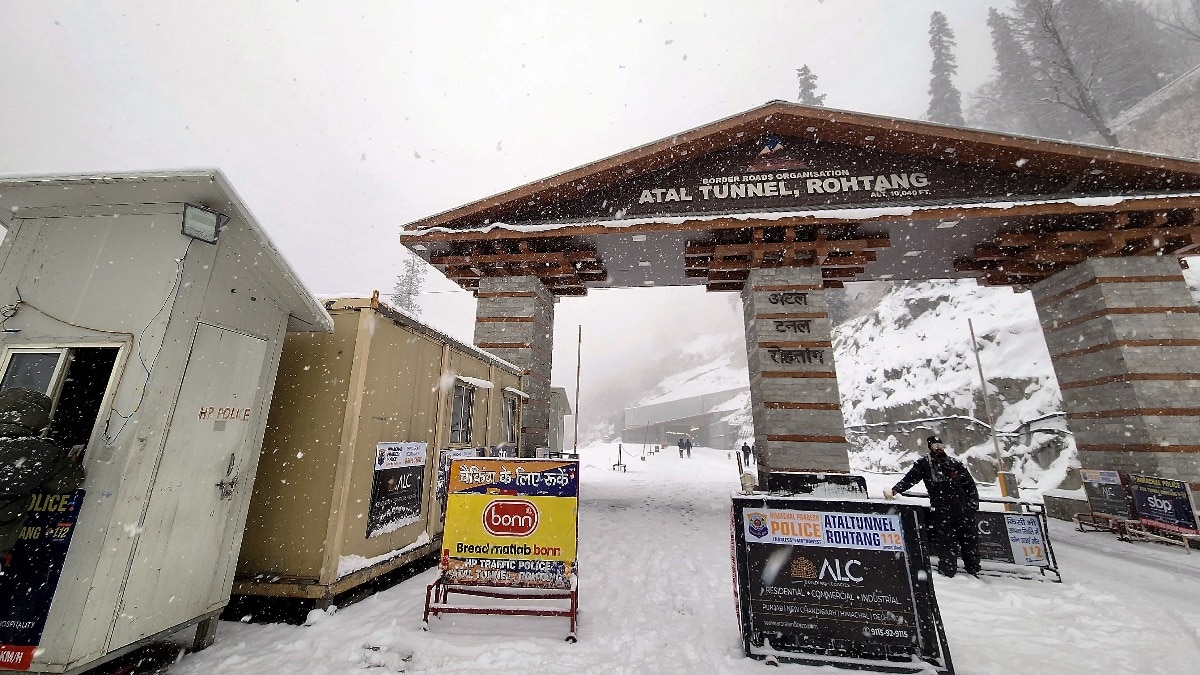
The abrupt weather shift was most visible in Himachal Pradesh’s Manali area, where heavy snowfall near the Atal Tunnel, Rohtang, left nearly 1,000 vehicles stranded and forced authorities to launch a rescue operation.
Officials said snow accumulated rapidly near the tunnel’s south portal, making roads extremely slippery and bringing traffic to a halt. Teams from the Border Roads Organisation (BRO) and the Himachal Pradesh Police began clearing snow and guiding stranded vehicles to safer locations.
According to local authorities, weather conditions in Manali remained normal until late Saturday night, prompting many tourists to travel toward higher areas such as Lahaul Valley and the Atal Tunnel. Conditions changed quickly as snowfall began in high-altitude stretches.
By the next morning, snowfall intensified across the tunnel approach roads and nearby mountain passes. Within hours, traffic congestion built up as hundreds of vehicles struggled to move along snow-covered roads, leaving many tourists stranded.
The India Meteorological Department (IMD) has linked the weather event to a fresh western disturbance.


West Bengal Chief Minister Mamata Banerjee led a protest march in Kolkata against the alleged LPG shortage, accusing the PM Narendra Modi-led Centre of failing to ensure adequate supply.

Himayani Puri, daughter of Union Minister Hardeep Singh Puri, has moved the Delhi High Court over "false and malicious" reports linking her to convicted sex offender Jeffrey Epstein.

The family, a resident of Thyagaraju Street in Punganur town, had recently repaired the engine of their two-wheeler vehicle. A local mechanic advised the family to keep the engine running overnight to "set" the newly installed parts. However, this turned out to be fatal for the family.

The Supreme Court closed criminal proceedings against Ashoka University professor Ali Khan Mahmudabad after the Haryana government said it would not grant sanction to prosecute him over social media posts related to Operation Sindoor.

Three Congress MLAs in Bihar are reportedly out of contact as voting for five Rajya Sabha seats is underway, with the INDIA bloc and the BJP-led NDA locked in a tight contest for the fifth seat that could hinge on cross-voting.

Bunty Solanki stabbed his wife to death following a quarrel at their residence in Vadodara's Bakrawadi area. Rita died on the spot.

The girl's family members were angered over the friendship, and as a result, they called Jadhav last Saturday evening and allegedly beat him.

External Affairs Minister S Jaishankar has said that direct talks with Iran to restore shipping through the war-hit Strait of Hormuz have yielded results, stressing that direct engagement with Tehran is the most effective way to address the disruption.

This moment comes days after the Supreme Court allowed Harish Rana to die with dignity – a historic first court-ordered case of passive euthanasia in India. The court acknowledged the medical opinion that Rana will never recover and that the tubes that feed him and keep him alive are only prolonging his pain.


Ground videos from Shopian showed snow-draped pine trees as the weather brought joy for tourists. Speaking to reporters, a tourist from Bihar said she was unable to contain her happiness over the unexpected snowfall.

At least 10 patients were killed in a massive fire that broke out at the SCB Medical College and Hospital in Odisha's Cuttack early on Monday, Chief Minister Mohan Charan Majhi said.

Snowfall during March is considered off-season because the western Himalayas typically receive most of their snow between December and February, the peak winter months.