Inside a 200-year-old chapel near Mumbai, reimagined as an intimate arts venue
The Hindu
Inside a 200-year-old chapel near Mumbai, reimagined as an intimate arts venue
On certain mornings, the drive out of Mumbai begins in compression with glass towers, flyovers, and the low-grade impatience of traffic, before loosening into the long, engineered sweep of the Mumbai–Pune Expressway. It is a road of tunnels and viaducts, banking curves and sudden descents, cutting through the basalt folds of the Western Ghats.
As the ascent toward Khandala begins, the mood shifts. The Bhor Ghat section — historically a crucial rail and trade pass — remains one of the most dramatic stretches of the route. In the monsoon months, waterfalls streak down the rock faces; fog gathers without warning. The journey is efficient by design, but the landscape refuses to remain neutral. You move from velocity to vertigo to a certain suspended quiet.
One of the entrances to the chapel | Photo Credit: Special arrangement
It is within that quiet that Abbey 301 now stands.
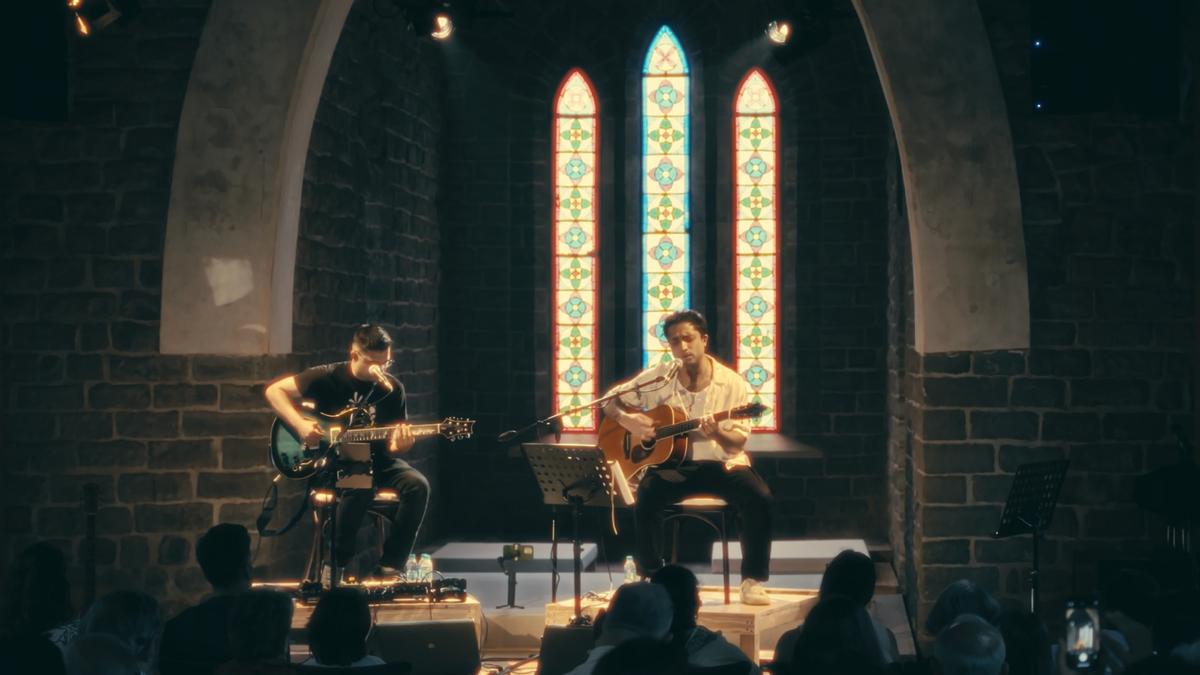
The chapel, named after the area’s postal code, predates the Expressway by nearly two centuries. Held by the Kotak family since 1973, the nearly 200-year-old black basalt chapel has entered a new chapter under Kamini Kotak and architect Adil Dholakia of Five Cross Architects, who led its recent restoration.
The property was acquired by the late Bhagwanbhai Kotak, the family patriarch, who encountered the former Anglican chapel at a time when its congregation had thinned in the years after Independence and the building stood decommissioned and locked. With deep roots in the Sahyadris, the family already considered the region home. Drawn to the chapel’s gravitas, Bhagwanbhai persuaded the Church to sell it to him, initially imagining it as a library for his personal collection.


Khalid Rahman is reuniting with Malayalam superstar Mammootty after Unda (2019). The Thallumaala director has teamed up with the veteran for Mattancherry Mafia.

Bollywood actor Akshay Kumar paid tribute to the martial arts grandmaster and Hollywood’s action star, Chuck Norris, who passed away on Thursday, March 19, 2026.

Renowned Odissi dancer Madhumita Raut, aged 59, dies of cardiac arrest, leaving behind a legacy of artistic achievements.

Chuck Norris, iconic martial arts master and actor, dies at 86, leaving behind a legendary legacy and internet memes.

South African naturalist Steve Boyes speaks on ghost elephants, ancestral tracking, and Werner Herzog’s documentary exploring Angola’s elusive highland giants

Actor-director Amol Palekar will receive META's Lifetime Achievement award for 2026 on March 25 in New Delhi.

India's artists unite against rising censorship, advocating for creative freedom and support for marginalized voices in the arts.

Written and directed by Kunal, the film also stars Sparsh Shrivastava and Vanshika Dhir

This year, Bharatnatyam artistes will present the Tyagaraja Aradhane as a dance performance

This year, Bharatnatyam artistes will present the Tyagaraja Aradhane as a dance performance

The actor, along with director Sushant Shah, speak about their upcoming series ‘Chiraiya’, Divya’s process of working on the dialect, Sushant’s approach to telling a story about women, and more

An independent video, ‘Feel the Spark’ by Raleigh Rajan with vocals by Ciera Dumas that celebrates Tamil literary giants, garnered 1.4 million views in less than 36 hours.

In ‘Jack Ryan: Ghost War’, John Krasinski is back as the savvy CIA analyst, diving headfirst into a high-stakes mission that unravels a deadly conspiracy and pits him against a rogue black-ops unit