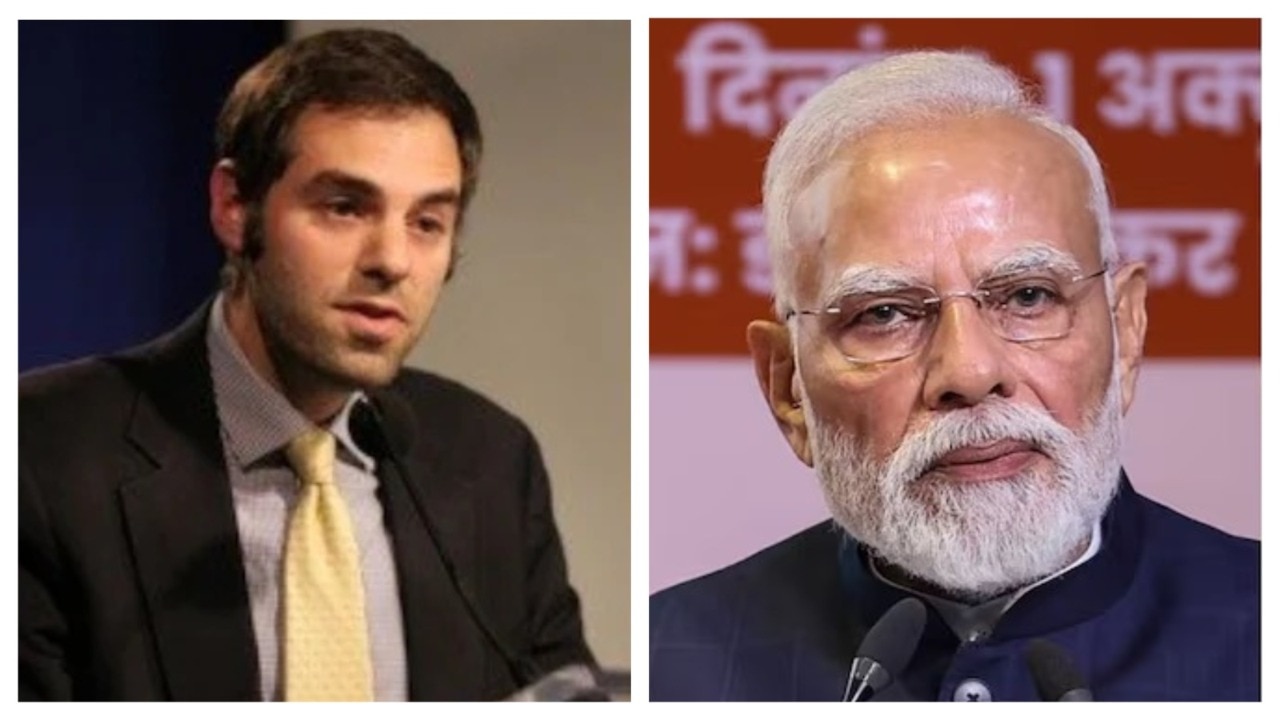
India in a spot: Micheal Kugleman cautions Delhi over its Iran war 'balancing act'
India Today
The senior fellow at the Asia Pacific Foundation said that, while on one hand, India maintains strong ties with Israel, it also has good ties with Iran, keeping in mind New Delhi's interests in the Middle East. Hence, it won't be easy for India to perfect a balancing act during the ongoing war.
India is in a tough spot as it faces a difficult diplomatic balancing act as tensions escalate in the Middle East amid the ongoing conflict involving Iran, Israel and the US, geopolitical expert and author Michael Kugelman has said. Speaking to India Today TV, Kugelman said New Delhi must tread cautiously to protect its strategic interests, maintain key partnerships and safeguard energy security while adhering to its long-standing doctrine of strategic autonomy.
Kugelman argued that India is in a tough spot because it maintains close ties with several actors, some of them rivals, directly affected by the conflict.
Over the past decade, India’s relationship with Israel has deepened considerably, particularly in defence cooperation. The partnership has become increasingly important as New Delhi looks to strengthen its military capabilities, including acquiring advanced air defence systems from Israel.
"Balancing would, of course, reflect India’s foreign policy when it comes to strategic autonomy," Kugelman said, noting that maintaining such balance will be difficult in the current climate.
"India’s in a tough spot because we see how important India’s relationship with Israel has become over the last years".
He pointed out that Indian Prime Minister Narendra Modi visited Israel shortly before the US and Israel launched strikes on Iran, underlining the growing closeness between the two countries.


India on Monday said it has not held bilateral talks with the United States on deploying naval vessels to secure merchant shipping in the Strait of Hormuz. The clarification came after US President Donald Trump urged countries to send warships to keep the strategic waterway open amid tensions with Iran.

After attacking his wife, Nafees attempted suicide by inflicting injuries on himself with the same scissors. Neighbours intervened after hearing the commotion and stopped him from taking his own life.

The victim, identified as Naitik Kumar, allegedly rammed his speeding Bullet motorcycle into a scooter near Janeshwar Mishra Park in Lucknow, triggering a crash that left him dead and two others injured.

RJD MLA who skipped Bihar Rajya Sabha poll voting cites mother's illness

West Bengal Chief Minister Mamata Banerjee led a protest march in Kolkata against the alleged LPG shortage, accusing the PM Narendra Modi-led Centre of failing to ensure adequate supply.

Himayani Puri, daughter of Union Minister Hardeep Singh Puri, has moved the Delhi High Court over "false and malicious" reports linking her to convicted sex offender Jeffrey Epstein.

The family, a resident of Thyagaraju Street in Punganur town, had recently repaired the engine of their two-wheeler vehicle. A local mechanic advised the family to keep the engine running overnight to "set" the newly installed parts. However, this turned out to be fatal for the family.

The Supreme Court closed criminal proceedings against Ashoka University professor Ali Khan Mahmudabad after the Haryana government said it would not grant sanction to prosecute him over social media posts related to Operation Sindoor.

Three Congress MLAs in Bihar are reportedly out of contact as voting for five Rajya Sabha seats is underway, with the INDIA bloc and the BJP-led NDA locked in a tight contest for the fifth seat that could hinge on cross-voting.

Bunty Solanki stabbed his wife to death following a quarrel at their residence in Vadodara's Bakrawadi area. Rita died on the spot.

The girl's family members were angered over the friendship, and as a result, they called Jadhav last Saturday evening and allegedly beat him.

External Affairs Minister S Jaishankar has said that direct talks with Iran to restore shipping through the war-hit Strait of Hormuz have yielded results, stressing that direct engagement with Tehran is the most effective way to address the disruption.

This moment comes days after the Supreme Court allowed Harish Rana to die with dignity – a historic first court-ordered case of passive euthanasia in India. The court acknowledged the medical opinion that Rana will never recover and that the tubes that feed him and keep him alive are only prolonging his pain.