India-Arab League: bridging cultures, creating opportunities Premium
The Hindu
As India grows into a major power, the Arab League region forms a critical part of its global matrix. For the Arab League countries too, India is a strong and reliable partner
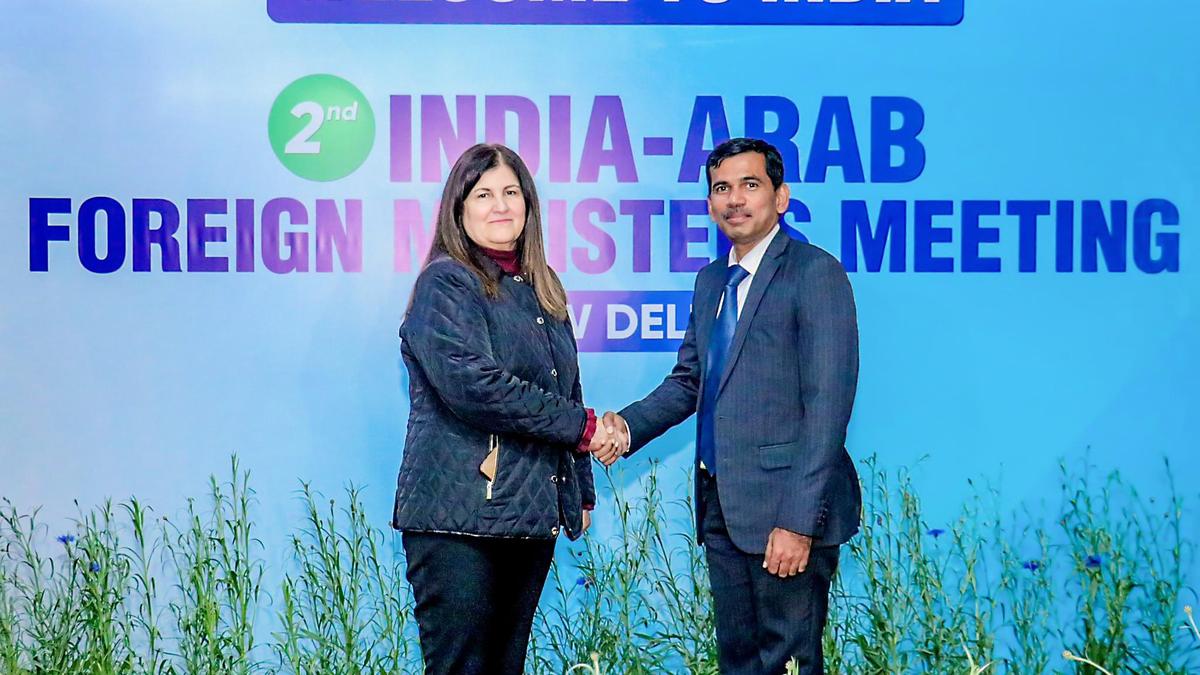
Ministers and delegates of the 22-member Arab League are gathering in Delhi for the 2nd India-Arab Foreign Ministers’ Meeting on January 30-31, 2026. This is a major diplomatic outreach by India at a time when there are multiple conflicts brewing on the horizon in the region and the world is grappling with the rapidly changing global order, set in motion largely due to U.S. President Donald Trump’s total disregard for the sovereignty of nations and the rules-based international order.
As the ministers gather in Delhi, war clouds are still hovering over Iran and the massive military build-up by the U.S. continues. In Syria, despite a ceasefire, uncertainty continues and long-term peace is still some distance away. Gaza finally looks towards transitioning to peace even as details of phase two of the ceasefire are still in the works. The recovery of the body of the last Israeli hostage from Gaza on January 26 is a major victory for Israel and may well motivate it to move towards relaxing the restrictions in Gaza.
However, the most surprising development is the emergence of fault lines among two close allies — Saudi Arabia and the UAE — mostly over conflicting interests in Yemen but also over power and influence in the region. We need to watch out for the possibility of rival military alliances. India, too, is closely monitoring the situation, while formulating its own strategy for the region.
The Arab League, officially known as the League of Arab States (LAS), was formed in Cairo on March 22, 1945, initially with seven members. Today, it has 22 member states from North Africa and West Asia. Although India’s relations with countries in the Arab League go back centuries, the engagement with the LAS was formalised in March 2002 when a Memorandum of Understanding (MoU) was signed, institutionalising the process of dialogue. The MoU is aimed to “promote and develop the traditional relationship of friendship and cooperation between India and the Arab States” and provides for annual meetings between the External Affairs Minister of India and the Secretary General of the Arab League.
During the visit of Arab League Secretary General, Amr Moussa, to India in December 2008, the Arab-India Cooperation Forum (AICF) was established. And in December 2010, the Indian Ambassador to Egypt was designated as India’s Permanent Representative to the Arab League. The first meeting of the AICF was held in January 2016 at Manama, Bahrain. In addition, there is the India-LAS Partnership and Investment Summit, a biennial flagship economic event. During the current visit of foreign ministers, a new initiative called the India and Arab Countries Chambers of Commerce, Industry and Agriculture is scheduled to be inaugurated.
The India-LAS partnership goes beyond trade and investment. Over the past decade, strategic partnerships and security have emerged as crucial areas of engagement. Oman was the first country with which India signed a strategic partnership in 2008. With the signing of similar agreements with the UAE in 2015, Saudi Arabia in 2019, Egypt in 2023, and Qatar in 2025, the depth and scope of strategic convergence with the region has grown rapidly.


Decomposed body of a missing 25-year-old man discovered in Dindigul stone quarry, prompting calls for investigation and quarry closure.

SVEEP activities launched in The Nilgiris aim to boost voter turnout at 13 polling booths with low participation rates.

Learn who can vote by postal ballot in the upcoming Tamil Nadu Assembly election, including seniors and persons with disabilities.

Shorts News:Watch: UDF linked to communal forces in Kerala: CPI(M) leader A Vijayaraghavan

Karnataka government postpones Deendayal Upadhyaya event at KSOU Mysuru due to protocol violations and lack of government involvement.

Sameer Wankhede denies bribery allegations involving Shah Rukh Khan’s son in drugs case during Bombay High Court proceedings.

What does it take to design gloves, masks and uniform that factor in the various challenges faced by workers on the waste beat? Indore, Bengaluru and Pune have an answer

Gaurav Gogoi files nomination for Jorhat Assembly seat, marking his electoral debut in the upcoming Assam elections.

A round-up of events and programmes held at colleges in Tiruchi and other Cauvery delta districts

CPI(M) and Congress clash over accusations of aiding BJP, threatening the LDF-UDF duopoly ahead of Kerala Assembly polls 2026.

Shivamogga veterinarians demand accountability for the death of trainee vet Dr. Sameeksha Reddy, citing systemic failures in zoo administration.

BJP launches 'Mana Ooru–Mana Jenda' campaign on April 6 to strengthen grassroots connections and promote development in Andhra Pradesh.

Anuradha Jonnalagadda took over as in-charge Vice-Chancellor of the University of Hyderabad, focusing on continuity during the transition.