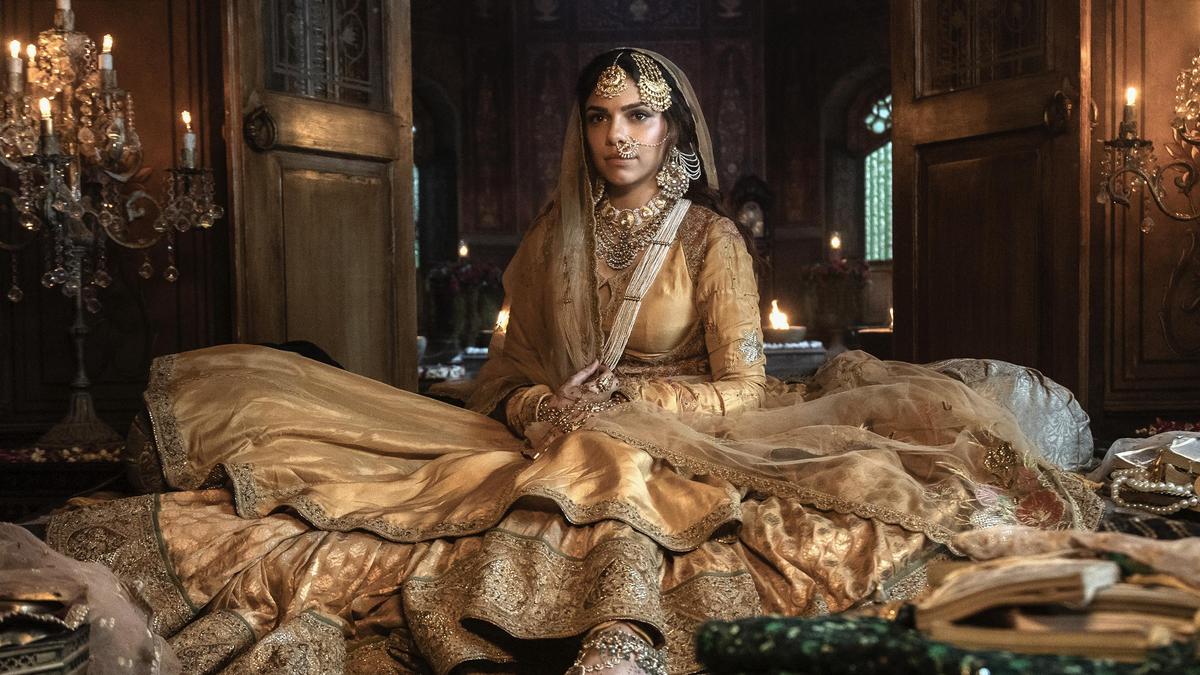
Review of Tarana Husain Khan’s new novel, The Courtesan, Her Lover and I
The Hindu
Discover the intertwining stories of a 19th-century courtesan and a modern writer in Tarana Husain Khan's captivating novel.
The title of writer and historian Tarana Husain Khan’s new novel, The Courtesan, Her Lover and I, echoes the name of the 1960s Hindi movie Sahib, Bibi aur Ghulam. The genre is that of docu-fiction. As the story progresses, you are reminded of The Life of Jauhar Khan by Vikram Sampath and Mirza Hadi Ruswa’s Umrao Jan Ada. The narrative style is similar to the one in The Hours by Michael Cunningham and Julie and Julia by Julie Powell — where a story from the past gets reflected in the lives of people living in the present. This novel carries the weight of all these legacies impressively.
The first page draws you into the languorous spirit of a distant time and place carrying a faint fragrance called ‘Rampur’. Rukmini/ Rukhsar, an erstwhile features writer writing about the food scene in Delhi, returns with her husband Faraz, belonging to the Afghan bloodline, to his quirky but classic hometown, Rampur, after a short stint in debonair Dubai.
If you are looking for the intrigues of a Hindu-Muslim marriage, you will be disappointed — and thankfully, too. Rukmini is egged on to read about the lives of a Rampuri poet, Dagh Dehlvi, and his lady-love, Munni Bai Hijab, who lived towards the end of the 19th century. Dagh’s life is available for access through his many letters. While researching for more information about Munni Bai Hijab, a courtesan who was also a poet, Rukmini’s own life maps out against the contours of an ambivalent romance that lies buried in time and history.
A post shared by Hachette India (@hachette_india)
On the surface of the novel is the chequered love story of Munni Bai and Dagh. At the subterranean level is the story of Rukmini as she handles a husband who is habitually in debt and a teenage daughter who has taken a year’s gap from studies to figure out what she wants to do. Soon, the surface and the subterranean mingle. Munni Bai’s problematic relationship with her mother resonates with Rukmini’s estrangement from her mother. Dagh plays Prof. Higgins to Munni Bai and Rukmini finds her tutor-muse in Daniyal.
“Writing is fragile — it needs to develop in quiet places,” says Rukmini, as Munni Bai fears losing her clientele if she does not manufacture new lines regularly. She meets Dagh clandestinely while Rukmini meets Daniyal by pretending to go to the library. The cut-throat world of courtesans blends with the struggles of a first-time novelist trying to break through the gatekeeping in the publishing world. The stories of the two women become parallel commentaries on each other.


Priyanka Gandhi criticises PM Modi's West Asia remarks, urging for a comprehensive Parliament discussion on the matter.

Learn who can vote by postal ballot in the upcoming Tamil Nadu Assembly election, including seniors and persons with disabilities.

Decomposed body of a missing 25-year-old man discovered in Dindigul stone quarry, prompting calls for investigation and quarry closure.

SVEEP activities launched in The Nilgiris aim to boost voter turnout at 13 polling booths with low participation rates.

Learn who can vote by postal ballot in the upcoming Tamil Nadu Assembly election, including seniors and persons with disabilities.

Shorts News:Watch: UDF linked to communal forces in Kerala: CPI(M) leader A Vijayaraghavan

Karnataka government postpones Deendayal Upadhyaya event at KSOU Mysuru due to protocol violations and lack of government involvement.

Sameer Wankhede denies bribery allegations involving Shah Rukh Khan’s son in drugs case during Bombay High Court proceedings.

What does it take to design gloves, masks and uniform that factor in the various challenges faced by workers on the waste beat? Indore, Bengaluru and Pune have an answer

Gaurav Gogoi files nomination for Jorhat Assembly seat, marking his electoral debut in the upcoming Assam elections.

A round-up of events and programmes held at colleges in Tiruchi and other Cauvery delta districts

CPI(M) and Congress clash over accusations of aiding BJP, threatening the LDF-UDF duopoly ahead of Kerala Assembly polls 2026.

Shivamogga veterinarians demand accountability for the death of trainee vet Dr. Sameeksha Reddy, citing systemic failures in zoo administration.