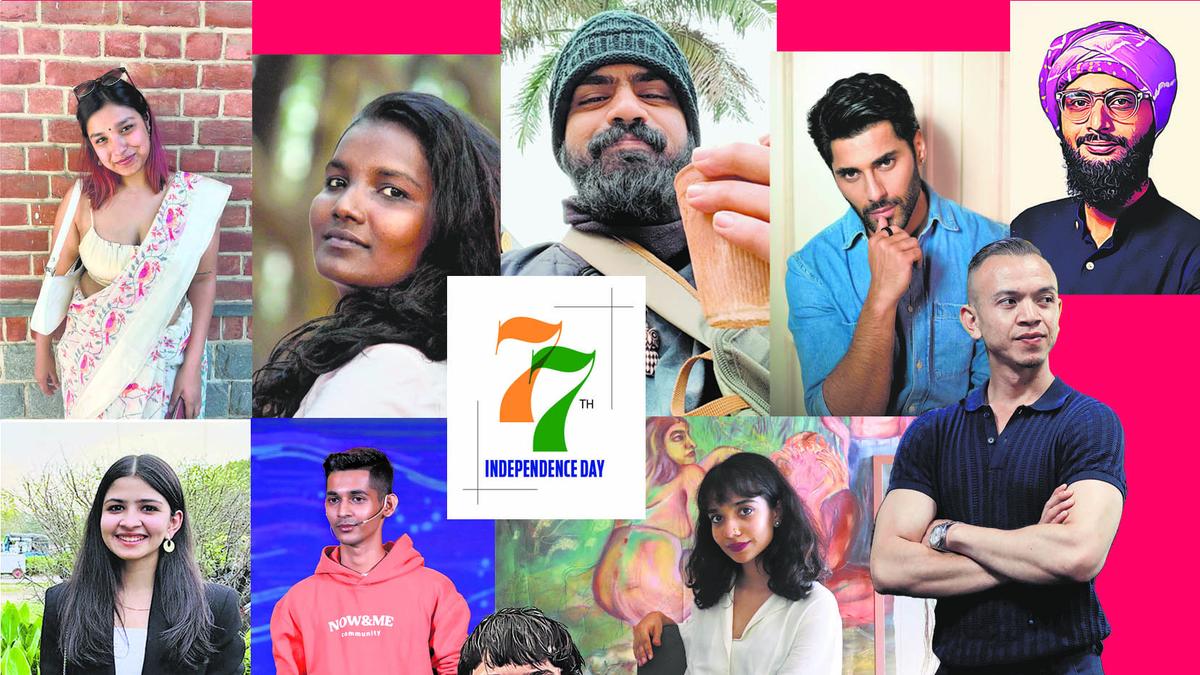
Independence Day 2024 | Young India: hope, dreams and democracy
The Hindu
How involved is India’s youth with the future of the country and its politics? What are their concerns and what changes would they like to see? Find out what a cross-section of young Indians has to say
The April-May Lok Sabha elections in India and the political campaign leading up to it started a nationwide discourse on democracy and what it means for the youth, who make up more than half of India’s population. What are their aspirations and expectations from a government in its third term? Do they have faith in the country’s political, economic and social systems to make a successful life for themselves? What are their concerns, and what changes would they like to see in the long-term?
In our conversations with a cross-section of young Indians ahead of Independence Day, one thing became clear: they are politically aware and keen to do their bit for the development of the nation. From casting their vote in an informed manner to working at the grassroots level to effect change, the youth want to be active participants in the country’s democratic framework. According to Madhuwanti Banerjee, former professor of sociology at S.K. Somaiya College of Arts, Science and Commerce, Mumbai, India’s youth will never compromise on democracy. Whether it was protesting for justice in the Nirbhaya rape case in 2012 or the 2014 movement to save Aarey’s forest or the 2019 protest against the Citizenship Amendment Act, “they were out there on the streets, risking their lives to express their dissent against what they thought was unjust and undemocratic”, she says.
Also, unlike what many people might think, Gen Z is a very sensible generation, according to Banerjee. “As a teacher, I can tell you that they are aware, empathetic, more accepting of different castes, classes, genders and cultures. The political and sociological discourse and dissent at colleges and universities is very healthy. I have seen them fighting for democracy, standing up for it without any fear.” Edited excerpts of a few young voices:
NGO employee | Gurugram
We have the right to vote, but are we doing it right? There is caste politics and religion politics, which make people sentimental about who they vote for — that shouldn’t be the case. People in power are shaping people’s opinions and leading uninformed decision-making. Election ethics are compromised, yet there are no consequences for the guilty. It’s frustrating to see propaganda media creating factions amongst common folk based on religion identity, gender, caste, community and more. It distracts people from what the need of the hour is: to save the environment and mitigate climate crisis. Laws detrimental to both are being approved, but people are too busy fighting to notice. I have chosen to work in the NGO sector with a grassroots education institution along with the government to make a change.
Poet, Dalit and queer activist | Kochi
The growing micro-aggression towards minorities and queer people is saddening. Even in what people perceive as a progressive state such as Kerala, I, a Dalit woman, am not able to find a rented accommodation. Even if I do find a place, I know I will constantly be under scrutiny. The attitude of people towards the minority has significantly changed in the last 10 years, ever since democracy in India has been interpreted as majoritarianism. My endeavour is to address these problems through my poetry and via public discourse and engagement with students. Silence is not the answer. Now is the time to speak up and fight for democracy.


TIMS Sanathnagar inauguration on Ugadi uncertain as construction, staffing gaps persist

Mumbai's water crisis escalates as corporators highlight irregular supply and reliance on costly private tankers amid administration neglect.

Explore the evolution of cooking fuels in Madras, from wood and coal to the rise of LPG, amid recent shortages.

Protests against the Sharavathi Pumped Storage Hydroelectric Project in the Western Ghats just got new life

51 couples take thebig plunge at Udaipur mass wedding event

A bridge collapse in Roop Nagar kills a woman; Delhi government forms a probe panel amid rising safety concerns.

Tribunal halts Colonel Purohit's retirement, pending promotion decision after his acquittal in the 2008 Malegaon blast case.

Pinarayi Vijayan launches his election campaign in Dharmadam, aiming for a third consecutive term amid tightening competition.

Delhi Speaker Vijender Gupta has written to Lieutenant-Governor Taranjit Singh Sandhu seeking directions to instal audible signals at traffic intersections across the city to ensure the safety of mobility-impaired individuals and senior citizens.

GVMC council concludes its five-year term, highlighting significant development projects and global events that enhanced Visakhapatnam's recognition.

Karnataka SC/ST Commission discusses internal reservation issues amidst confusion over reduced quotas for Scheduled Castes and Tribes.

President Droupadi Murmu serves Akshaya Patra’s 5 billionth meal, highlighting child nutrition and education at Rashtrapati Bhavan.

PM Modi and UAE President agree on ensuring safe navigation through the Strait of Hormuz amid regional tensions.