How Kashmir obsession turned Pakistan into toilet paper for the US
India Today
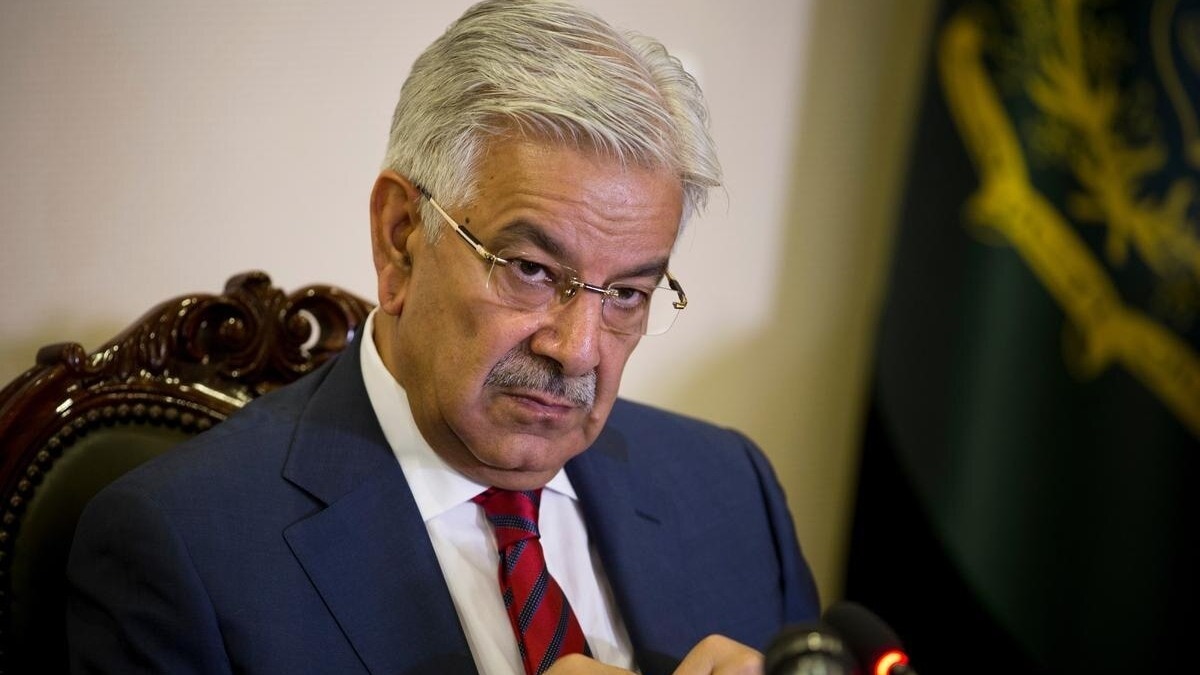
Pakistani Defence Minister Khwaja Asif described US treatment of Pakistan as "worse than toilet paper". The reference was to Pakistan's support of the US in its wars. What he doesn't mention is how Islamabad's Kashmir obsession actually brought its ruin.
Pakistan's Defence Minister Khwaja Asif, while speaking in the country's Parliament on Tuesday, made a particularly strong admission when he alleged that the US had treated Pakistan "worse than toilet paper". He said the US used and discarded Pakistan in pursuit of its own strategic interests. He described Pakistan's decision to align with Washington DC's stance on Afghanistan after 1999 as a grave mistake whose consequences would be felt for years.
Asif's admission stands out as one of the most blunt public criticisms of US alignment by a sitting Pakistani defence minister in recent years. It comes even as the country has been attempting to woo US President Donald Trump with a Nobel Peace Prize nomination for "pivotal leadership" and mining rights for rare earth minerals in Balochistan.
But the question that remains is this that how did Pakistan become a piece of "toilet paper" for the US to be used and discarded at will? Why did Pakistan align itself with US interests? And what consequences did Pakistan have to deal with because of its alignment with the US? And did the Islamabad-Rawalpindi hybrid regime's obsession with India and Kashmir play a role in it?
Pakistan, almost immediately after it was carved out in 1947, sided with the US on defence and security. Over time, Pakistan, which had evolved into a security state, deepened its cooperation, with its eyes on India, particularly obsessing over Kashmir.
Pakistan's alignment with the US further deepened during the Soviet-Afghan war, which lasted from 1979 to 1989. The US was looking for a regional security foothold and Pakistan emerged as a desirable option. While many newly independent nations tried to stay non-aligned during the Cold War, Pakistan emerged as the US's steadfast military ally in South Asia.
The strategic positioning of Pakistan at the crossroads of South Asia, the Middle East (Western Asia) and the former Soviet republics of Central Asia made it a staging ground for the US. And the Islamabad-Rawalpindi security regime used this leverage to make the US more comfortable with Pakistan militarily.


Amid the widening US, Israel–Iran war, the cyber front intensifies as the Handala hacker group claims attacks on US companies and Israeli intelligence-linked figures.

A post about a software developer's salary in Bengaluru and savings amount has started a conversation among X users about how to save wisely.

The profiles of at least three of China's leading nuclear, missile and radar experts were scrubbed from the website of the Chinese Academy of Engineering, the country's most prestigious academic body. This comes as a series of purges under Premier Xi Jinping's anti-corruption campaign have decimated the upper echelons of China's military and scientific community.

The aircraft had also been used by senior Iranian officials and military figures for both domestic and international travel, and for coordinating with allied countries, the Israeli military said. Meanwhile, Dubai International Airport has resumed flight operations after a temporary suspension of about seven hours caused by a drone strike near a fuel tank facility.

A government school teacher's gesture of buying a new uniform for an orphaned student has received widespread attention after a video of the act was shared on Instagram.

A father travelling with his toddler addressed fellow passengers ahead of a flight, asking for patience and understanding if his child became unsettled.

The lottery system for a segment of Green Cards, known as the Diversity Immigrant Visa programme, has been restarted. However, the stricter rules being enforced by the US won't impact Indian Green Card aspirants. Here's why.

Instead of putting an end to rumours, the video has triggered another wave of speculation about Netanyahu's fate. Several users on 'X' (formerly Twitter) have claimed that the video posted on 'X' was an AI-generated deepfake.

US jets strike military facilities near Iran's Chabahar free trade zone

The video, recorded inside the train coach, shows the compartment littered with snack packets, water bottles, soiled spoons and bedsheets scattered on the floor.

The US is planning to deploy a third aircraft carrier in the Middle East amid the war with Iran. Aircraft carriers, one of the most expensive defence systems, are floating military bases that project power. Here's how aircraft carriers are used and where India stands.

Donald Trump warned that Nato could face a 'very bad' future if member states fail to help reopen the Strait of Hormuz, and to support Washington's efforts amid the ongoing US-Israeli war with Iran.

When we look at Iran through the prism of religion and see a Shia Islamic country, we negate its thousands of years of rich pre-Islamic Persian culture. A dive into the world of Zoroastrianism and Vedas shows us how Indians and Iranians have been sharing languages, Gods, sciences and a sacred fire for thousands of years.