How an NGO’s initiative is helping parents in T.N. villages support children’s early development
The Hindu
An NGO initiative in Tamil Nadu empowers parents to enhance children's early development through education and community support.
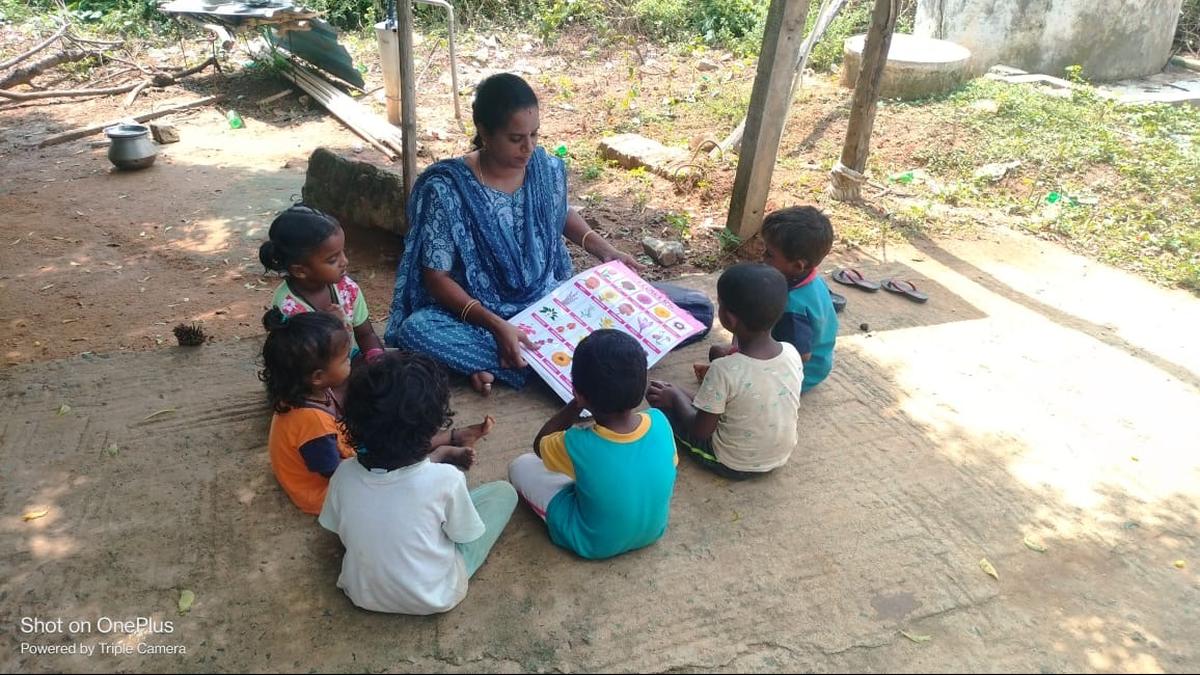
V. Menaka, a 29-year-old mother, wasn’t entirely aware that her two-year-old son was not as active as other children his age. “He used to keep to himself, wasn’t very playful, and always stayed close to me. But I thought that was normal,” she said. However, her perspective changed when workers from the Bala Mandir Research and Resource Centre’s (BMRRC) Early Childhood Care and Development and Education (ECCDE) programme visited her.
“The staff briefed me about brain development and how crucial the early years are for a child to mingle and play with others. They told me there are various ways to help a child grow and learn, and that both my role as a parent and the role of the community are very important. They also explained the importance of enrolling my child in the anganwadi,” she said.
Ms. Menaka, a resident of Lachivakkam in Tiruvallur district, said that months later she witnessed her son playing with other children at the anganwadi, which made her very happy. The child, who is now six years old, has been enrolled in Class 1 at a private school and is thriving. “He now makes friends so easily and is eager to go to school,” she added.
Ms. Menaka’s sentiments were echoed by other parents who have benefited from the research centre’s ECCDE programme. Initiated in 2014 in five villages in Gummidipoondi, with assistance from Michelin Tyres, the programme sought to raise awareness among parents about child and brain development.
“At the outset, anganwadis existed primarily as centres for nutrition for pregnant and lactating mothers. Later, the concept of early childhood care and development was introduced. Rural residents were initially hesitant to send their children there,” said Bindu R., director, BMRRC.
The ECCDE programme discusses brain development, noting that 25% of it occurs at birth and the remaining development takes place during the first six years of a child’s life. “We need to make use of this small window for the child’s development,” she added.


The government plans to amend the FCRA, introducing new regulations for NGO asset management and accountability for key functionaries.

The draft policy for “Responsible Digital Use Among Students”, released on Monday by the Department of Health and Family Welfare, has recommended that parents set structured routines with clear screen-time rules and prioritise privacy, safety, and open conversation with children on digital well-being.

Police Observer Sushant Kumar Saxena conducts surprise inspection at Shencottai police station, reviewing warrants and security arrangements ahead of elections.

Andhra Pradesh government to launch key projects in April, focusing on industrial growth and infrastructure development, says Nara Lokesh.

Lok Sabha refers the Corporate Laws (Amendment) Bill to a JPC amid opposition concerns over CSR provisions dilution.

SHG members in Kanniyakumari use snakes and ladders to raise election awareness and boost voter turnout.

Government accelerates consultations for early implementation of the Women’s Reservation Act to ensure women’s representation in 2029 elections.

CM A. Revanth Reddy distributes ₹1 crore insurance cheques to families of deceased Electricity department employees, enhancing financial security for workers.

The Bengaluru Traffic Police (BTP) registered 634 cases of drunk driving during a week-long special enforcement drive conducted across the city between March 16 and March 22.

GHMC intensifies action against property tax defaulters, seizing properties and offering a One Time Settlement scheme for payments.

CCB arrests three drug peddlers in Mangaluru, seizing ₹2.5 lakh worth of MDMA and other valuables.

TVK's 28 candidates in Puducherry include former BJP MLAs, a sitting Independent, and a retired police IG.

BRS submits notice on private member bill to Speaker