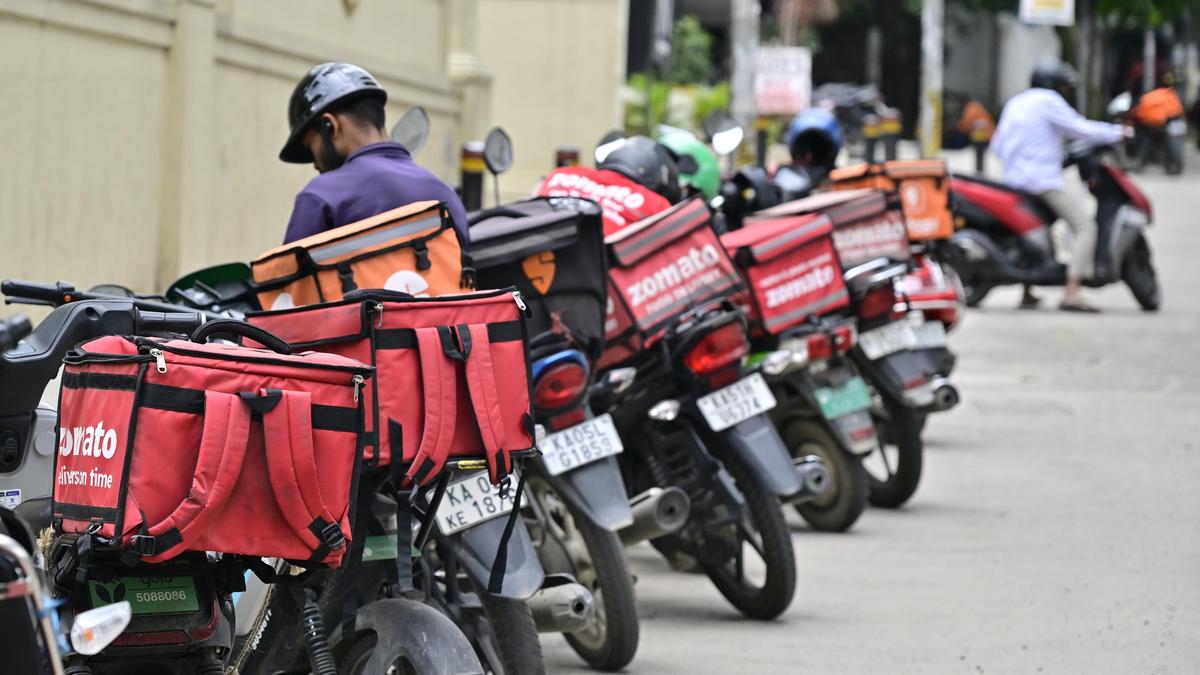
Karnataka constitutes Gig Workers’ Welfare Board
The Hindu
Karnataka establishes a Gig Workers’ Welfare Board to implement welfare measures and support gig workers through a dedicated body.
The Karnataka government on January 27, 2026, issued a notification constituting the Karnataka Platform-Based Gig Workers Welfare Development Board under sections of the Karnataka Platform-Based Gig Workers (Social Security and Welfare Development) Act, 2025.
According to the notification, the Labour Minister will be the ex-officio President of the Board. Senior officials from the Labour Department, the Department of Information Technology and the Commercial Taxes Department have been included as ex-officio members. The Chief Executive Officer of the Board will function as the Member Secretary.
ALSO WATCH Explained: What is Karnataka’s Gig Workers bill
The Board includes four representatives of gig workers from unions representing food delivery and app-based transport workers, and four representatives from aggregator platforms. Representatives from Porter, Zomato, Uber and Amazon have been named as aggregator members. The committee also includes labour unions including United Food Delivery Partners Union, the Indian Federation of App Based Transport Workers, All India Trader Union Congress (AITUC), and Ola Uber Drivers and Owners Association.
The constitution of the Board follows the State government’s decision to move ahead with the implementation of welfare measures for gig workers through a dedicated statutory body.
The State has decided to levy a welfare fee of 1% to 1.5%, with a cap, on aggregator platforms, with the rate varying across sectors and business models. Labour Minister Santosh Lad had said the levy was kept low initially to ensure a steady welfare fund for gig workers without placing an immediate financial burden on platforms.


The government plans to amend the FCRA, introducing new regulations for NGO asset management and accountability for key functionaries.

The draft policy for “Responsible Digital Use Among Students”, released on Monday by the Department of Health and Family Welfare, has recommended that parents set structured routines with clear screen-time rules and prioritise privacy, safety, and open conversation with children on digital well-being.

Police Observer Sushant Kumar Saxena conducts surprise inspection at Shencottai police station, reviewing warrants and security arrangements ahead of elections.

Andhra Pradesh government to launch key projects in April, focusing on industrial growth and infrastructure development, says Nara Lokesh.

Lok Sabha refers the Corporate Laws (Amendment) Bill to a JPC amid opposition concerns over CSR provisions dilution.

SHG members in Kanniyakumari use snakes and ladders to raise election awareness and boost voter turnout.

Government accelerates consultations for early implementation of the Women’s Reservation Act to ensure women’s representation in 2029 elections.

CM A. Revanth Reddy distributes ₹1 crore insurance cheques to families of deceased Electricity department employees, enhancing financial security for workers.

The Bengaluru Traffic Police (BTP) registered 634 cases of drunk driving during a week-long special enforcement drive conducted across the city between March 16 and March 22.

GHMC intensifies action against property tax defaulters, seizing properties and offering a One Time Settlement scheme for payments.

CCB arrests three drug peddlers in Mangaluru, seizing ₹2.5 lakh worth of MDMA and other valuables.

TVK's 28 candidates in Puducherry include former BJP MLAs, a sitting Independent, and a retired police IG.

BRS submits notice on private member bill to Speaker