153 tribal students in T.N. secure admissions to premier institutions
The Hindu
153 tribal students in Tamil Nadu gain admission to premier institutions, with plans to triple this number in future years.
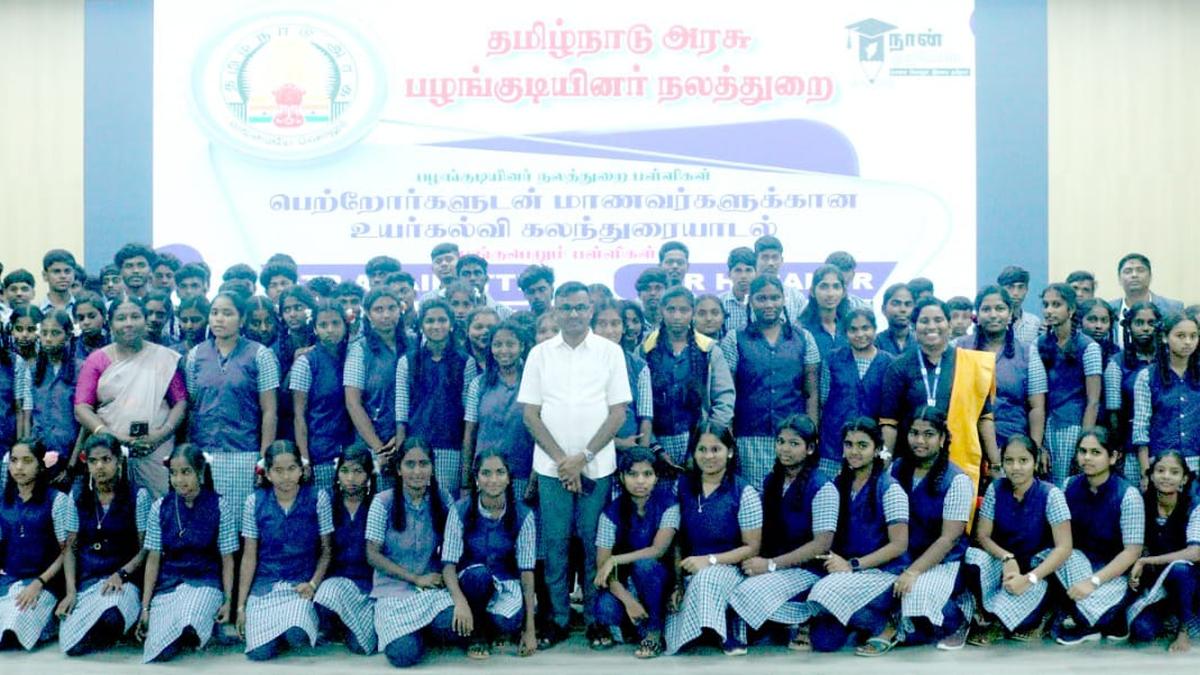
As many as 153 tribal students across Tamil Nadu have secured admissions to the country’s premier higher educational institutions during the 2025-2026 academic year, and the State government is working towards tripling this number in the coming years, said S. Annadurai, Director, Tribal Welfare Department, in Erode recently.
Addressing a parent-student counselling and career guidance programme organised by the department at Bannari Amman Institute of Technology at Sathyamangalam, Mr. Annadurai reaffirmed the government’s commitment to improving access to higher education for tribal students. He said the department’s target for 2026 is to ensure that at least 40% of tribal students gain admission to leading national institutions, while bringing the higher education dropout rate down to zero.
Explaining the benefits of various government scholarship and welfare schemes, the Director addressed parents’ concerns and sought to dispel apprehensions related to higher education, reiterating that the department would continue to support tribal students in achieving their full potential.
Encouraged by the success of previous years, the department has launched a new initiative aimed at increasing admissions threefold. As part of its first phase, parent-student counselling and career guidance programmes were conducted at the block level in 36 tribal schools across the State.
The programmes were led by teams of educationists and professional career counsellors, providing personalised guidance to parents on higher education pathways. The State was divided into 14 zones for implementation, with each programme conducted under the supervision of senior district officials, including the District Collector, Director of Tribal Welfare, District Adi Dravidar and Tribal Welfare Officer, Deputy Director, and other senior officials.
Officials said nearly 99% of the beneficiaries are first-generation graduates, with parents largely employed as daily-wage labourers. Several students belong to families rehabilitated from bonded labour, while others come from single-parent households. Social attitudes and lack of awareness, including instances of early marriage, were identified as key challenges to higher education.


The government plans to amend the FCRA, introducing new regulations for NGO asset management and accountability for key functionaries.

The draft policy for “Responsible Digital Use Among Students”, released on Monday by the Department of Health and Family Welfare, has recommended that parents set structured routines with clear screen-time rules and prioritise privacy, safety, and open conversation with children on digital well-being.

Police Observer Sushant Kumar Saxena conducts surprise inspection at Shencottai police station, reviewing warrants and security arrangements ahead of elections.

Andhra Pradesh government to launch key projects in April, focusing on industrial growth and infrastructure development, says Nara Lokesh.

Lok Sabha refers the Corporate Laws (Amendment) Bill to a JPC amid opposition concerns over CSR provisions dilution.

SHG members in Kanniyakumari use snakes and ladders to raise election awareness and boost voter turnout.

Government accelerates consultations for early implementation of the Women’s Reservation Act to ensure women’s representation in 2029 elections.

CM A. Revanth Reddy distributes ₹1 crore insurance cheques to families of deceased Electricity department employees, enhancing financial security for workers.

The Bengaluru Traffic Police (BTP) registered 634 cases of drunk driving during a week-long special enforcement drive conducted across the city between March 16 and March 22.

GHMC intensifies action against property tax defaulters, seizing properties and offering a One Time Settlement scheme for payments.

CCB arrests three drug peddlers in Mangaluru, seizing ₹2.5 lakh worth of MDMA and other valuables.

TVK's 28 candidates in Puducherry include former BJP MLAs, a sitting Independent, and a retired police IG.

BRS submits notice on private member bill to Speaker