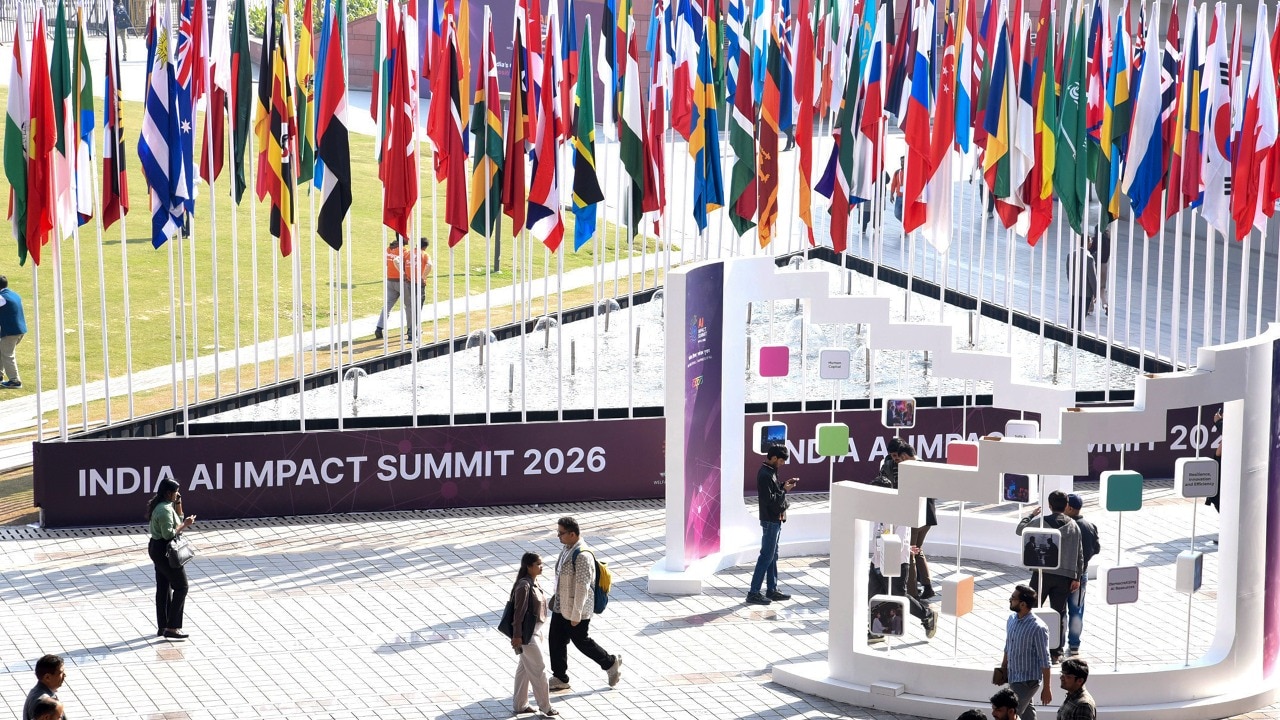
How AI surveillance is managing security at India AI Impact Summit
India Today
AI-powered surveillance systems are at the core of security at India's flagship tech event, despite significant crowd disruptions on the opening day.
The India AI Impact Summit 2026 commenced in New Delhi on February 16, showcasing the nation’s rapid progress in AI technologies. However, the opening day at Bharat Mandapam faced major logistical challenges, including overcrowding, long queues, and confusion over entry access.
The large-scale global technology event quickly drew criticism from founders, exhibitors, and visitors. Reports indicated significant crowd management issues, including bottlenecks at entry points, unclear instructions, and last-minute closures of exhibition zones that disrupted movement inside the venue. The increased security measures implemented for high-level attendees exacerbated the operational strain, resulting in long queues and instances of attendees being left stranded outside venue halls for hours.
A general advisory issued ahead of the event had already stated that the Bharat Mandampam Expo Arena would remain closed on the opening day. Despite the advisory, videos shared on X showed large crowds gathering near the exhibition sections, contributing to congestion and amplifying confusion at entry points.
“The crowd management relies on an AI-powered surveillance grid,” says Additional CP Devesh Kumar Mahla. He mentioned that the grid is coordinated through at least 32 control rooms monitoring both the venue and its surrounding areas.
More than 20,000 personnel from the Central Armed Police Forces and local police are using these AI tools to track crowd movement in real time, identify potential threats, and respond swiftly to incidents. This deployment comprised several key technologies: an AI-enabled CCTV network, Facial Recognition Systems (FRS), real-time video analytics, and AI smart glasses utilised by on-site officers, that was also deployed during the January 26 Republic Day security operations.
This AI-enabled system works by feeding live CCTV and wearable camera footage into a central command network, where computer-vision models analyse faces, crowd density and movement patterns in real time. Facial recognition tools compare images against police databases, which then send alerts to control rooms and field officers for quick verification and response.


India depends on imports to meet its demand for urea, one of the most widely-used fertilisers in India.

India Today's OSINT team identified at least 22 Indian-flagged vessels operating in the Gulf region, including seven LPG carriers, seven oil tankers, four container ships, two bulk carriers, one tug and one dredger.

India on Monday said it has not held bilateral talks with the United States on deploying naval vessels to secure merchant shipping in the Strait of Hormuz. The clarification came after US President Donald Trump urged countries to send warships to keep the strategic waterway open amid tensions with Iran.

After attacking his wife, Nafees attempted suicide by inflicting injuries on himself with the same scissors. Neighbours intervened after hearing the commotion and stopped him from taking his own life.

The victim, identified as Naitik Kumar, allegedly rammed his speeding Bullet motorcycle into a scooter near Janeshwar Mishra Park in Lucknow, triggering a crash that left him dead and two others injured.

RJD MLA who skipped Bihar Rajya Sabha poll voting cites mother's illness

West Bengal Chief Minister Mamata Banerjee led a protest march in Kolkata against the alleged LPG shortage, accusing the PM Narendra Modi-led Centre of failing to ensure adequate supply.

Himayani Puri, daughter of Union Minister Hardeep Singh Puri, has moved the Delhi High Court over "false and malicious" reports linking her to convicted sex offender Jeffrey Epstein.

The family, a resident of Thyagaraju Street in Punganur town, had recently repaired the engine of their two-wheeler vehicle. A local mechanic advised the family to keep the engine running overnight to "set" the newly installed parts. However, this turned out to be fatal for the family.

The Supreme Court closed criminal proceedings against Ashoka University professor Ali Khan Mahmudabad after the Haryana government said it would not grant sanction to prosecute him over social media posts related to Operation Sindoor.

Three Congress MLAs in Bihar are reportedly out of contact as voting for five Rajya Sabha seats is underway, with the INDIA bloc and the BJP-led NDA locked in a tight contest for the fifth seat that could hinge on cross-voting.

Bunty Solanki stabbed his wife to death following a quarrel at their residence in Vadodara's Bakrawadi area. Rita died on the spot.

The girl's family members were angered over the friendship, and as a result, they called Jadhav last Saturday evening and allegedly beat him.