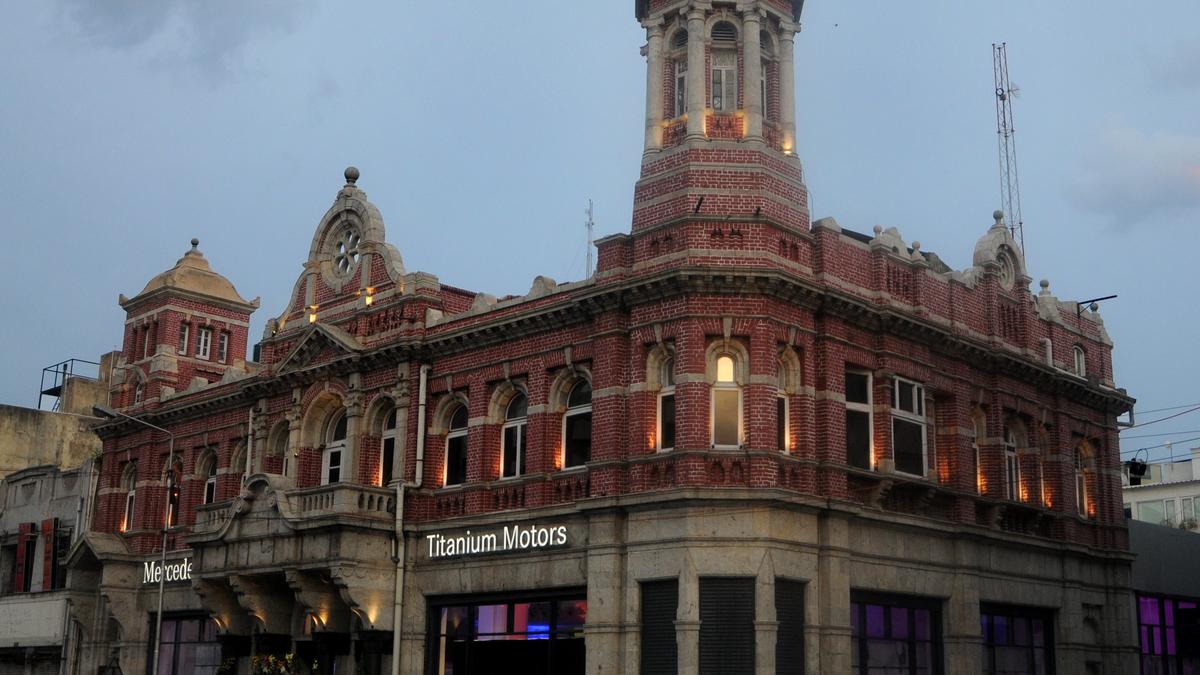
Heritage as climate strategy: how India’s old towns hold the key to resilient cities
The Hindu
Reimagine heritage cities to revive lost history and urban life, preserving cultural identity and addressing climate challenges.
A walk through the medieval streets of Mylapore, George Town, or Karaikudi reveals a lost history, where abandoned houses and institutions, built over a hundred years ago, now stand in disrepair. A reimagination of heritage cities by planning authorities, in collaboration with civic society, could rejuvenate these derelict neighbourhoods.
While newfound mobility and technology resulted in mega-cities with metros and automobiles, the medieval town, at its core, was often abandoned or subjected to densities far greater than it could absorb. Recognising this predicament, the First Master Plan of Chennai moved the inner-city markets and transport hubs to Koyambedu to decongest GeorgeTown and Parrys Corner. But it was not impetus enough to revive its heritage precincts.
Alexander Tzonis and Liane Lefaivre — architectural theorists, authors and historians, known for their interdisciplinary approach towards design theory, history, and political critique, leaving a lasting impact on architectural pedagogy and practice — discuss this urban phenomenon in the context of globalisation: how rapid urban growth has been responsible for large-scale constructions at the cost of losing identity through the erasure of historic precincts.
Professor Lefaivre believes cities across climatic regions are beginning to look alike, resulting in a loss of climate-responsive and site-specific spatial identity.
Most often, heritage buildings give way to uniform, hermetically-sealed and air-conditioned constructions, which rarely respond to climate.
However, in the face of adverse environmental conditions, cities across the world are recognising the value of heritage in a refreshingly new context. Medieval structures often reveal significant cultural and climatic features that hold lessons for responding to inclement weather patterns, whether urban heat or incessant monsoons.
Vernacular architecture, with its shade and natural ventilation elements, creates a cooler micro-climate.


Farmers of Kalakudi demand payment for paddy bags procured at DPC

BJP's seal on a 2019 Election Commission letter ignites controversy in Kerala, prompting claims of careless handling by CPI(M).

Transgenders go on rally condemning Transgenders Amendment Bill 2026

Supreme Court dismisses plea challenging Sonam Wangchuk's detention, noting the Centre revoked it on March 14, 2026.

Private medical shops in Telangana government hospitals face eviction due to expired leases and ongoing legal challenges, says Health Minister.

A.P. BIE Secretary reviews answer script evaluation, emphasizing transparency and accuracy to ensure error-free marking and timely results.

Join the walkathon in Puducherry to promote oral hygiene awareness and celebrate World Oral Health Day with community participants.

The ‘Swastha Mysuru’ initiative aims to promote healthy living and preventive healthcare in Mysuru through community engagement and awareness.

Farmers in Ongole protest against BJP's policies, citing dangers to their livelihoods and demanding support for local agriculture.

From March 24, paneer queserotta, prawn tostadas, beef birria and more feature on MadCo's special Mexican pop up menu by Chef Mathangi Kumar alongside experimental cocktails, including a marigold highball

Revenue Minister Krishna Byre Gowda defends subsidies as crucial for economic growth, emphasising their role in boosting consumer demand during recessions.

Three doctors were arrested by the Mico Layout traffic police on Monday (March 23) after a video allegedly showing them triple-riding without helmets with one of the pillion riders seen drinking from a bottle went viral on social media.

Assembly protest ends in arrests as BJP targets Government over guarantees