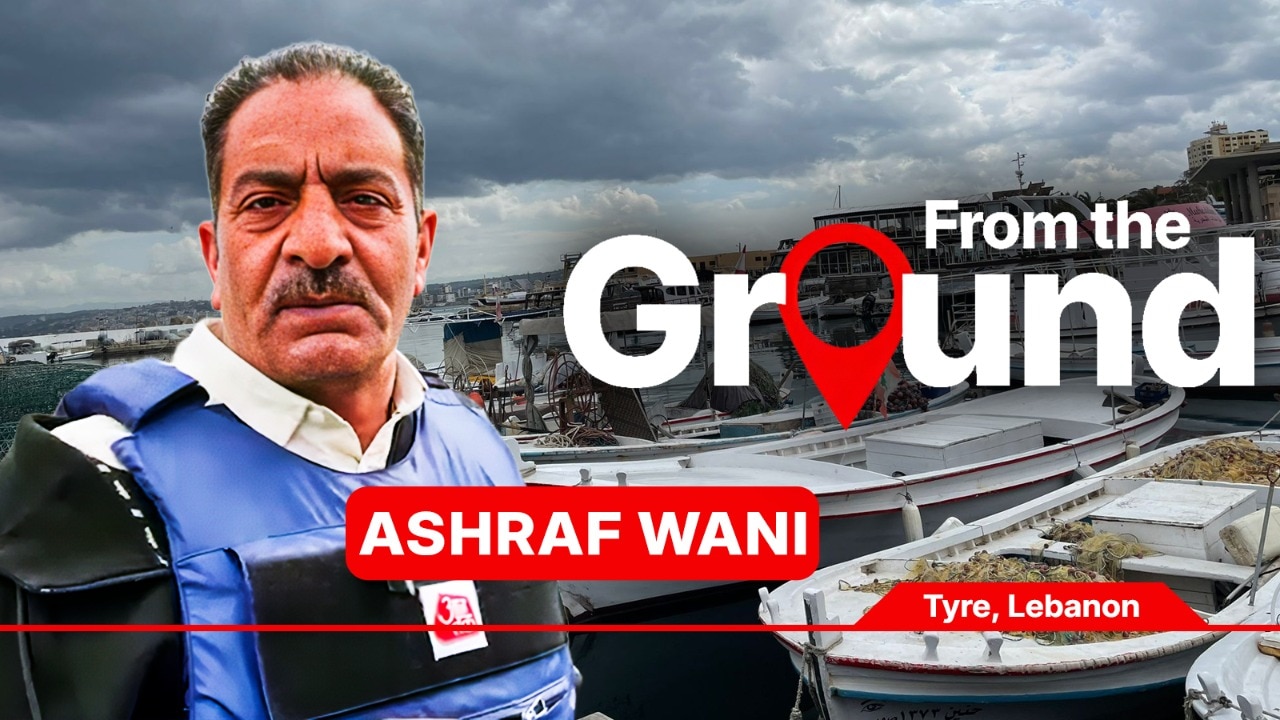
Ground report: Boats idle, no income as war hits Lebanese fishermen hard
India Today
Fishermen in south Lebanon's Tyre are facing immense financial hardship. The ongoing Israeli strikes and security curbs have cut them off from the sea, their only source of livelihood.
Along Lebanon’s southern coastline, fishing has long been more than just a source of income — it is a way of life passed down through generations. Today, however, that tradition is under serious threat as the ongoing conflict in the middle East disrupts access to the Mediterranean Sea, leaving hundreds of families in uncertainty.
From Saida to Naqoura, nearly 1,500 fishermen depend on the sea for their daily livelihood, according to local syndicate estimates. In the coastal city of Tyre alone, around 180 registered boats once headed out at dawn, supplying fresh fish to markets across the region. In Saida, more than 450 families rely entirely on fishing as their primary source of income.
But now, many of those boats remain docked. Fishing grinds to a halt due to Israeli strikes in south Lebanon. (India Today photo)
Ali, a local fisherman, says the situation has drastically changed in the last few weeks. "We used to go out every morning. The sea was our life," he explains. "Now, we just wait and hope things will change."
The disruption comes after Lebanon was pulled into the Middle East war due to the Iran-backed Hezbollah firing rockets and drones into Israel on March 2. This triggered heavy Israeli bombardment across the country. Ali, a local fisherman, is struggling to make ends meet due to the disruption. (India Today photo)
Israeli strikes have since killed more than 1,000 people in Lebanon and displaced over a million, according to Lebanese authorities. The conflict has compounded the economic strain on already vulnerable coastal communities.


Iran's Islamic Revolutionary Guard Corps (IRGC) Navy says that all vessels must coordinate with Iran's maritime authorities before entering the waterway. According to Iranian officials, this requirement has become stricter in recent weeks as security concerns grow in the region.

Pakistan, a country struggling to contain violence within and around its own borders, now wants to broker peace between the US and Iran. The contradiction is glaring.

According to the passenger, the auto driver was not just occasionally glancing at his phone, but "locked in," continuously watching short videos while driving.

Legal immigration to the US in 2025 has seen one of its sharpest declines since the pandemic. About 2,50,000 fewer visas in total were issued compared to 2024, reported The Washington Post. The drop has been global, but India stands out as one of the worst affected, alongside China. Visa approvals for the two countries fell by a combined 84,000.

Shradha Saini from Bengaluru has gone viral after sharing a detailed breakdown of her monthly expenses, calling it her "Gen Z lifestyle".


As reports suggest Saudi Arabia is pushing for a tougher stance on Iran, Trump's public praise of Gulf allies reveals shifting dynamics, and raises questions over how far the conflict could escalate.

Yogesh Yadav, climbed nearly 40 feet up the tower on Tuesday morning and refused to come down for several hours. He was later taken into custody.

Snubs, sarcasm and shifting power play - Iran's choice of JD Vance over Trump's trusted aides reveals a deeper mistrust, raising questions over who really controls the path to ending the war.

The video, originally shared on Rakesh Kumar's Facebook profile, shows him dragging a snake-like object tied to a rope across a platform that triggered fear and confusion among passengers present at the station.

From shutting US bases to controlling a key global oil route, Iran's demands in response to Trump's proposal set a steep stage for talks, but hints of flexibility quietly emerge behind the scenes.

Shantanu Deshpande recorded the moment from inside the workplace, spotlighting Akash Sharma, a supply chain intern, who casually broke into a set of pull-ups in the middle of a regular workday.
