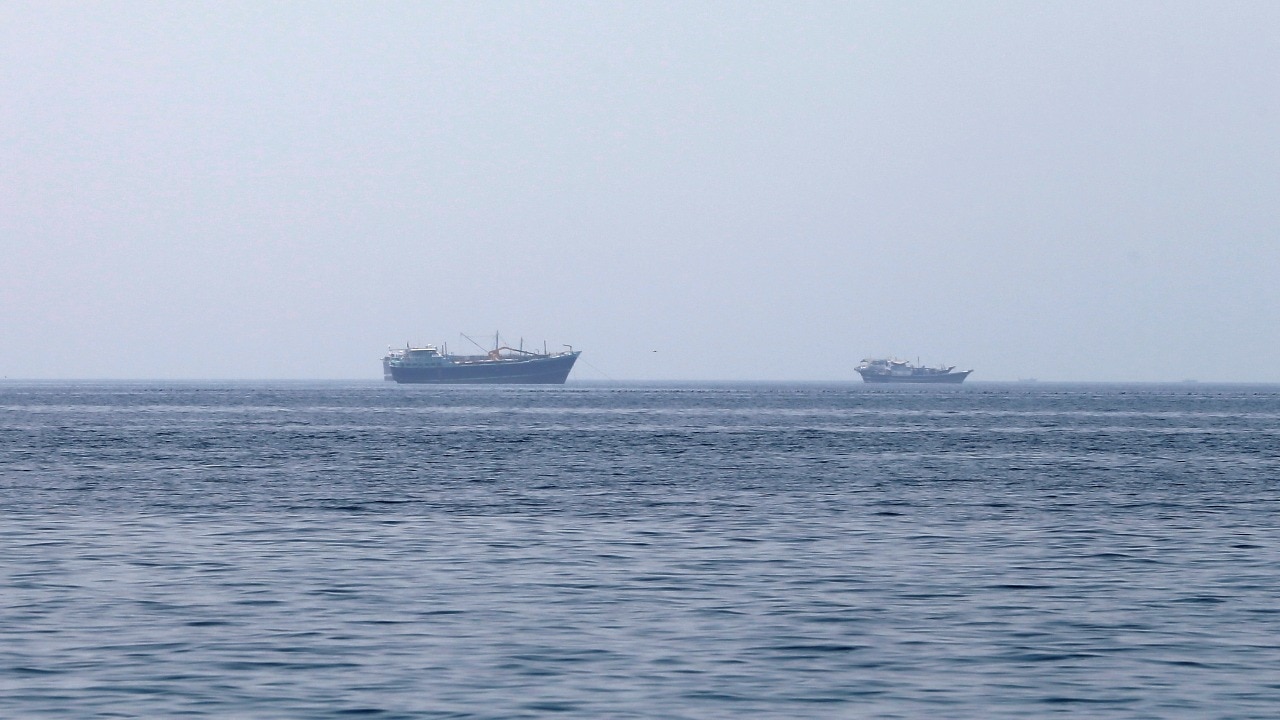
Iran turns back Pak-bound vessel in Strait of Hormuz over clearance violation
India Today
Iran's Islamic Revolutionary Guard Corps (IRGC) Navy says that all vessels must coordinate with Iran's maritime authorities before entering the waterway. According to Iranian officials, this requirement has become stricter in recent weeks as security concerns grow in the region.
Iran has stopped a Pakistan-bound merchant vessel from crossing the strategically crucial Strait of Hormuz, citing lack of required permissions. The vessel, identified as SELEN, was reportedly on its way to Karachi carrying food supplies when it was forced to reverse course near the entrance of the waterway. Iranian authorities said the ship failed to comply with mandatory legal protocols required for transit through the strait, which is one of the world’s busiest routes.
As the US-Israel war with Iran intensifies, Tehran has effectively blocked passage through the Strait of Hormuz, allowing only approved vessels to cross while restricting others amid ongoing tensions.
Iran’s Islamic Revolutionary Guard Corps (IRGC) Navy confirmed that the ship was denied passage due to procedural violations. In a post on X, Commander Alireza Tangsiri said, "The container ship SELEN was turned back by the IRGC Navy due to failure to comply with legal protocols and lack of permission to pass through Strait of Hormuz."
He added that all vessels must coordinate with Iran’s maritime authorities before entering the waterway. According to Iranian officials, this requirement has become stricter in recent weeks as security concerns grow in the region.
Tehran has maintained that only "non-hostile vessels" will be allowed safe passage, provided they fully comply with its regulations. In a statement, Iran’s mission in New York said such vessels must not be linked to any actions against Iran and must follow safety protocols set by Iranian authorities.
Iran’s Defence Council has also reinforced that passage through the Strait of Hormuz now depends on prior coordination with Iranian officials. The decision comes as Tehran accuses the US and Israel of continued military aggression, prompting a more assertive stance over its territorial waters.


From shutting US bases to controlling a key global oil route, Iran's demands in response to Trump's proposal set a steep stage for talks, but hints of flexibility quietly emerge behind the scenes.

Shantanu Deshpande recorded the moment from inside the workplace, spotlighting Akash Sharma, a supply chain intern, who casually broke into a set of pull-ups in the middle of a regular workday.


Oil and gas refineries and hubs are up in flames not just in the Middle East, but also in Russia and the US. Crude oil prices have surged over $100 a barrel. With the energy infrastructure in the Middle East likely to take years to be rebuilt, the world could be set for the biggest oil disruption in history.

The US has sent a 15-point proposal to Iran aimed at ending the Middle East conflict, including strict restrictions on its nuclear programme, halting support for proxy groups and reopening the Strait of Hormuz.

Trump says the war is already "won", but then points to his own defence chief as the man who did not want peace. Behind the victory claim lies a growing split inside Washington's war room.

Speaking at the White House, Trump said the United States was in contact with "the right people" in Iran and suggested that Tehran was eager to reach an agreement to halt hostilities. "We're in negotiations right now," he told reporters, without offering further details on the scope or format of the talks.

Casting doubt on the prospects of any immediate resolution, Jeffrey Sachs dismissed the idea of a near-term endgame.

Iran has issued a blunt warning to the US, threatening to sink US ships and paralyse the country if attacked. A senior official said any strike would trigger a "head for an eye" response, if US strikes on Iranian infrastructure.

The young aviator, Rishi, is seen confidently guiding the aircraft during a practice session at California's Oxnard Airport.

Lebanon's Ministry of Foreign Affairs said the decision was formally conveyed after Secretary-General Abdul Sattar Issa summoned Iran's chargé d'affaires in Beirut, Tawfiq Samadi Khoshkho. The ministry confirmed that Sheibani must leave Lebanese territory no later than March 29.

A US county judge, who made history as the first Indian-origin judge in Fort Bend, Texas, has been convicted of financial crimes. KP George, who traces his roots to Kerala, was found guilty of money laundering with prosecutors arguing he had misused funds intended for his election campaign.

A rare moment of peace between humans and wildlife was captured on IIT Madras campus by a research scholar and the wholesome video has over 10 million views.