Govt. approves eight new railway line projects
The Hindu
Union Cabinet approves 8 railway projects worth ₹24,657 crore to enhance connectivity, reduce logistics cost, and lower carbon emissions.
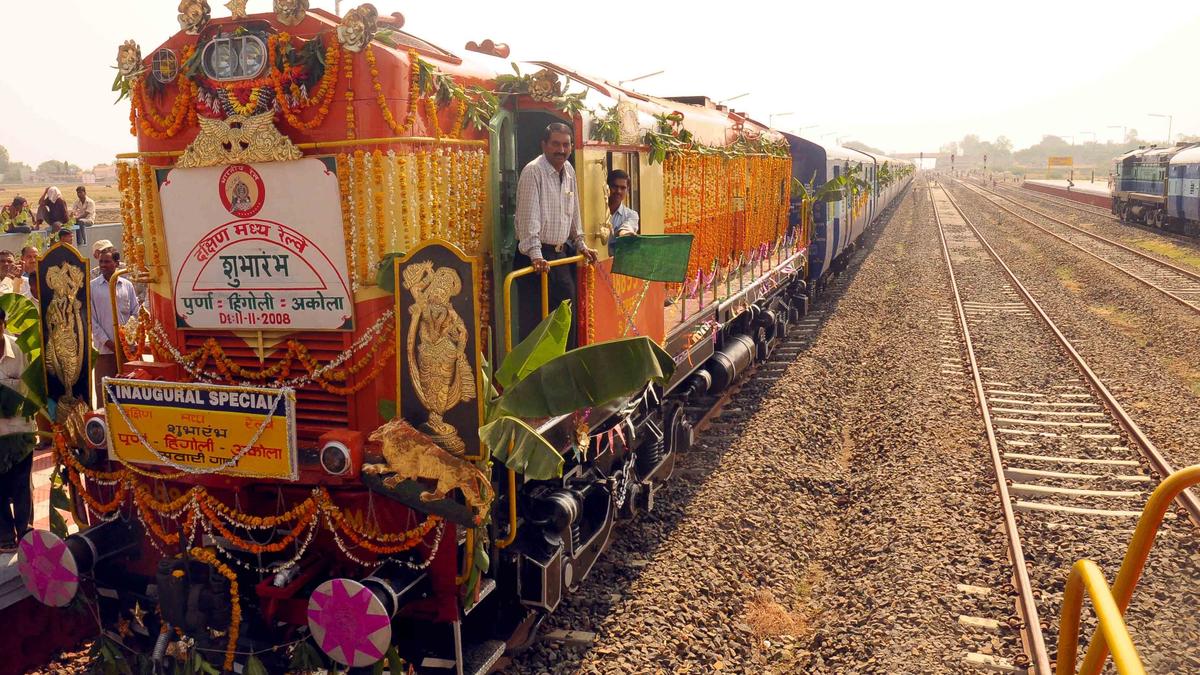
The Union Cabinet on Friday (August 9, 2024) approved eight new railway projects at an estimated cost of ₹24,657 crore to provide connectivity, facilitate ease of travelling, minimise logistics cost, reduce oil imports and lower carbon dioxide emissions.
Expected to be completed by 2030-31, the projects cover 14 districts in the seven States of Odisha, Maharashtra, Andhra Pradesh, Jharkhand, Bihar, Telangana and West Bengal, which will increase the existing network of the railways by 900 km.
The railway line routes include Gunupur - Therbubali (73.62 km) in Rayagada; Junagarh - Nabrangpur (116.21 km) in Kalahandi and Nabrangpur; Badampahar - Kandujhargarh (82.06 km) in Keonjhar and Mayurbhanj; Bangriposi - Gorumahisani (85.60 km) in Mayurbhanj; Malkangiri - Pandurangapuram (via Bhadrachalam) (173.61 km) in Malkangiri, East Godavari and Bhadradri Kothagudem; Buramara - Chakulia (59.96 km) in East Singhbhum, Jhargram and Mayurbhanj; Jalna - Jalgaon (174 km) in Aurangabad and Bikramshila - Katareah (26.23 km) in Bhagalpur.
With these projects, 64 new stations will be constructed providing enhanced connectivity to six ‘aspirational districts’ (East Singhbum, Bhadradri Kothagudem, Malkangiri, Kalahandi, Nabarangpur, and Rayagada) covering approximately 510 villages and comprising about 40 lakh population.
The proposed projects will improve logistical efficiency by connecting the unconnected areas and enhancing transportation networks, resulting in streamlined supply chains and accelerated economic growth, the Ministry of Railways said in a statement.
The projects will also generate direct employment for about three crore man-days during construction. The projects are a result of PM-Gati Shakti National Master Plan for multi-modal connectivity that have been possible through integrated planning and will provide seamless connectivity for movement of people, goods and services. Ajanta Caves, a UNESCO World Heritage site will be connected to the railway network, thereby facilitating a large number of tourists.
These are essential routes for transportation of commodities such as agriculture products, fertiliser, coal, iron ore, steel, cement, bauxite, limestone, aluminium powder, granite, ballast, containers, etc. The capacity augmentation works will result in additional freight traffic of magnitude 143 MTPA (million tonnes per annum).


TIMS Sanathnagar inauguration on Ugadi uncertain as construction, staffing gaps persist

Mumbai's water crisis escalates as corporators highlight irregular supply and reliance on costly private tankers amid administration neglect.

Explore the evolution of cooking fuels in Madras, from wood and coal to the rise of LPG, amid recent shortages.

Protests against the Sharavathi Pumped Storage Hydroelectric Project in the Western Ghats just got new life

51 couples take thebig plunge at Udaipur mass wedding event

A bridge collapse in Roop Nagar kills a woman; Delhi government forms a probe panel amid rising safety concerns.

Tribunal halts Colonel Purohit's retirement, pending promotion decision after his acquittal in the 2008 Malegaon blast case.

Pinarayi Vijayan launches his election campaign in Dharmadam, aiming for a third consecutive term amid tightening competition.

Delhi Speaker Vijender Gupta has written to Lieutenant-Governor Taranjit Singh Sandhu seeking directions to instal audible signals at traffic intersections across the city to ensure the safety of mobility-impaired individuals and senior citizens.

GVMC council concludes its five-year term, highlighting significant development projects and global events that enhanced Visakhapatnam's recognition.

Karnataka SC/ST Commission discusses internal reservation issues amidst confusion over reduced quotas for Scheduled Castes and Tribes.

President Droupadi Murmu serves Akshaya Patra’s 5 billionth meal, highlighting child nutrition and education at Rashtrapati Bhavan.

PM Modi and UAE President agree on ensuring safe navigation through the Strait of Hormuz amid regional tensions.