Goa’s Echoes of Earth festival pays an ode to the Western Ghats
The Hindu
The just-concluded Echoes of Earth festival in Goa seamlessly blended an immersive experience of music, Nature, conservation, and sunsets
Nestled amidst a lush forest at Chopdem Morjim in Goa, a line-up of over 40 international artistes perform live music on four uniquely-designed stages at sunset. The three-day Echoes of Earth festival celebrates the magic of music and the beauty of nature with focus on sustainability.
The stages include a dramatic ‘Big Beak’ modelled after the great Indian hornbill, a majestic grey-black-yellow bird of the Western Ghats and ‘The Kraken,’ which pays homage to the giant Pacific octopus. Built by Indian artist Siddharth Karawal, the stages are made from recycled junk and metal. Artist Muzammil Shairff’s ‘The Ghost’ crafted largely from sheets of metal carefully pieced together, honours the horned ghost crab, an inhabitant of the Indo-Pacific Ocean. And, a newly-introduced ‘Jungle Bar’ stage, designed within a jungle setting with lights glowing like fireflies, adds to the immersive ambience, enlivening the musical performances.
Known for its unique live music experiences, Echoes of Earth calls itself ‘India’s greenest festival,’ celebrating sustainability and conservation through art, music, and culture. Roshan Netalkar, founder and director of the festival is thrilled with the response this year. “Goa, which is home to rich ecosystems and biodiversity on one hand and a culture of international music and entertainment on the other, was the perfect destination for us,” he says, adding that a staggering 10,000 people showed up, with kids and pets in tow.
This year, a hyper-local theme, Ensemble of the Wild, celebrated India’s vibrant biodiversity hotspot, the Western Ghats, focussing on the interconnectedness of flora, fauna, habitats, and ecosystems. For example, the great Indian hornbill, largest of the four hornbill species found across the Western Ghats, plays a pivotal role in the ecosystem from seed dispersal to forest regeneration.
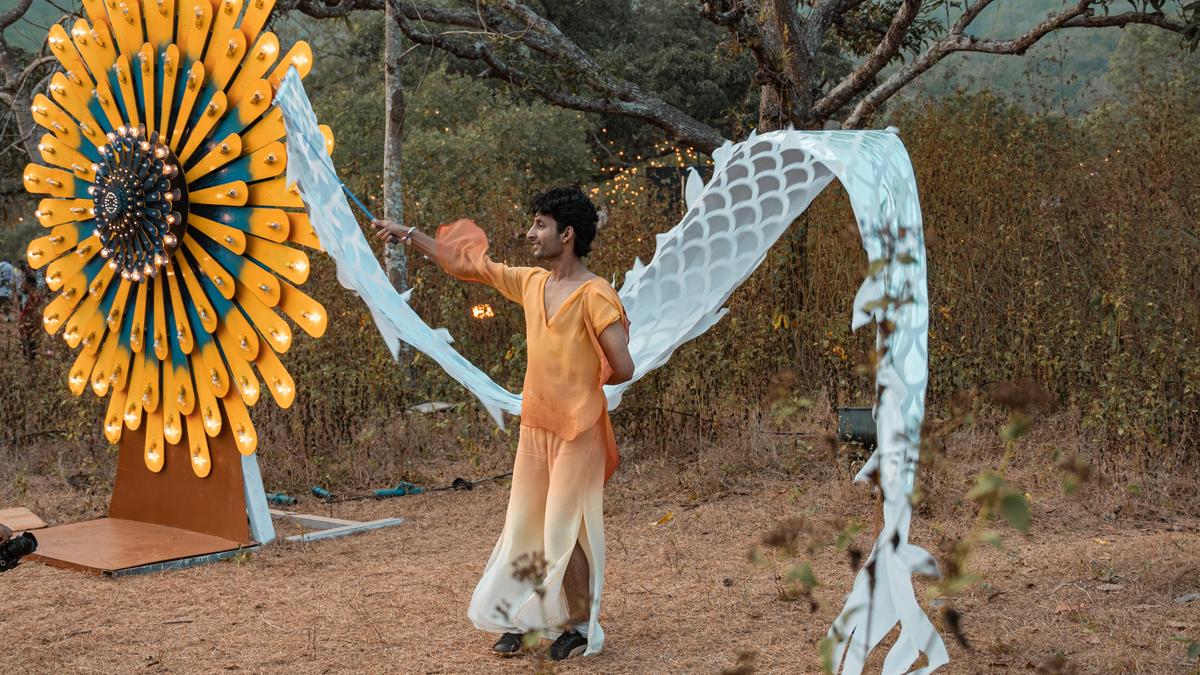
Since its inception, Echoes has collaborated with diverse visual and multimedia artists, transforming urban scrap and waste into larger-than-life stages and captivating art installations. Over 20 installations made of junk materials, from discarded cardboard to organic waste, such as leaves and branches, brought the space alive.
Artist Nirmal Kulkarni, who is also a herpetologist, presented the plight of the yellow-lipped sea krait, a venomous snake found in the Eastern Indian Ocean. Using recycled fishing nets along with fibre, iron bars and two upcycled motors (to show movement), he drew attention to the fact that sea kraits often get stuck in old nets while hunting for food.
Artist Jay Painter’s stunning humpback ocean dolphin, crafted using metal rods, e-waste, spray cans, and fabric, highlighted the growing pollution along the Goan coast, which is home to dolphins that feed sardines, mullets and mackerels. Sculpturist Yadhunandan constructed a praying mantis and olive ridley turtles from coconut leaves, metal, and bamboo. The artist collective, AltNative, built an Indian gaur using old tyre tubes, recycled waste and trash. And Akshay Manjrekar masterfully assembled the Malabar tree nymph butterfly, the state butterfly of Goa renowned for its large wingspan, using metal tubes, cotton cloth and synthetic resin.


Decorated homes, busy temples and shared feasts mark Ugadi in Hyderabad

Housing Minister seeks ₹260 crore to develop 50 slums for Karnataka's golden jubilee, urging CSR support for infrastructure enhancement.

Congress opposes VBSA Bill, citing constitutional overreach, State power encroachment, and politicization of higher education funding.

Hyderabad Airport wins Skytrax 2026 award for Best Airport Staff in India and South Asia for the fifth time.

General and Election Expenditure Observers assumed charge in Krishnagiri to monitor election processes and expenditure across six constituencies.

A detailed analysis of Puducherry’s evolving political landscape and election trends since 2011.

CPI(M) insists on six Tamil Nadu Assembly seats, while DMK offers five, causing a stalemate in alliance talks.

Unaccounted cash, articles worth ₹13.58 lakh seized in Tirunelveli in five days

Ugadi Asthanam at Tirumala temple celebrated with rituals, Vedic recitations, floral decorations, and grand festivities honoring the Telugu new year.

Srirangam temple offers herbal buttermilk and paanakam to devotees to help them stay cool during the summer heat.

VMRDA invites global bids for the Vizag Bay City project to develop a world-class integrated waterfront hub by 2026.

Civil society urges Amit Shah to direct police vigilance against open threats of communal violence in Uttam Nagar, Delhi.

PMK leader Anbumani blames alcohol and drug abuse for rising suicides in Tamil Nadu, criticising government inaction.