Gen Naravane memoir entered global markets before govt approval: Delhi Police
India Today
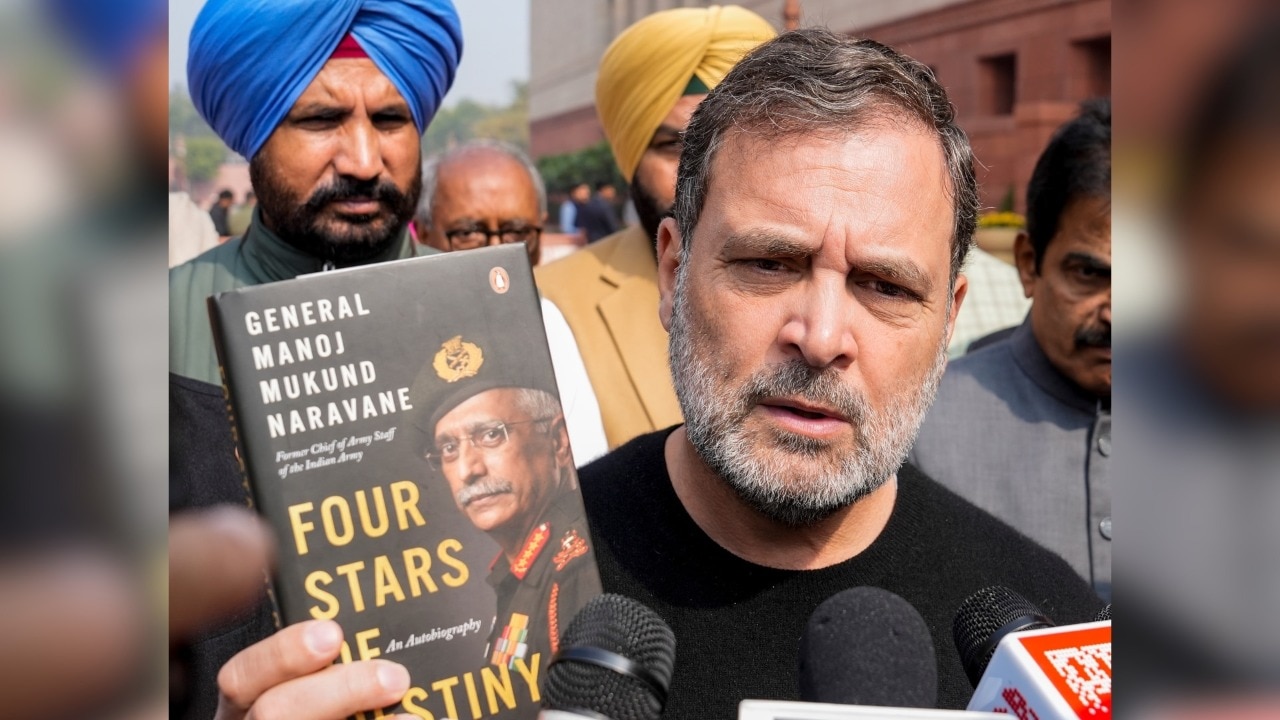
The controversy surrounding Naravane's memoir, which erupted after Congress MP Rahul Gandhi sought to cite it in Parliament last week, shows no signs of abating. The matter has now escalated into a police case, with an FIR registered after Gandhi was seen holding up a copy. The memoir is still awaiting mandatory clearance from the Defence Ministry and has not yet been officially published.
Amid the ongoing row over former Army Chief General MM Naravane’s memoir Four Stars of Destiny, the Delhi Police Special Cell has launched a multi-nation investigation into its alleged leak. According to sources, the book entered global digital markets before receiving the mandatory clearance from the Defence Ministry.
Preliminary findings have suggested that the leak was not an isolated act of piracy but a “planned and coordinated operation” that bypassed official approval processes meant for defence-related publications.
An FIR has been registered under criminal conspiracy charges, and investigators are now tracking digital and financial trails in the US, Canada, Germany and Australia, where the book was allegedly available online before clearance.
Investigators have found that the leaked version of Naravane's memoir was not only circulated internationally but was first made available online in foreign markets. Online sales were detected on platforms operating in the US, Canada, Australia and Germany.
Sources said the first upload of the leaked material was traced to a website using the “.io” domain extension — a country code top-level domain (ccTLD) originally assigned to the British Indian Ocean Territory and widely used by tech platforms and startups.
The content was subsequently mirrored across multiple hosting platforms.


India on Monday said it has not held bilateral talks with the United States on deploying naval vessels to secure merchant shipping in the Strait of Hormuz. The clarification came after US President Donald Trump urged countries to send warships to keep the strategic waterway open amid tensions with Iran.

After attacking his wife, Nafees attempted suicide by inflicting injuries on himself with the same scissors. Neighbours intervened after hearing the commotion and stopped him from taking his own life.

The victim, identified as Naitik Kumar, allegedly rammed his speeding Bullet motorcycle into a scooter near Janeshwar Mishra Park in Lucknow, triggering a crash that left him dead and two others injured.

RJD MLA who skipped Bihar Rajya Sabha poll voting cites mother's illness

West Bengal Chief Minister Mamata Banerjee led a protest march in Kolkata against the alleged LPG shortage, accusing the PM Narendra Modi-led Centre of failing to ensure adequate supply.

Himayani Puri, daughter of Union Minister Hardeep Singh Puri, has moved the Delhi High Court over "false and malicious" reports linking her to convicted sex offender Jeffrey Epstein.

The family, a resident of Thyagaraju Street in Punganur town, had recently repaired the engine of their two-wheeler vehicle. A local mechanic advised the family to keep the engine running overnight to "set" the newly installed parts. However, this turned out to be fatal for the family.

The Supreme Court closed criminal proceedings against Ashoka University professor Ali Khan Mahmudabad after the Haryana government said it would not grant sanction to prosecute him over social media posts related to Operation Sindoor.

Three Congress MLAs in Bihar are reportedly out of contact as voting for five Rajya Sabha seats is underway, with the INDIA bloc and the BJP-led NDA locked in a tight contest for the fifth seat that could hinge on cross-voting.

Bunty Solanki stabbed his wife to death following a quarrel at their residence in Vadodara's Bakrawadi area. Rita died on the spot.

The girl's family members were angered over the friendship, and as a result, they called Jadhav last Saturday evening and allegedly beat him.

External Affairs Minister S Jaishankar has said that direct talks with Iran to restore shipping through the war-hit Strait of Hormuz have yielded results, stressing that direct engagement with Tehran is the most effective way to address the disruption.

This moment comes days after the Supreme Court allowed Harish Rana to die with dignity – a historic first court-ordered case of passive euthanasia in India. The court acknowledged the medical opinion that Rana will never recover and that the tubes that feed him and keep him alive are only prolonging his pain.