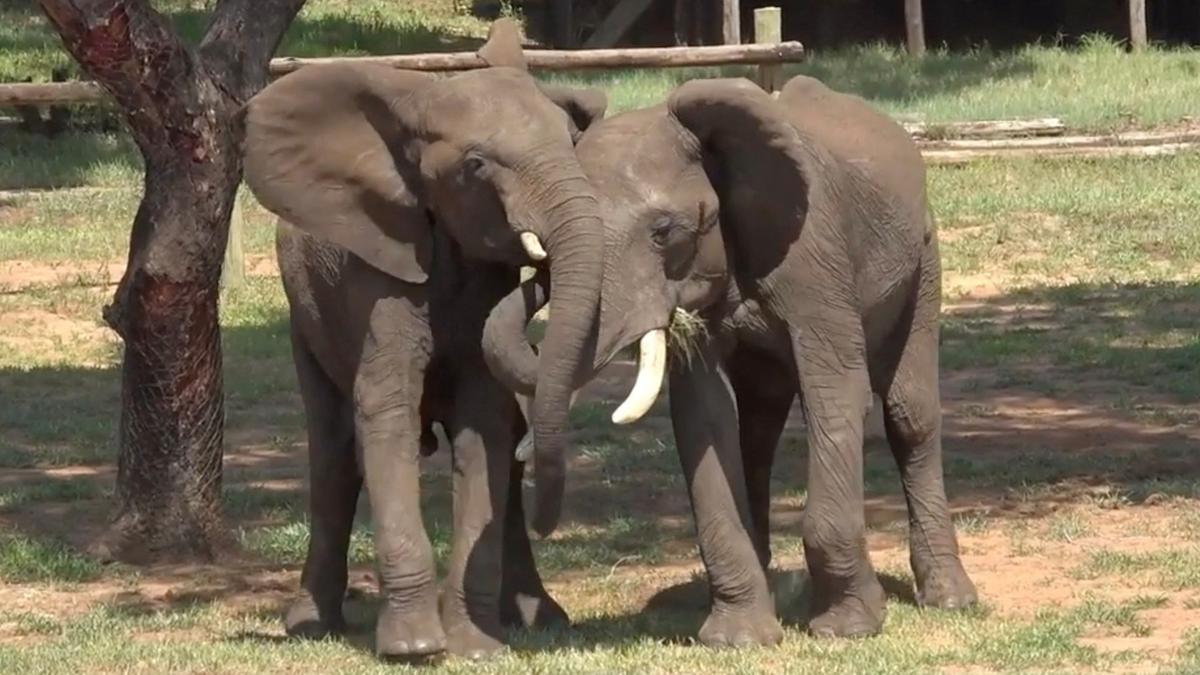
For elephants, like people, greetings are a complicated affair
The Hindu
A study based on observations of African savannah elephants in the Jafuta Reserve in Zimbabwe provides new insight into the visual, acoustic and tactile gestures they employ in greetings
People greet each other in a variety of ways. They might say "hello," "guten tag," "hola," "konnichiwa" or "g'day." They might shake hands, bump fists, make a fist-and-palm gesture or press their hands together with a gentle head bow. They might kiss on the cheek or hand. And they might give a nice big hug.
For elephants, greetings appear to be a similarly complex affair. A study based on observations of African savannah elephants in the Jafuta Reserve in Zimbabwe provides new insight into the visual, acoustic and tactile gestures they employ in greetings, including how greetings differ depending on factors such as their sex and whether they are looking at each other.
"Elephants live in a so-called 'fission-fusion' society, where they often separate and reunite, meeting after hours, days or months apart," said cognitive and behavioural biologist Vesta Eleuteri of the University of Vienna in Austria, lead author of the study published this month in the journal Communications Biology.
Elephants, Earth's largest land animals, are highly intelligent, with keen memory and problem-solving skills and sophisticated communication.
Female elephants of different family groups might have strong social bonds with each other, forming "bond groups." Previous studies in the wild reported that when these groups meet, the elephants engage in elaborate greeting ceremonies to advertise and strengthen their social bond, Eleuteri said.
Male elephants have weaker social bonds, and their greetings may function more to ease possible "risky reunions" - a hostile interaction. They greet mainly by smelling each other, reaching with their trunks, Eleuteri added.
The study detailed around 20 gesture types displayed during greetings, showing that elephants combine these in specific ways with call types such as rumbles, roars and trumpets. It also revealed how smell plays an important role in greetings, often involving urination, defecation and secretions from a unique elephant gland.


Mohamed Salah will leave Liverpool at season's end, concluding a remarkable nine-year tenure at Anfield.

Telangana CM to hold urgent meeting on March 25 to address petrol, LPG, and urea stock concerns amid rising demand.

Karnataka Minister announces efforts to resume separate Haj terminal at Mangaluru airport, pending Centre's approval.

Ahead of the Assembly election, DMK Youth Wing secretary and Deputy Chief Minister Udhayanidhi Stalin has tasked the party youth wing members with meeting young voters every day till the polling day to explain various achievements of the ‘Dravida model government’ to them.

Bird flu outbreak in Chhattisgarh's Bilaspur kills 4,400 chickens, prompting increased surveillance and culling measures.

Four queer activists discuss the repercussions of the Trans Amendment Bill 2026 on dignity and identity within the community.

Explosion in Ooty's Botanical Garden highlights Tamil Viduthalai Padai's protest against Hindi imposition and demand for Tamil Eelam.

Assembly polls 2026: Follow updates from The Hindu on the upcoming elections in five States on March 25, 2026

Royapuram faces urgent issues like livelihood security, affordable housing, and social welfare as residents prepare for the assembly election.

Long queues at Hyderabad fuel stations persist on March 25, 2026, as motorists face delays

ChatGPT maker OpenAI is offering private-equity firms a sweeter deal than rival Anthropic as both artificial intelligence companies court buyout firms to form joint ventures

Opposition parties criticize Delhi's budget as inflated and misleading, questioning transparency and funding for key initiatives.

Srirangam residents seek improved infrastructure and amenities to support rapid urbanization and growing tourism demands in the constituency.