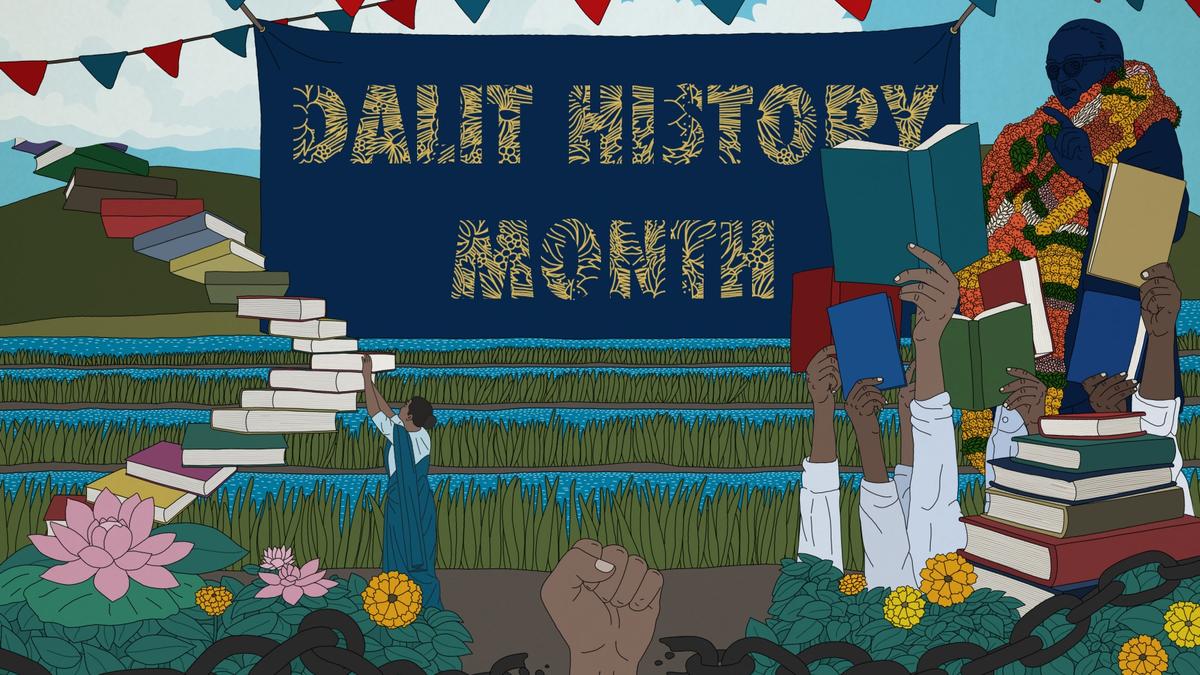
Dalit History Month: writers and artists recommend essential anti-caste books
The Hindu
Explore essential anti-caste books recommended by prominent Dalit writers and artists to celebrate Dalit History Month.
Every year since 2015, India has observed Dalit History Month to reclaim history through the perspectives of those long marginalised and oppressed.
Across the 20th and 21st centuries, Dalit writing has steadily grown, reshaping the literary landscape. A powerful canon has emerged in English as well as in many regional languages, articulating anger, despair, struggle, love, and resistance, while also giving voice to the innermost lives of people. These stories have become increasingly visible and widely read, aided in part by India’s growing culture of translation.
These are all stories of diverse individuals with distinct personhoods. Reading them matters not only because they reflect lived experience, but because they challenge dominant histories, which have often been written by those with cultural and economic power. Whether fiction or non-fiction, forms whose boundaries are often blurred, Dalit writing is visceral and unforgettable.
We asked some of India’s most remarkable Dalit writers and artists to recommend a book. The roots of Dalit literature continue to deepen and spread. What we have here is only a small glimpse of that vast and growing tradition.
“Writing on caste has been ubiquitous in the last decade. But only a fraction of it has come from writers from marginalised and oppressed caste backgrounds. Given the rapid transformation of caste into a stomping ground for several dominant caste anthropologists, social scientists, and historians eager to “study how the other lives”, one of the books I have enjoyed immensely is The Blaft Book of Anti-Caste SF (Blaft Publications). An anthology of short stories spanning science fiction, fantasy, and magical realism, this volume includes voices of caste oppressed writers as well as others who have incorporated anti-caste perspectives into their writing. The spectre of caste is so immense and all-encompassing that often, non-fiction alone fails to reach its farthest contours. This is where this delicious anthology comes in: naming feelings that often seem unnameable, identifying practices that resist categorisation, and drawing the reader into a world that caste-oppressed people inhabit all their lives — yet one that mostly goes unnoticed, or is wilfully ignored.”Yashica DuttJournalist, author, speaker
“Gail Omvedt’s Seeking Begumpura (Navayana) is a fascinating study of India’s anti-caste thinking. It examines the ideas of Bhakti saints such as Ravidas and Kabir, as well as reformers such as Jyotirao Phule and B.R. Ambedkar. The book presents an alternative history that highlights the voices and struggles of marginalised communities. What I liked most is how it links spirituality with social and political resistance. The concept of ‘Begumpura’, a utopian society free from caste, inequality, and suffering, is both inspiring and thought-provoking. Omvedt demonstrates that these visions were not just religious ideals; they were also strong critiques of social hierarchy. Her writing makes complex ideas easy to understand without oversimplifying them. This book provides a new viewpoint on Indian history, emphasises the importance of anti-caste thought, and encourages readers to think critically about equality and justice while introducing them to voices often ignored.”Somnath Waghmare Documentary filmmaker


MeeSeva centres in Telangana face criticism for overcharging citizens, with reports of corruption and agent exploitation of vulnerable individuals.

90-year-old Nelluri Seshagiriamma seeks Jagan's help, alleging illegal land-grab during Amaravati's land pooling process without fair compensation.

IIM Visakhapatnam earns five-year BGA accreditation, showcasing its commitment to impactful education and responsible management.

Pakistan's Defence Minister Khawaja Asif vows a "swift, calibrated, and decisive" response to any potential attack amid rising tensions.

Warangal faces monsoon flooding challenges while ambitious infrastructure projects aim to boost its growth and development.

NGT dismisses BRS leader's challenge to Telangana's Musi River Front Project, affirming compliance with environmental regulations.

C. Joseph Vijay blames both the Centre and State for LPG shortages while campaigning for the Tiruchi East Assembly election.

Mumbai suburbs experienced drizzle, possibly linked to a western disturbance, according to an IMD official's report.

Delhi HC orders removal of 'obscene' song by Honey Singh and Badshah, citing misogynistic lyrics and disregard for decency.

The Hindu Morning Digest gives a select list of stories to start the day. Read the top news today on April 3, 2026

Karnataka's decision to grade third-language papers signals a shift towards a two-language policy, easing student pressure amid political debate.

Parliament approves Jan Vishwas Amendment Bill, reforming 784 legal provisions to enhance business and support citizens and MSMEs.

Education Ministry designates NCERT as a deemed university, allowing it to offer degrees and courses under UGC guidelines.