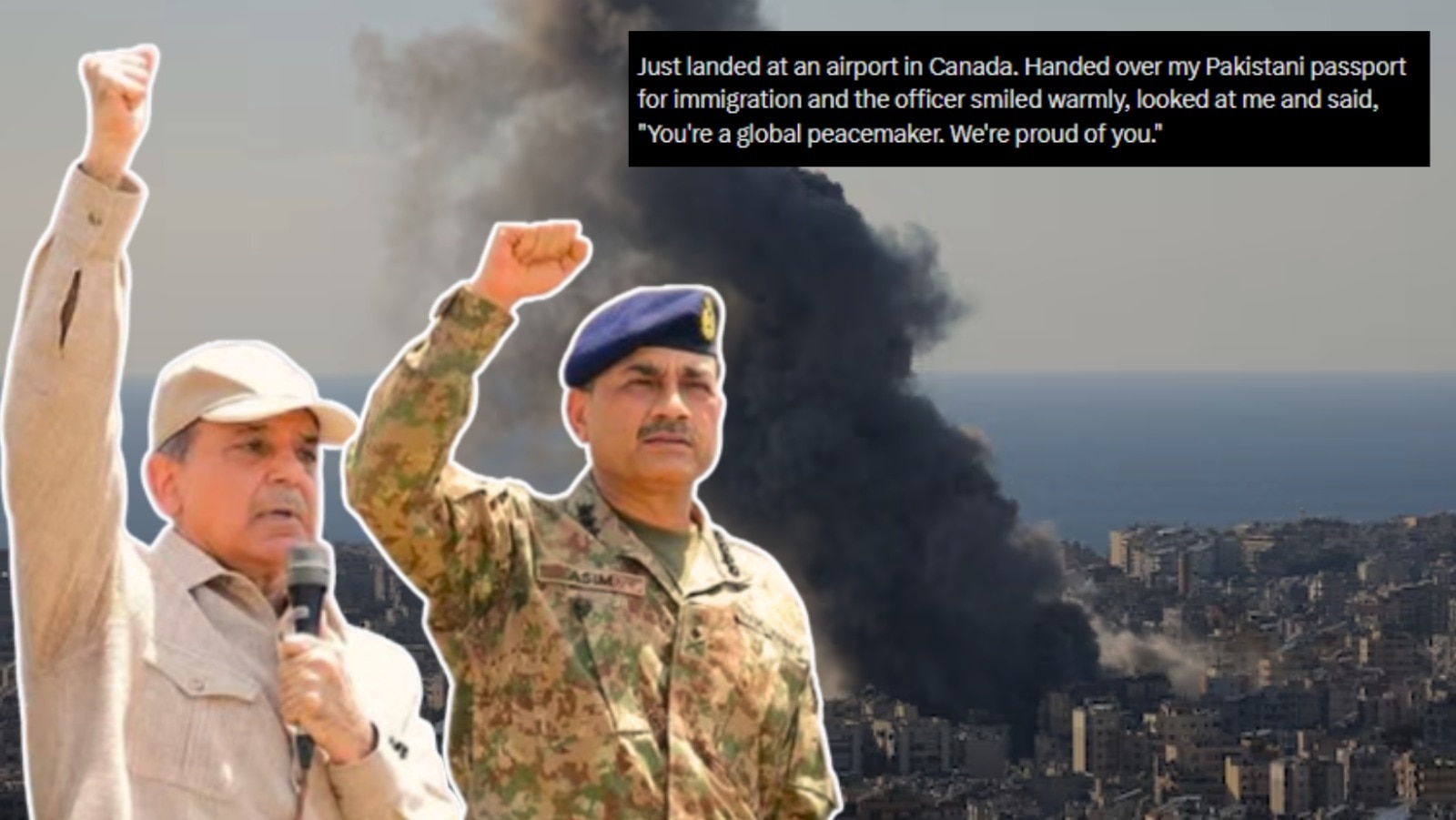
Did China just use Pakistan to secretly broker the most unlikely ceasefire in modern history?
India Today
Pakistan's dramatic rise as mediator in the US-Iran war has stunned the world. But behind Islamabad's remarkable diplomatic moment sits a far more powerful and far more deliberate hand.
Pakistan just did something that made the entire diplomatic world stop and stare. Islamabad is actively brokering a ceasefire between the United States and Iran, two powers that have spent months exchanging threats, strikes, and ultimatums with no sign of stopping. The country that spent years on every Western watchlist, treated as an unreliable partner at best and a dangerous one at worst, now sits at the most consequential negotiating table on earth. It is extraordinary. It is also not the whole story.
Behind Pakistan's remarkable diplomatic moment sits China, quiet, deliberate, and almost entirely invisible. Beijing did not stumble into this role. It chose it with the kind of patience that has become its defining characteristic in global affairs.
How Pakistan got here
Pakistan's emergence as a trusted mediator did not happen overnight. Islamabad spent years repositioning itself as a regional deal maker, first in Afghanistan, then gradually across the broader West Asian security order. It was not new to the business of negotiation. It simply lacked a stage big enough to matter.
Then two things happened almost simultaneously. Donald Trump publicly warmed to Islamabad, handing Pakistan a narrow but real window of credibility with Washington. And Pakistan's own near-war experience with Iran in 2024, a dangerous tit-for-tat exchange of cross-border strikes that nearly spiralled beyond control, gave Islamabad a firsthand understanding of exactly how quickly a skirmish becomes a catastrophe. Pakistan did not just want this ceasefire. It needed one.


"Iran managed to withstand a confrontation with the United States, and that in itself is a significant achievement."

In 2025, Pakistan needed a face-saving exit as India pounded its air bases during Operation Sindoor. Then, it desperately reached out to the US. A year later, the US needed an exit in Iran. Pakistan provided it. A classic case of you scratch my back, and I will scratch yours.

A man shared how Wikipedia's "nearby" feature turned his surroundings into a map of hidden stories, sparking curiosity across the internet.

The US has not conducted a draft since the Vietnam War, but rising global tensions, including the ongoing Iran conflict, have renewed focus on preparedness.

While Pakistan is looking to be seen as the mediator that pulled the US and Iran back from the edge, it is itself sitting in China's Urumqi, looking for a way out of its own "open war" with Afghanistan.

A UK-based founder shared the four things that were the driving force behind his company's work culture, and how he tackled burnout through them.

During his two-day trip, Bangladesh Foreign Minister Khalilur Rahman held talks with India's External Affairs Minister S Jaishankar and Petroleum and Natural Gas Minister Hardeep Singh Puri, including on energy cooperation.

Delhi Airport has reacted to concerns over missing stray dogs Dholu and Kaddu at Delhi Airport, with activists and users questioning authorities and fuelling a debate on animal welfare.

Israel's Ambassador to India, Reuven Azar, questioned Pakistan's credibility despite US outreach, even as Lebanon reeled from its deadliest day in the current Middle East conflict.

In the middle of the two-week truce between the United States and Iran, Donald Trump issued fresh threats against Tehran.

Iran has directed ships to use alternate routes in the Strait of Hormuz, citing sea mine risks, while allowing limited transit under a two-week truce and advising coordination with IRGC Navy forces.

Following the two-hour meeting, Rutte acknowledged strains within the alliance, describing the exchange as candid but constructive, even as divisions over the conflict with Iran came into clearer focus.

Trump sends a Vance-led team to Pakistan for US-Iran talks starting Saturday, as Washington rejects earlier Iranian proposals but signals progress after a revised plan aligned with US demands.