‘Dhurandhar: The Revenge’ and the perils of ‘nationalist’ violence Premium
The Hindu
"Dhurandhar: The Revenge" exemplifies how films propagate a violent nationalism, reshaping Indian identity and undermining democratic values.
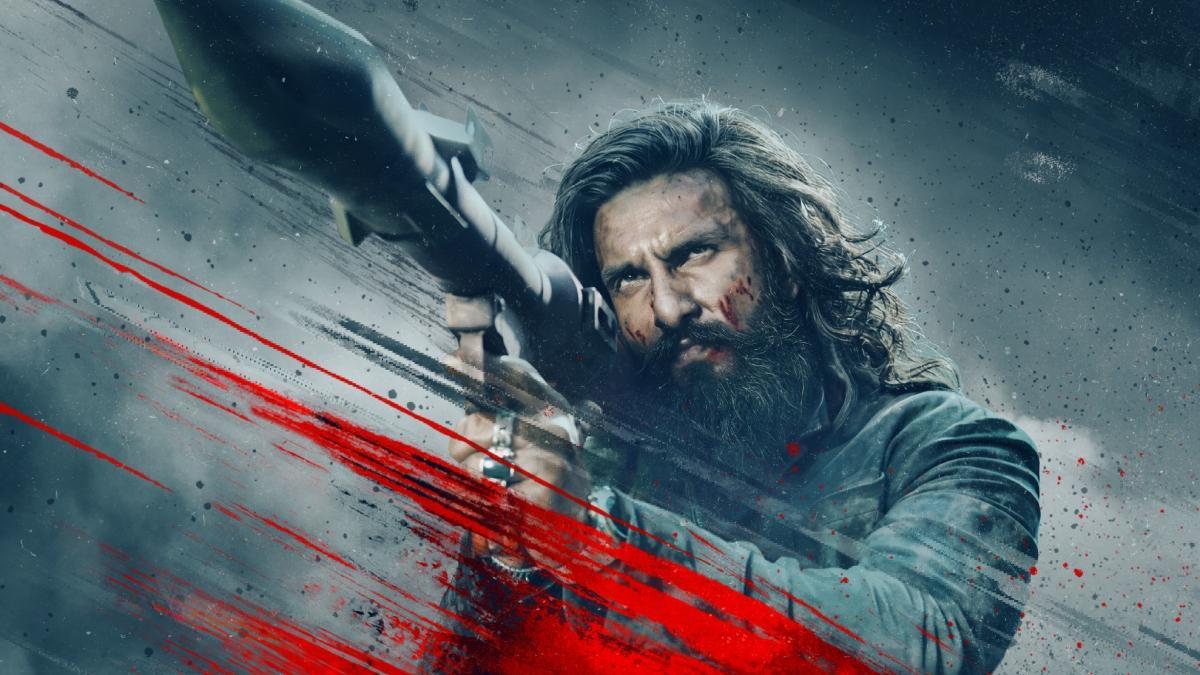
With Dhurandhar’s second part, it is as if director Aditya Dhar wanted to prove his critics right, and not wrong. With the first part there was a huge backlash against the few critics who had called it propaganda. Now, even ardent fans find it difficult to deny that the sequel is propaganda as the political messaging is no longer subtle.
This propaganda is not in favour of the state, like many Hollywood films, but in favour of the ruling party, thus collapsing together the state and the party. Nevertheless, the label “propaganda” is hardly novel in a Bollywood climate suffused with propagandist productions. What is more critical, in a political reading, is that films such as Dhurandhar are enabling the construction of a new kind of Indian citizen, in which a narrowly defined nationalism is the only virtue and is also indissolubly associated with violence. This has grave implications for culture as well as democracy.
When the chief antagonist, a barbaric ISI figure Major Iqbal (Arjun Rampal) who wants to commit unspeakable horrors on Indians, is told by his father: “You said your people would win again this time, didn’t you?” against the backdrop of the 2014 visual of the oath-taking of Prime Minister Modi, the film is emphatic about labelling the main opposition in the world’s largest democracy, the Congress party, as an ally of the terror-sponsoring Pakistani state.
When the film portrays demonetisation as a masterstroke against Pakistani production of Indian fake currency, it seeks to rewrite history. After all, demonetisation led to the deaths of over a hundred people, did not eliminate terrorism or black money (99.3% of currency was returned to the banks), devastated the vast informal sector and brought down India’s GDP growth rate from 8.3% (2016) to 3.9% (2019). For a film that is lauded for showing real events, many of the terrorists and gangsters were killed, unlike depicted, before 2014.
As histories are being blatantly rewritten for explicitly militarist-nationalist causes, the film ends with an actual Army motto, ‘Balidan Param Dharm.’ Here, every male citizen is encouraged to perform what sociologist Klaus Theweleit — who studied male fantasies and Nazism — would call as “soldierly masculinity.”
After all, the film is unabashed when a lead character Ajay Sanyal (R. Madhavan playing Ajit Doval) tells the protagonist Jaskirat/Hamza (Ranveer Singh): We are men… we are meant to fight. For our cause. For our dreams. For our rights. For our family.” Unsurprisingly, the female lead, Yalina (Sara Arjun), gets around 15 minutes of screen time in the four-hour film as her husband sets out exacting revenge for all the nation’s wounds.


"Dhurandhar: The Revenge" exemplifies how films propagate a violent nationalism, reshaping Indian identity and undermining democratic values.

BJP’s junior ally in Assam, AGP, gets the same number of seats to contest as last time, but a granular analysis reveals slipping ground

Parliament Budget Session LIVE: Follow The Hindu for the latest updates on the Budget Session on March 24, 2026.

At Amar Khamar in Kolkata, a lunchroom rooted in Bengal’s landscape and literature works with women farmers, Sundarbans’ communities and beekeepers to revive rare rice, heirloom ingredients and disappearing food traditions

Delhi experiences a cooler morning at 16.6°C, with daytime temperatures expected to exceed 30°C and moderate air quality.

Know all about Assam's political landscape ahead of the 2026 Assembly Elections, analysing voting trends, turnout, and party dynamics.

Members of LGBTQIA+ communities held protests across Karnataka, categorically opposing the recently proposed Transgender Persons (Protection of Rights) Amendment Bill, 2026.

Congress criticises Modi government, citing reports about Pakistan's diplomatic role amid U.S.-Iran tensions, labelling it a setback for India.

Folk music with the Barmer Boys that crosses all boundaries

Tamil comic blockbuster Thaai Kizhavi releases on JioHotstar this week, as actress Radikaa Sarathkumar rewrites rules on pay, age, and women in Tamil films

"The jury has difficulty coming to a consensus regarding one defendant, do you have any advice on how to move forward?" the jurors told Judge Carolyn Kuhl

Maharashtra relocates 25 leopards to Gujarat's Vantara facility amid rising leopard and tiger populations, says Forest Minister Naik.

Assembly polls 2026: Follow updates from The Hindu on the upcoming elections in five States on March 24, 2026