At this Kolkata lunchroom, taste forgotten rice, rare fish and lost flavours
The Hindu
At Amar Khamar in Kolkata, a lunchroom rooted in Bengal’s landscape and literature works with women farmers, Sundarbans’ communities and beekeepers to revive rare rice, heirloom ingredients and disappearing food traditions
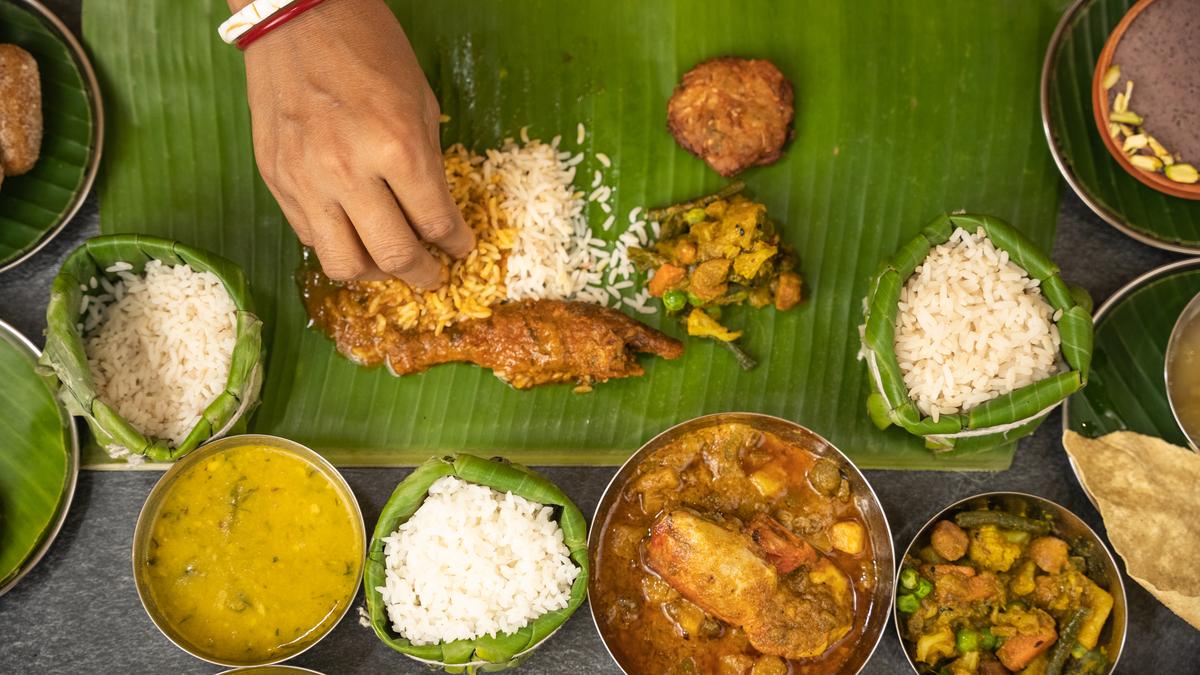
At Amar Khamar lunchroom, the kolapata (green banana leaf) is glossed with steam from nearly forgotten rice varieties such as daadkhani and harinakhuri.
What follows is a procession of dishes: mutton slow cooked with chui jhal (piper chilli), fritters of kulekhara (marsh barbel) leaves, a chochchori (a mash) of carp entrails and peas. Each grain, fish, and leaf carries the soil it comes from — birthed, foraged, found, and sometimes rediscovered after years of silent disappearance. Diners halt conversations mid-sentence and prompt startled recognition: “Isn’t Daadkhani from Jogindranath Sarkar’s children’s poems? We never knew it was an actual rice variety.”
This is a map of Bengal served on a plate.
Khichuri tasting platter | Photo Credit: Special Arrangement
Amar Khamar’s ingredient-led table traces the geography of Bengal’s floodplains, forests, ponds, and paddy fields – a land whose fertility has produced countless varieties of rice, lentils, greens, and fish, surviving mostly in old poems, stories, and oral recall. Founded by Sarah Gekeler and Sujoy Chatterjee, the Amar Khamar Lunchroom treats sourcing as an act of reverence for the soil, the farmer, and the slow labour that precedes the meal.
Women working in the fields | Photo Credit: Special Arrangement


Members of LGBTQIA+ communities held protests across Karnataka, categorically opposing the recently proposed Transgender Persons (Protection of Rights) Amendment Bill, 2026.

Congress criticises Modi government, citing reports about Pakistan's diplomatic role amid U.S.-Iran tensions, labelling it a setback for India.

Folk music with the Barmer Boys that crosses all boundaries

Tamil comic blockbuster Thaai Kizhavi releases on JioHotstar this week, as actress Radikaa Sarathkumar rewrites rules on pay, age, and women in Tamil films

"The jury has difficulty coming to a consensus regarding one defendant, do you have any advice on how to move forward?" the jurors told Judge Carolyn Kuhl

Maharashtra relocates 25 leopards to Gujarat's Vantara facility amid rising leopard and tiger populations, says Forest Minister Naik.

Assembly polls 2026: Follow updates from The Hindu on the upcoming elections in five States on March 24, 2026

Delhi's per capita income is projected to grow 7.09% by 2025-26, highlighting the city's economic progress and infrastructure challenges.

Review meeting held in Dharmapuri with election observers and nodal officers to discuss upcoming Assembly elections.

Execution of development projects, infrastructure augmentation to occupy centre stage in electioneering

Telangana Cabinet approves Hate Speech and Parents Support Bills, ensuring accountability for neglecting elderly and curbing hate-driven offences.

EU and Australia finalize a free trade agreement and establish a new defense partnership to enhance economic and military cooperation.

U.S.-Israeli war on Iran LIVE: Iran faces deadline of US President Donald Trump warning to open Strait of Hormuz. Follow The Hindu for more LIVE updates on March 23 2026 on Iran-Israel war.