Decoding Iran’s energy sector: Surviving without thriving under sanctions regime Premium
The Hindu
In the present-day context, when both regional and global order is being reshaped, Iran’s growing confrontation with the United States and Israel continues to shape the current regional security narrative.
The centrality of Iran in West Asian affairs cannot be ignored. Iran’s strategic location, huge energy resources, and its assertive role, particularly in the region, have always attracted international attention. In the present-day context, when both regional and global order is being reshaped, Iran’s growing confrontation with the United States and Israel continues to shape the current regional security narrative.
For over four decades, Iran has operated under one of the most complex and sustained sanctions regimes in the world. What began as targeted post-1979 restrictions evolved into a dense architecture of U.S., European Union (EU), and United Nations (UN) measures addressing Iran’s nuclear programme, ballistic missiles, regional activities, and financial networks. The present article is an attempt to examine Iran’s energy potential and how it manages to trade despite U.S. sanctions.
What are the key challenges faced by Iran to realise the full potential of its huge oil and gas reserves? It is argued that despite America’s ‘Maximum Pressure’ policy, Iran has been able to survive without thriving under the sanctions regime. It has crafted various ways and means to circumvent the sanctions, thus mitigating the negative impact on its economy. The Iranian leadership has come up with its ‘Maximum Resistance’ strategy to counter the Maximum Pressure policy. This article also unpacks trade beyond hydrocarbons to explain the toolkit adopted by Iran to manage its overall economic challenges.
This article is from The Hindu e-book. Iran: Revolution in retreat
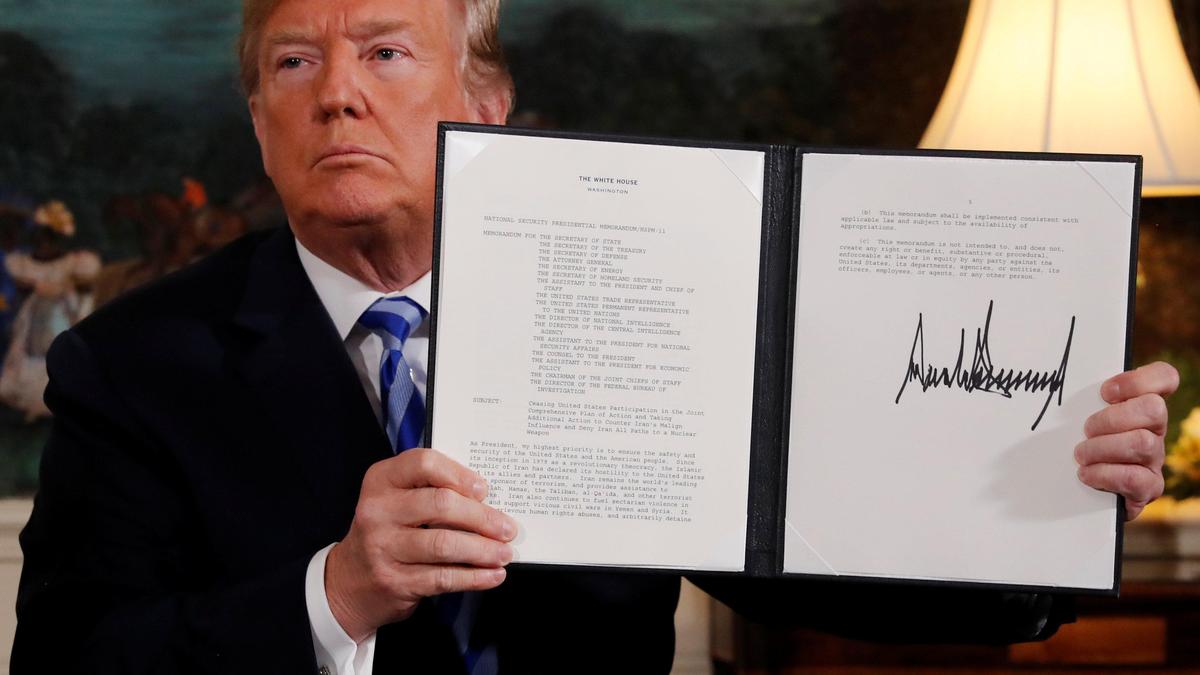
Following the U.S. withdrawal from the Iran nuclear agreement, formally known as the Joint Comprehensive Plan of Action ( JCPOA), in 2018, President Donald Trump imposed comprehensive sanctions against Iran, targeting the country’s core banking system, oil imports, and conduits to the global financial system. The most arduous sanction of all is preventing Iranian banks from using the Belgium-based Society for Worldwide Interbank Financial Telecommunication (SWIFT) network, the largest electronic payment network in the world.
The International Monetary Fund (IMF) reports suggest that Iran’s main source of revenue, its oil exports, dropped from 2.5 million barrels a day to almost zero between 2018 and 2020, and its currency hit record lows. More than 100 major foreign companies withdrew from the Iranian market or cancelled investments since 2018, leading to a loss of tens of billions of dollars in investment.


Pakistan has asked Saudi Arabia to route oil supplies through the Red Sea port of Yanbu after the closure of the Strait of Hormuz disrupted shipping.

Iranians gather in Tehran for a three-day farewell ceremony for late Supreme Leader Ayatollah Ali Khamenei.

The relationship between Iran and Israel is one of the most complex and determining relationships in the West Asian region. This article is from The Hindu e-book. Iran: Revolution in retreat

U.S. orders non-emergency consular staff and families to leave Karachi and Lahore due to security concerns, maintaining Islamabad embassy status.

With just 100 days to go, the World Cup faces challenges from the Iran conflict and rising violence in Mexico.

China seeks U.S. dialogue while asserting its red lines amid delicate relations ahead of a key summit.

Russia and China block U.S. UNSC Programme of Work over Iran, highlighting tensions in the Security Council's dynamics.

Airline ticket prices rise sharply on Asia-Europe routes due to Gulf airport closures amid escalating regional tensions.

Wang Dong discusses Beijing's perspective on the U.S. and Israel's military actions in Iran and their regional implications.

Billy Leon Kearse was executed in Florida for the 1991 murder of police officer Danny Parrish during a traffic stop.

Shorts News:Watch: ‘Worst case is replacing Iranian leaders with someone no better!’ - Trump

With Iran targeting U.S. bases in other countries in the West Asian region, the U.S.-Israel attack has created a massive ripple effect extending well beyond the region, threatening global energy security.

Iran-Israel war: Follow the latest updates on the West Asia war, on March 4, 2026