Confident of achieving e-highway target by 2027, says NHEV official
The Hindu
Game-changing green fuel charging stations with hydrogen capabilities to be set up on 5,500 km e-highway across India.
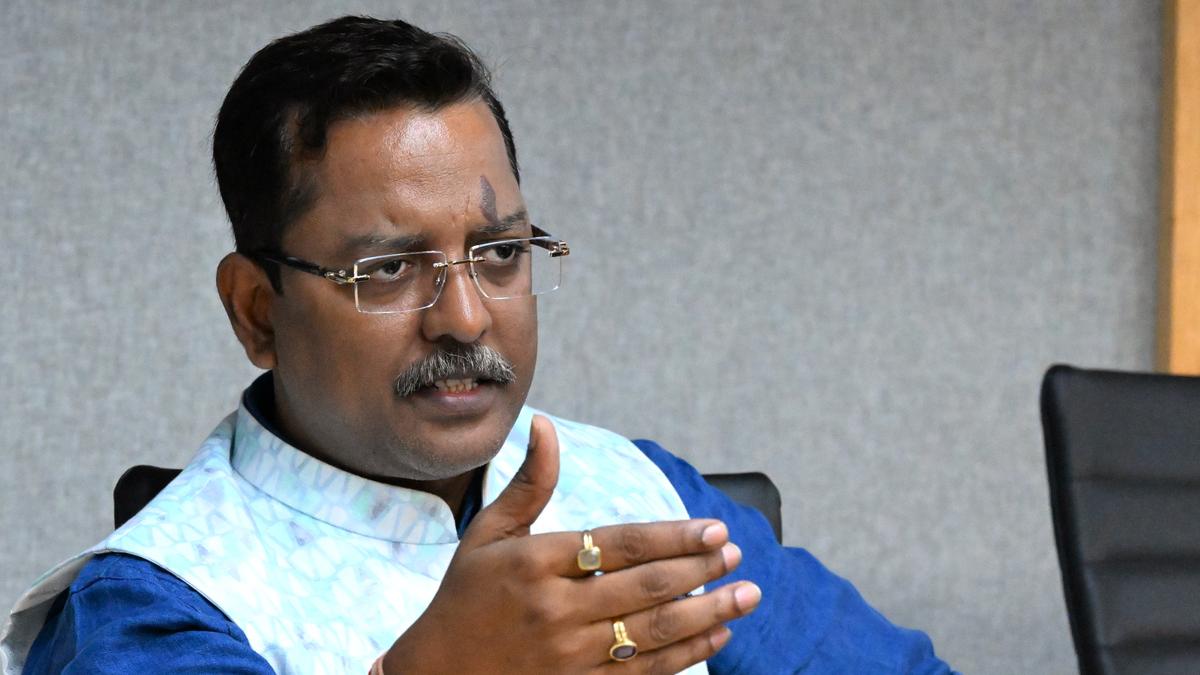
The third-generation ‘green fuel charging stations’, to be set up on a 5,500 km-stretch across 28 cities, will be a game changer as they will have hydrogen dispensing capabilities, apart from grid, solar and wind power, said Abhijeet Sinha, Project Director, National Highway for Electric Vehicles (NHEV).
Mr. Sinha, who is also the National Programme Director for Ease of Doing Business (EODB), was in the city to witness the demonstration of a Solid State Transformer (SST) and inauguration of a Power Electronic Lab at Lotus Wireless Technologies India Pvt. Ltd., at Aganampudi.
The green fuel charging stations will be established under the Bharatmala and Sagarmala projects in tune with Prime Minister Narendra Modi’s vision to achieve net zero carbon emissions by 2030. The charging infra set-up has been proposed to match the compliance reduction. This reform is intended to reduce the bottlenecks in implementation and boost the speed of adoption of e-mobility, Mr. Sinha told The Hindu.
The pilot project, covering 500 km in two stretches between Delhi-Agra and Delhi-Jaipur, was completed successfully. Of the remaining 5,000 km, the tech-trial run for the 332-km Chennai-Trichy stretch was completed in September this year. The other stretches, where work is in progress, are Chennai-Visakhapatnam and Visakhapatnam-Bhubaneswar.
The total cost for the upgradation of National Highways and Expressways into 23 e-Highways nationwide will be around ₹5,500 crore, of which the infra cost would be ₹3,762 crore. “The charging stations, to be funded by the Government of India, would be allotted on the PPP model,” Mr. Sinha said.
These stations will have hydrogen vending capabilities and robust charging infrastructure for EV cars, buses, two-wheelers and three-wheelers. “The 3,200 kw capacity charging stations would generate 800 kw each of solar, wind and hydrogen power apart from supplying 800 kw to the fossil grid.”
“The surplus power generated by the solar and wind systems during the day time can be stored as liquid hydrogen,” he said.


Supreme Court quashes copyright case against filmmaker Sujoy Ghosh over 'Kahaani 2,' overturning previous court rulings.

G. Sudhakaran announces his campaign against Minister R. Prasad in Cherthala, citing unwarranted remarks and party value erosion.

Union Minister Jayant Chaudhary received a death threat from an unknown caller, leading to a police investigation and security review.

Villivakkam faces civic challenges despite infrastructure improvements, with residents demanding better healthcare, transport, and green spaces ahead of elections.

Explore the struggles of Konaseema women lured by Gulf job promises, facing exploitation and seeking safe repatriation.

CM Stalin accuses the Opposition in Tamil Nadu of being controlled by Delhi, stressing the need for state autonomy in upcoming elections.

BRS legislators protest Telangana's unfulfilled Congress promises before the 2026-27 budget presentation, demanding accountability for the Six Guarantees.

Join the Irular community in Mamallapuram to celebrate Masi Magam, reconnecting with their culture and traditions on the seashore.

Women in India face stigma, delayed diagnosis, financial barriers, and discrimination throughout their tuberculosis journey.

CPI(M) leader in Kerala faces charges for alleged sexual relations under false marriage promise, leading to woman's suicide attempt.

Chennai-based Harry MacLure has started a petition to help take his latest film, Calcutta, I’m Sorry, showcasing the talent of the Anglo-Indian community to a global audience

Legendary director Mani Ratnam is teaming up with Vijay Sethupathi and Sai Pallavi for his next film. The movie is produced by the filmmaker’s own Madras Talkies and Lyca Productions

Humayun Kabir claims a Muslim Chief Minister or Deputy CM is possible in West Bengal's upcoming elections, shaping political dynamics.