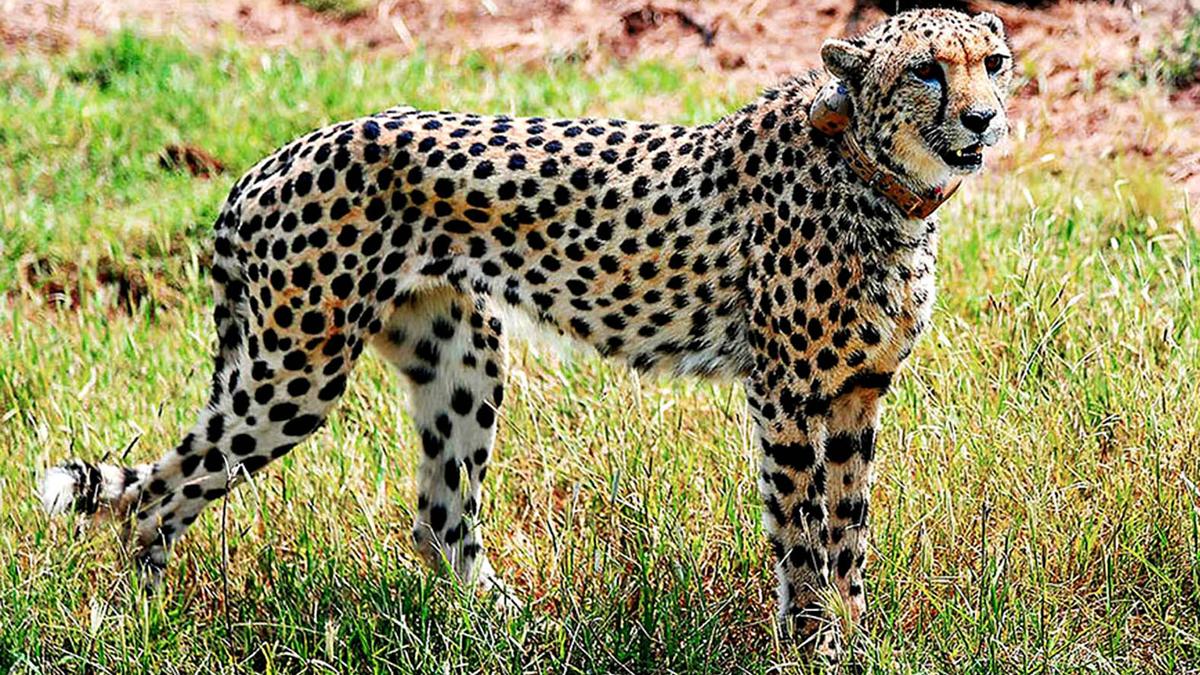
Cheetahs set to roam free in Kuno after year-long enclosure stay
The Hindu
African cheetahs in India to be released into the wild after health issues, with concerns raised by experts.
African cheetahs brought to India as part of the world's first intercontinental translocation of big cats will soon be released into the wild, nearly a year after they were returned to enclosures in Madhya Pradesh's Kuno National Park for health check-ups and monitoring, according to officials.
Officials told PTI that the Centre's Cheetah Project Steering Committee on Friday (August 23, 2024) decided to release the African cheetahs and their cubs, born in India, into the wild in a phased manner after the monsoon withdraws from central parts of the country.
"Members of the committee and NTCA (National Tiger Conservation Authority) officials conducted field visits to Kuno and discussed the schedule for releasing the cheetahs. While adult cheetahs will be released into the wild in phases once the rains end, the cubs and their mothers will be released after December," an official said.
All 25 cheetahs — 13 adults and 12 cubs — are doing well, according to the official.
The first batch of eight cheetahs from Namibia was introduced in India in September 2022 and the second batch of 12 cheetahs was flown in from South Africa last February.
Some cheetahs were initially released into the wild but were brought back to their enclosures by August last year after the deaths of three cheetahs — a female named Tbilisi (from Namibia) and two South African males, Tejas and Sooraj — due to septicemia, an infection that occurs when bacteria enter the bloodstream and spread.
This condition arose from wounds under the cheetahs' thick winter coats on their backs and necks, which became infested with maggots and led to blood infections, according to the government's annual report on Project Cheetah.


BJP's Vijayendra accuses Congress of using money to influence Bagalkot bypolls, urging voters to reject their tactics.

First randomization of electronic voting machines completed in Tirunelveli and Tenkasi districts for upcoming Assembly elections.

RPF seizes 10.12 kg of unclaimed cannabis worth ₹5.06 lakh from a train in Mangaluru.

Kolar's groundwater levels rise to 50-100 ft due to the K.C. Valley project, ensuring clean water and improved health outcomes.

Three smugglers arrested in Sangareddy with 574 kg of ganja valued at ₹2.87 crore during a police operation.

Mysuru MP urges a 'flex-free Mysuru' by discouraging birthday banners, promoting responsible celebrations to preserve the city's heritage.

Farmers of Kalakudi demand payment for paddy bags procured at DPC

BJP's seal on a 2019 Election Commission letter ignites controversy in Kerala, prompting claims of careless handling by CPI(M).

Transgenders go on rally condemning Transgenders Amendment Bill 2026

Supreme Court dismisses plea challenging Sonam Wangchuk's detention, noting the Centre revoked it on March 14, 2026.

Private medical shops in Telangana government hospitals face eviction due to expired leases and ongoing legal challenges, says Health Minister.

A.P. BIE Secretary reviews answer script evaluation, emphasizing transparency and accuracy to ensure error-free marking and timely results.

Join the walkathon in Puducherry to promote oral hygiene awareness and celebrate World Oral Health Day with community participants.