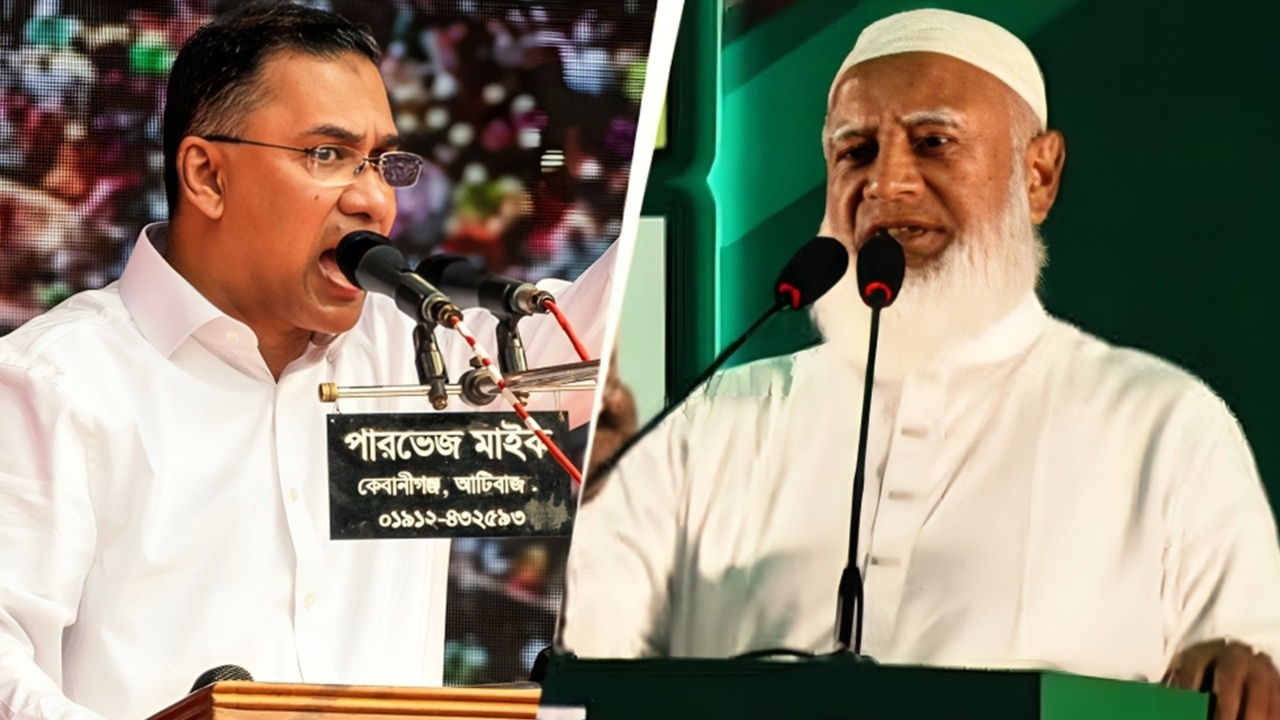
Bangladesh Elections: Can Bangladesh finally break its cycle of bloodshed and build a lasting democracy?
India Today
After 1,400 deaths and Sheikh Hasina's exile, Bangladesh votes on 12 February 2026 in its first election since the July Revolution. With the Awami League banned and democracy on trial, will this ballot finally deliver change?
Bangladesh stands at a crossroads. On 12 February 2026, millions will queue to vote in an election born from blood, revolution and decades of broken promises. It is the country's first national poll since students flooded Dhaka's streets in July 2024, demanding change. When the government responded with bullets, at least 1,400 people lost their lives. Sheikh Hasina, who had ruled with an iron grip for 15 years, fled to India. Her party, the Awami League, has been banned. The ballot box has replaced the barricade.
This is not just another election. It is a stress test for a nation that has stumbled from military rule to one party dominance to street uprisings in barely five decades. Bangladesh has tried democracy before. It has watched it bend. It has watched it break. Now, as voters line up again, the question looms: will democracy finally stand, or will it fail once more?
The roots of Bangladesh's political turmoil stretch back to its violent birth. In December 1970, Sheikh Mujibur Rahman's Awami League swept East Pakistan's seats in elections that should have made him prime minister of a united Pakistan. The military government in West Pakistan refused. What followed was nine months of war, ethnic cleansing and three million deaths, according to official records. Bangladesh won its independence in December 1971.
Mujib became the nation's founding father and first prime minister. But within three years, he banned all opposition parties and created a one party state. In August 1975, he and most of his family were assassinated in a military coup. His two daughters, including Sheikh Hasina, survived only because they were abroad.
What followed was chaos. Military strongmen seized power, held sham elections and ruled through force. Ziaur Rahman, a liberation war hero, took charge in 1977 and instituted multi party democracy. He was assassinated in 1981. General Hussain Muhammad Ershad staged a coup in 1982 and ruled as a dictator until mass protests, led by two women, forced him out in 1990.


Amid the widening US, Israel–Iran war, the cyber front intensifies as the Handala hacker group claims attacks on US companies and Israeli intelligence-linked figures.

A post about a software developer's salary in Bengaluru and savings amount has started a conversation among X users about how to save wisely.

The profiles of at least three of China's leading nuclear, missile and radar experts were scrubbed from the website of the Chinese Academy of Engineering, the country's most prestigious academic body. This comes as a series of purges under Premier Xi Jinping's anti-corruption campaign have decimated the upper echelons of China's military and scientific community.

The aircraft had also been used by senior Iranian officials and military figures for both domestic and international travel, and for coordinating with allied countries, the Israeli military said. Meanwhile, Dubai International Airport has resumed flight operations after a temporary suspension of about seven hours caused by a drone strike near a fuel tank facility.

A government school teacher's gesture of buying a new uniform for an orphaned student has received widespread attention after a video of the act was shared on Instagram.

A father travelling with his toddler addressed fellow passengers ahead of a flight, asking for patience and understanding if his child became unsettled.

The lottery system for a segment of Green Cards, known as the Diversity Immigrant Visa programme, has been restarted. However, the stricter rules being enforced by the US won't impact Indian Green Card aspirants. Here's why.

Instead of putting an end to rumours, the video has triggered another wave of speculation about Netanyahu's fate. Several users on 'X' (formerly Twitter) have claimed that the video posted on 'X' was an AI-generated deepfake.

US jets strike military facilities near Iran's Chabahar free trade zone

The video, recorded inside the train coach, shows the compartment littered with snack packets, water bottles, soiled spoons and bedsheets scattered on the floor.

The US is planning to deploy a third aircraft carrier in the Middle East amid the war with Iran. Aircraft carriers, one of the most expensive defence systems, are floating military bases that project power. Here's how aircraft carriers are used and where India stands.

Donald Trump warned that Nato could face a 'very bad' future if member states fail to help reopen the Strait of Hormuz, and to support Washington's efforts amid the ongoing US-Israeli war with Iran.

When we look at Iran through the prism of religion and see a Shia Islamic country, we negate its thousands of years of rich pre-Islamic Persian culture. A dive into the world of Zoroastrianism and Vedas shows us how Indians and Iranians have been sharing languages, Gods, sciences and a sacred fire for thousands of years.