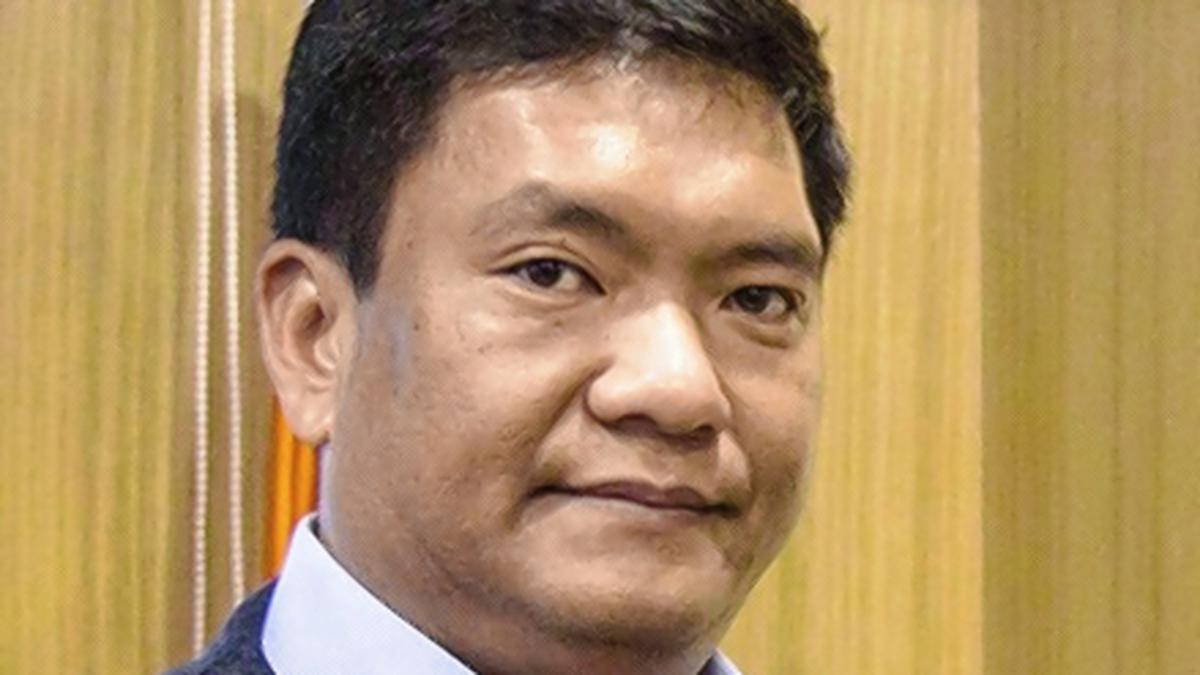
Arunachal Pradesh CM Pema Khandu reviews hydropower projects
The Hindu
Arunachal Pradesh CM Pema Khandu reviews major hydropower projects, emphasizing local welfare and national energy security.
Arunachal Pradesh Chief Minister Pema Khandu has reviewed the progress of key hydropower projects in Dibang Valley district, underscoring the State’s push to balance timely execution with local welfare, infrastructure development and national energy security.
The projects he reviewed included the 3,097 MW Etalin Hydroelectric Project (HEP) and the 680 MW Attunli HEP, which are under implementation, along with those under survey, such as Emini (500 MW), Amulin (420 MW) and Mihumdon (400 MW).
“With a total planned capacity of 5,097 MW, discussions focussed on timelines, statutory clearances, and ensuring that development supports local communities while strengthening India’s energy security,” Mr. Khandu said in a statement after a meeting with power developers.
Slated to be India’s largest hydroelectric project, the Etalin HEP on the Dri River is expected to commence soon.
“Being developed by SJVN Limited, the project is envisaged as a transformative initiative to accelerate infrastructure growth, generate employment, boost local livelihoods and significantly augment the country’s clean energy capacity,” the Chief Minister said.
Mr. Khandu also visited the Etalin project site along the Roing-Anini Highway and received a detailed briefing from SJVN officials.


"The jury has difficulty coming to a consensus regarding one defendant, do you have any advice on how to move forward?" the jurors told Judge Carolyn Kuhl

Maharashtra relocates 25 leopards to Gujarat's Vantara facility amid rising leopard and tiger populations, says Forest Minister Naik.

Assembly polls 2026: Follow updates from The Hindu on the upcoming elections in five States on March 24, 2026

Delhi's per capita income is projected to grow 7.09% by 2025-26, highlighting the city's economic progress and infrastructure challenges.

Review meeting held in Dharmapuri with election observers and nodal officers to discuss upcoming Assembly elections.

Execution of development projects, infrastructure augmentation to occupy centre stage in electioneering

Telangana Cabinet approves Hate Speech and Parents Support Bills, ensuring accountability for neglecting elderly and curbing hate-driven offences.

EU and Australia finalize a free trade agreement and establish a new defense partnership to enhance economic and military cooperation.

U.S.-Israeli war on Iran LIVE: Iran faces deadline of US President Donald Trump warning to open Strait of Hormuz. Follow The Hindu for more LIVE updates on March 23 2026 on Iran-Israel war.

KPCC chief Sunny Joseph emphasizes UDF's focus on Sabarimala and corruption while expressing confidence in winning Kerala's upcoming Assembly elections.

A military plane crash in Colombia leaves 125 aboard, with at least 48 survivors rescued amid ongoing recovery efforts.

‘Symposium’, a new platform to promote lifelong learning and counter misinformation among youth, was launched in Hyderabad.

By using TB as an entry point, integrated healthcare delivery can optimise and improve public health efficiency