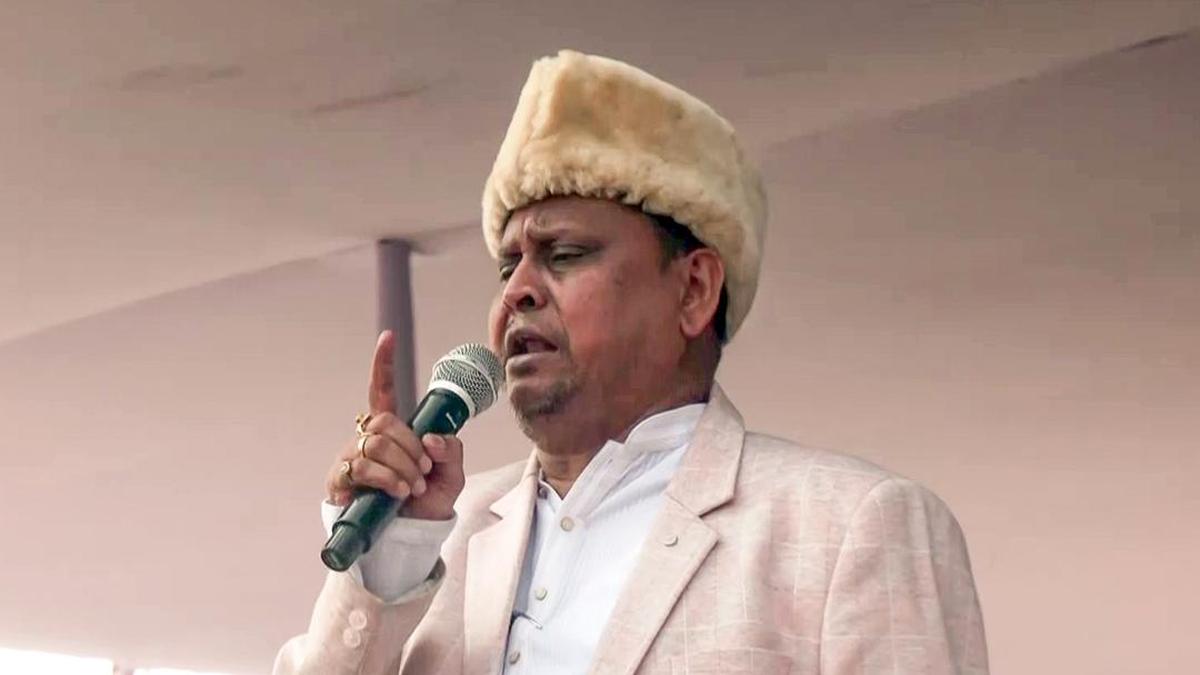
JUP leader Humayun Kabir explores tie-up with CPI(M), ISF for Bengal polls
The Hindu
JUP leader Humayun Kabir seeks alliance with CPI(M) and ISF ahead of West Bengal Assembly polls, aiming for electoral strategy.
A meeting on Wednesday between West Bengal Communist Party of India (Marxist) secretary Md. Salim and suspended Trinamool Congress MLA Humayun Kabir, who had recently launched the Janata Unnayan Party (JUP), has sparked speculation about an understanding between the two political groupings ahead of the 2026 Assembly election.
Mr. Salim said the meeting was to “understand (Mr. Kabir’s) mind”.
Mr. Kabir, on the other hand, said he wants an electoral understanding with the CPI(M) and Indian Secular Front (ISF) to be settled by February 15. In the 2021 election, the CPI(M)-led Left Front and the Congress had entered into an electoral alliance with ISF. However, the alliance failed to make much of an impact in the last Assembly polls, winning only one Assembly seat in Bhangar, which is represented by ISF MLA Nawsad Siddique.
Mr. Kabir added that he has asked Mr. Salim to speak to ISF on his behalf. On Friday, Mr, Kabir said he spoke to Abbas Siddique, the force behind ISF. He has also called a public meeting in Murshidabad on Saturday, as a “show of strength”.
The meeting between the CPI(M) State Secretary and the JUP leader who has given a call to set up a mosque modelled on Badri Masjid has brought some embarrassment to the party. But there are people in the party who say that the primary goal should be to defeat the Trinamool Congress.
Only ten days ago, ISF MLA Nawshad Siddique said that it was essential to forge an alliance with the Congress and Left Front at the earliest to defeat the Trinamool Congress and the Bharatiya Janata Party (BJP) in the upcoming Assembly polls. “To defeat the Trinamool Congress and the BJP. To ensure that they can be easily defeated. We need to form an alliance within a month with Left parties and Congress,” the ISF leader had said.


The government plans to amend the FCRA, introducing new regulations for NGO asset management and accountability for key functionaries.

The draft policy for “Responsible Digital Use Among Students”, released on Monday by the Department of Health and Family Welfare, has recommended that parents set structured routines with clear screen-time rules and prioritise privacy, safety, and open conversation with children on digital well-being.

Police Observer Sushant Kumar Saxena conducts surprise inspection at Shencottai police station, reviewing warrants and security arrangements ahead of elections.

Andhra Pradesh government to launch key projects in April, focusing on industrial growth and infrastructure development, says Nara Lokesh.

Lok Sabha refers the Corporate Laws (Amendment) Bill to a JPC amid opposition concerns over CSR provisions dilution.

SHG members in Kanniyakumari use snakes and ladders to raise election awareness and boost voter turnout.

Government accelerates consultations for early implementation of the Women’s Reservation Act to ensure women’s representation in 2029 elections.

CM A. Revanth Reddy distributes ₹1 crore insurance cheques to families of deceased Electricity department employees, enhancing financial security for workers.

The Bengaluru Traffic Police (BTP) registered 634 cases of drunk driving during a week-long special enforcement drive conducted across the city between March 16 and March 22.

GHMC intensifies action against property tax defaulters, seizing properties and offering a One Time Settlement scheme for payments.

CCB arrests three drug peddlers in Mangaluru, seizing ₹2.5 lakh worth of MDMA and other valuables.

TVK's 28 candidates in Puducherry include former BJP MLAs, a sitting Independent, and a retired police IG.

BRS submits notice on private member bill to Speaker