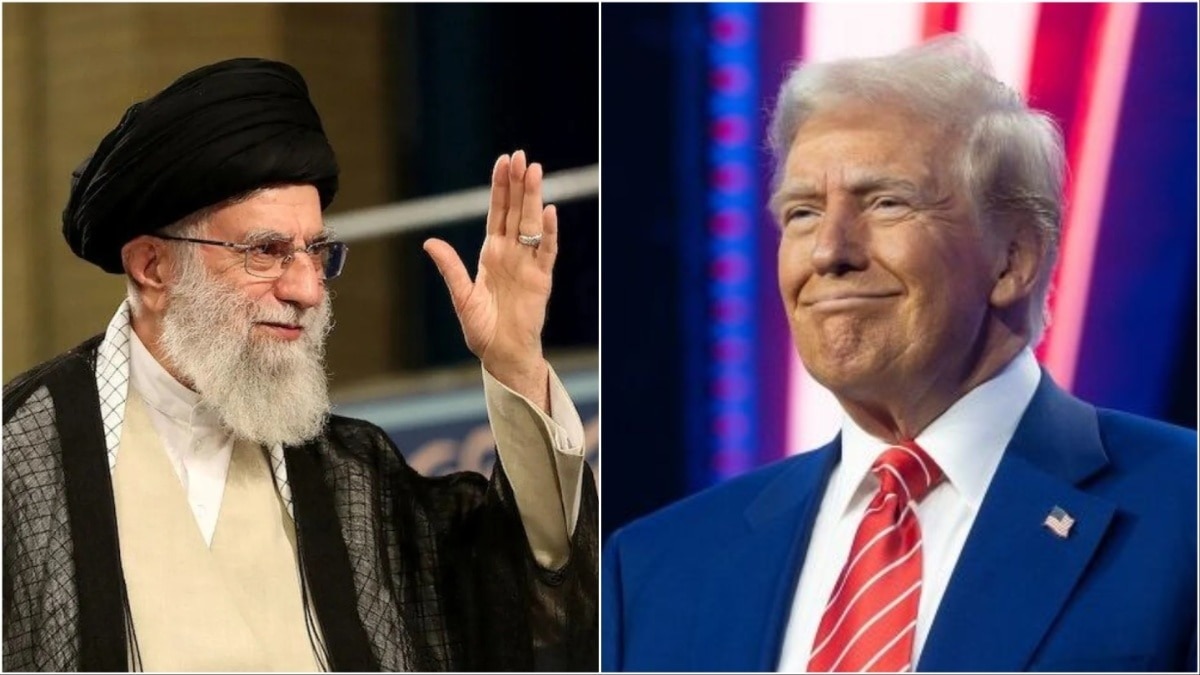
Amid fears of US attack, Iran Is Hiding Its 'Nuclear Gold': Uranium
India Today
As US strikes loom, Iran digs deeper at its nuclear sites and moves its flagship drone carrier six kilometres south of Bandar Abbas.
Far out at sea, the United States has assembled its steel armada, the USS Abraham Lincoln Carrier Strike Group. Closer to shore, the Iranian Navy’s Shahid Bagheri drone carrier sits roughly six kilometres off the coast of Bandar Abbas. On land, Iran appears visibly gripped by unease.
Commercial satellite imagery analysed by researchers at the Institute of Science and International Security(ISIS) shows how Iran’s actions have shifted as US military forces move closer. Iran is burying its nuclear infrastructure deeper underground, as per analysis by American physicist and weapons expert David Albright and his team. Tunnel entrances being buried at Esfahan nuclear site
In what appeared to be a swift retaliatory response to the deployment of the USS Abraham Lincoln in the Arabian Sea, Iranian state-affiliated media reported that Iran had moved “hundreds of fast, missile-launching and support vessels” into close proximity with the American carrier strike group. Additional satellite pictures reviewed by India Today show the IRGC Navy’s Shahid Bagheri drone carrier six kilometres off Bandar Abbas on the Strait of Hormuz.
The 12-day war last year saw the US strike Fordow and Natanz with bunker-buster bombs, reportedly inflicting major damage and Iran appears to have learned its lesson.
Recent satellite imagery indicates renewed efforts by Iran to further bury tunnel entrances at one of its primary nuclear facilities within the Esfahan nuclear complex, with heaps of fresh soil over the access points. The analysis also identifies a series of dump trucks carrying soil along the access road to the tunnel complex, suggesting continued backfilling activity, likely aimed at further sealing the central entrance. Reconstruction at the Esfahan site
The United States dropped 12, 30,000-pound GBU-57 MOPs on Fordow in June 2025, targeting the site’s ventilation shafts that led to a centrifuge cascade hall located at least 200 feet underground.


Amid the widening US, Israel–Iran war, the cyber front intensifies as the Handala hacker group claims attacks on US companies and Israeli intelligence-linked figures.

A post about a software developer's salary in Bengaluru and savings amount has started a conversation among X users about how to save wisely.

The profiles of at least three of China's leading nuclear, missile and radar experts were scrubbed from the website of the Chinese Academy of Engineering, the country's most prestigious academic body. This comes as a series of purges under Premier Xi Jinping's anti-corruption campaign have decimated the upper echelons of China's military and scientific community.

The aircraft had also been used by senior Iranian officials and military figures for both domestic and international travel, and for coordinating with allied countries, the Israeli military said. Meanwhile, Dubai International Airport has resumed flight operations after a temporary suspension of about seven hours caused by a drone strike near a fuel tank facility.

A government school teacher's gesture of buying a new uniform for an orphaned student has received widespread attention after a video of the act was shared on Instagram.

A father travelling with his toddler addressed fellow passengers ahead of a flight, asking for patience and understanding if his child became unsettled.

The lottery system for a segment of Green Cards, known as the Diversity Immigrant Visa programme, has been restarted. However, the stricter rules being enforced by the US won't impact Indian Green Card aspirants. Here's why.

Instead of putting an end to rumours, the video has triggered another wave of speculation about Netanyahu's fate. Several users on 'X' (formerly Twitter) have claimed that the video posted on 'X' was an AI-generated deepfake.

US jets strike military facilities near Iran's Chabahar free trade zone

The video, recorded inside the train coach, shows the compartment littered with snack packets, water bottles, soiled spoons and bedsheets scattered on the floor.

The US is planning to deploy a third aircraft carrier in the Middle East amid the war with Iran. Aircraft carriers, one of the most expensive defence systems, are floating military bases that project power. Here's how aircraft carriers are used and where India stands.

Donald Trump warned that Nato could face a 'very bad' future if member states fail to help reopen the Strait of Hormuz, and to support Washington's efforts amid the ongoing US-Israeli war with Iran.

When we look at Iran through the prism of religion and see a Shia Islamic country, we negate its thousands of years of rich pre-Islamic Persian culture. A dive into the world of Zoroastrianism and Vedas shows us how Indians and Iranians have been sharing languages, Gods, sciences and a sacred fire for thousands of years.