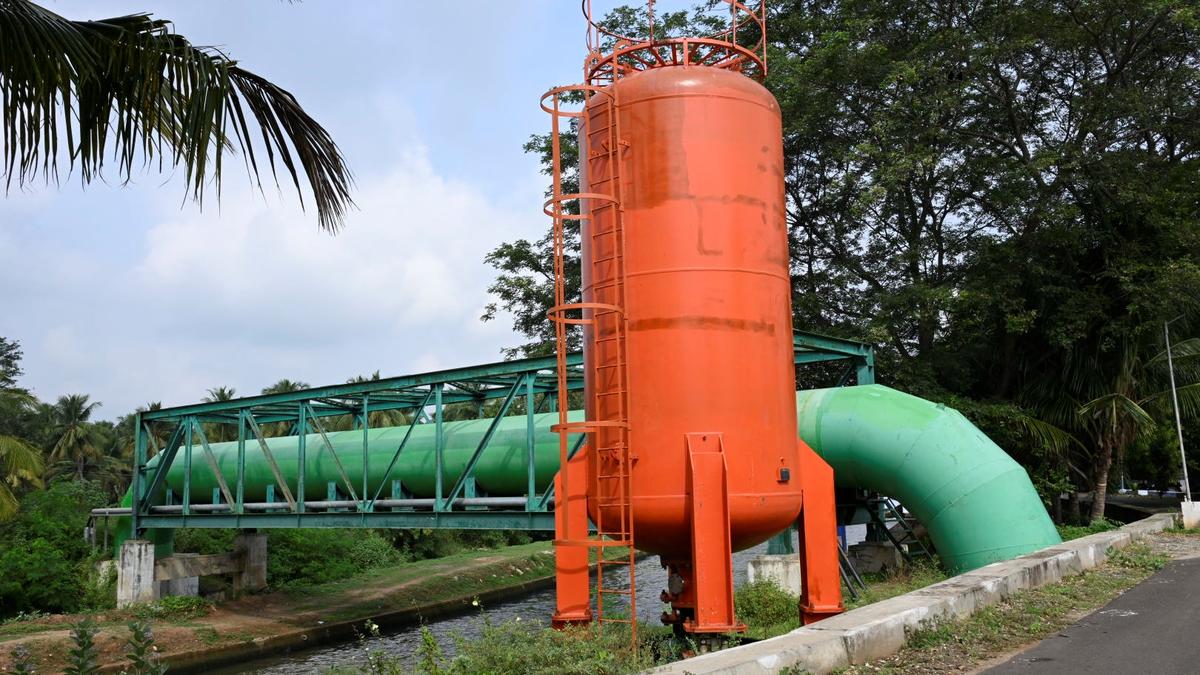
After 67-year wait, Athikadavu-Avinashi project in Tamil Nadu to be commissioned on August 17
The Hindu
The Athikadavu-Avinashi project in Tamil Nadu, which was conceived 67 years ago, is finally taking shape with Chief Minister M.K. Stalin set to commission the project through video conferencing on Saturday (August 17, 2024).
The Athikadavu-Avinashi project in Tamil Nadu, which was conceived 67 years ago, is finally taking shape with Chief Minister M.K. Stalin set to commission the scheme through video conferencing on Saturday (August 17, 2024).
The project proposes to divert 1.5 thousand million cubic feet (TMC) of surplus water from the downstream of Kalingarayan anicut of the Bhavani river at Kalingarayanpalayam in Erode district, filling 1,045 water bodies and irrigating 24,468 acres of farm land in Erode, Tiruppur, and Coimbatore districts.
The Bhavani river originates from the Nilgiris in the Western Ghats, enters Kerala, and re-enters Athikadavu, a place near Pilloor dam in Mettupalayam in Coimbatore district. The river enters the Bhavanisagar dam in Erode district, from where it travels 75 km to join the Cauvery river at Bhavani.
The 217-km-long perennial river is fed by both southwest and northeast monsoons, and to utilise the surplus water that enters Cauvery, farmers made a representation to the then Chief Minister K. Kamaraj in 1957 to divert the water through open canals and fill the dry pockets in the erstwhile Coimbatore district.
The scheme was initially named the Upper Bhavani Project.
Over the last 50 years, steps were taken by various State governments to get the scheme up and running. In 2009, a technical expert committee was constituted under the chairmanship of A. Mohanakrishnan, Advisor to Government of Water Resources, that investigated the viability of the scheme. It submitted a report which stated that 2 tmc ft of water during flood flow could be diverted.
Political parties, farmers, traders, welfare organisations, and the public resorted to various protests over these years urging successive governments to implement the scheme.


Three youths radicalised by ISIS and AQIS arrested in Vijayawada for planning terror activities across India.

T.N. CM Stalin challenges PM Modi on government preparedness for West Asia crisis, emphasising leadership responsibility over public outsourcing.

Telangana DCA warns against unsupervised semaglutide use, stressing the importance of medical supervision and safe purchasing practices.

From origami classes at Rosary matriculation school to the two-day Makers Market in Mylapore, Chennai resident Priya Subramaniam has come a long way.

Election Commission bans exit poll results in Tamil Nadu from April 9 to April 29 ahead of Assembly elections.

Residents of Tambaram express concern over inadequate infrastructure amid rapid urban growth, highlighting traffic, drainage, and waste management issues.

Explore the defining moments and developments of Tamil Nadu's 16th Assembly, marked by political confrontations and administrative innovations.

Kerala CM Pinarayi Vijayan defends his remarks on G. Sudhakaran, labeling him a 'class traitor' amid election tensions.

Social media rumors spark panic buying of petrol in Belagavi, causing long queues and temporary fuel shortages at stations.

Delhi Budget 2026 LIVE: Follow live updates from The Hindu on the Delhi state budget for 2026-27, on March 24, 2026

Shorts News:WatchNetanyahu says Trump sees chance of striking deal with Iran

The facility in New Colony will benefit over 17,000 consumers, say officials

Water pipeline leak causes traffic congestion and waterlogging in Miyapur, Hyderabad, prompting detours and delays for commuters.