A slip into lake turned this engineer into a conservationist Premium
The Hindu
It began with a newspaper article claiming 21 cities, including Bengaluru, would run dry by 2025. “That really stuck with me,” says Anand Malligavad, who was recently named “Earth Champion” by Sony BBC Earth. It got him thinking about why a city which once had surplus water was at risk of running out of it, and he began reading and researching extensively about it.
It began with a newspaper article claiming 21 cities, including Bengaluru, would run dry by 2025. “That really stuck with me,” says Anand Malligavad, who was recently named “Earth Champion” by Sony BBC Earth. It got him thinking about why a city which once had surplus water was at risk of running out of it, and he began reading and researching extensively about it.
“Bengaluru does not have big rivers,” he says, pointing out that even the smaller ones, Vrishabhavathi, Kumudvathi, Arkavathy and Dakshina Pinakini, which generate from Nandi Hills, are now so polluted that they resembled septic tanks.
He also began investigating the city’s lakes, once Bengaluru’s primary source of potable water, many built by the Chola kings some 800-900 years ago. “They had built it systematically as interconnected, cascading lakes,” he says, claiming that the city once boasted of nearly 1850 lakes. Around 465 remain, of which only a tiny percentage still contain clean water, the abysmal situation a function of the city’s unprecedented growth over the last few decades. “Bangalore was not a metro city,” says Anand. It was a small city surrounded by villages, each containing a lake or two built by our ancestors, which merged over the years. “Lakes were once the lungs of this area,” he says.
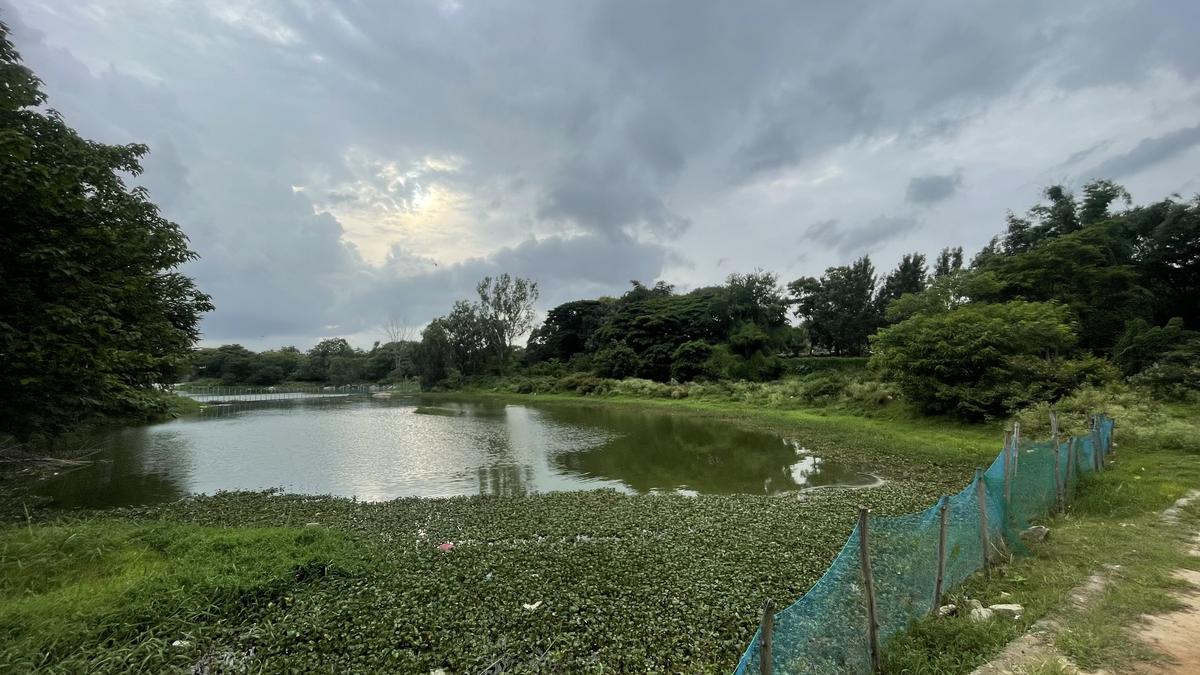
In 2017, after spending a year or so on research, he decided to take matters into his own hands, a decision galvanised by an incident at the mostly dry Kyalasanahalli lake he drove past every day on his way to his office; he worked in Sansera Engineering, an automotive components manufacturer, back then. Wanting to look closer, he began walking around the 36-acre lake, filled with debris, industrial effluents and sewage. Then, disaster struck. “I slipped and fell,” he says, with a laugh, recalling how the stench of the lake clung onto him for days after. “That is when I thought of creating a model of lake rejuvenating, working in parallel with the government to resuscitate the water body.”
Anand Malligavad grew up in the village of Karamudi, a small hamlet located in Karnataka’s Koppal District, an hour or so away from Hampi, the erstwhile capital of the Vijayanagara kingdom. He says it was a dry, arid landscape, constantly prone to drought, comparing it to the state of Rajasthan in which the Thar Desert is located. The village lake, therefore, became the fulcrum around which life revolved, says Anand, who considers himself lucky because his school was near this lake. “I used to spend a lot of time there,” he says, recalling how he frolicked in the water, making models of check dams and lagoons with mud. “That was my life. I learnt about ecosystems from that lake, something that helps me today,” he believes.
In 1996, he moved to Bengaluru to study mechanical engineering, getting a job at Sansera Engineering, where he would spend the next 15-odd years of his life before quitting in 2019 to pursue lake conservation full-time. He has fond memories of the city back then. “Bengaluru used to receive the best rains...had a great climate…rich soil…lots of greenery,” he says, pointing out that this dense vegetation ensured moderate microclimates, plenty of rain and the fragrance of flowers constantly lingering in the air. He offers an adage, which was true about the city before it became the messy metro it is today. “Whenever a Bengalurian sweats, the city would receive rain.”
Not anymore, however. The former garden city, now constantly clogged with traffic, smog and construction dust, filled with high-rises, malls and IT Parks, is among the most water-starved cities in the world, with a crisis looming large almost every other summer, including this one. It is also vulnerable to frequent flooding, a function of poor infrastructure, concretisation and destruction of its lakes and green spaces, among other things. “Economy and infrastructure here are going up like a high-rise building. But the environment is going down like water,” he quips.


Explore the evolution of cooking fuels in Madras, from wood and coal to the rise of LPG, amid recent shortages.

Protests against the Sharavathi Pumped Storage Hydroelectric Project in the Western Ghats just got new life

51 couples take thebig plunge at Udaipur mass wedding event

A bridge collapse in Roop Nagar kills a woman; Delhi government forms a probe panel amid rising safety concerns.

Tribunal halts Colonel Purohit's retirement, pending promotion decision after his acquittal in the 2008 Malegaon blast case.

Pinarayi Vijayan launches his election campaign in Dharmadam, aiming for a third consecutive term amid tightening competition.

Delhi Speaker Vijender Gupta has written to Lieutenant-Governor Taranjit Singh Sandhu seeking directions to instal audible signals at traffic intersections across the city to ensure the safety of mobility-impaired individuals and senior citizens.

GVMC council concludes its five-year term, highlighting significant development projects and global events that enhanced Visakhapatnam's recognition.

Karnataka SC/ST Commission discusses internal reservation issues amidst confusion over reduced quotas for Scheduled Castes and Tribes.

President Droupadi Murmu serves Akshaya Patra’s 5 billionth meal, highlighting child nutrition and education at Rashtrapati Bhavan.

PM Modi and UAE President agree on ensuring safe navigation through the Strait of Hormuz amid regional tensions.

JNU student leaders face severe repercussions for activism, risking their academic futures amid allegations and online abuse.

India Post launches 24-hour and 48-hour Speed Post services in Bengaluru, ensuring urgent delivery across major metro cities.