A reckoning for India’s aviation sector
The Hindu
India's aviation sector faces critical challenges, with operational failures threatening major airlines and new entrants amid declining profits and safety concerns.
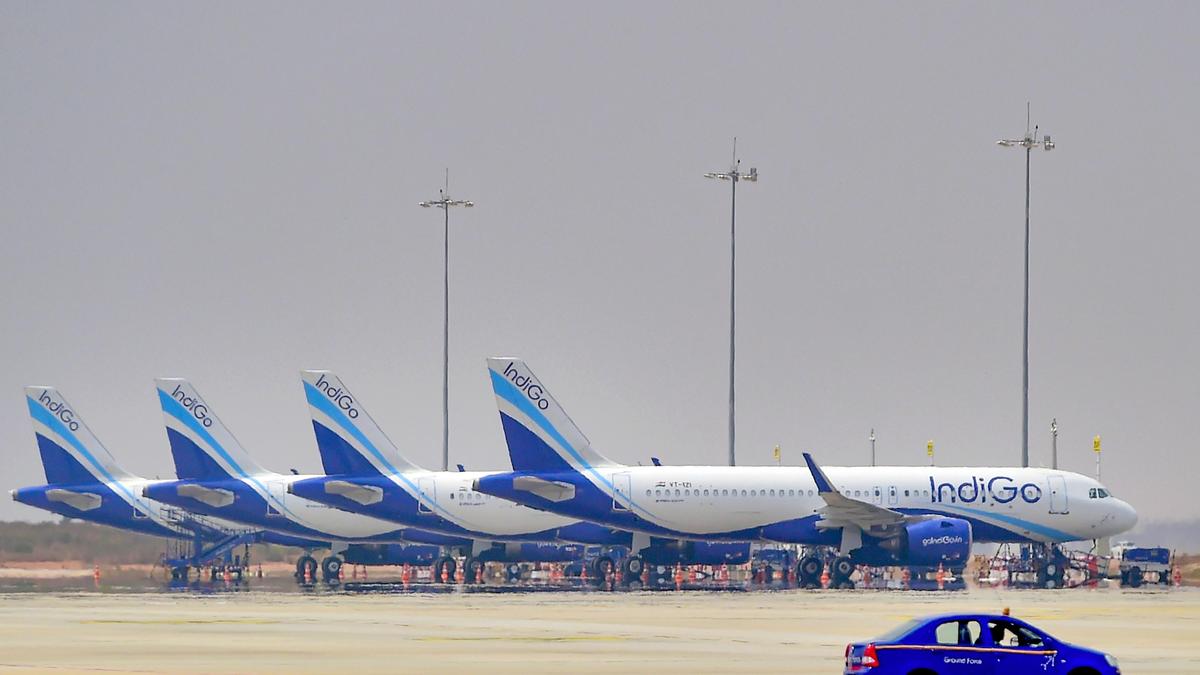
The past year was marked by sustained turbulence in India’s civil aviation sector, with multiple failures, whose scale and frequency paint a grim picture for the duopoly (IndiGo and the Air India group), both now bracing for thumping losses, with profits plunging drastically, according to recent numbers. The year witnessed a series of breakdowns from the June 2025 Ahmedabad crash to mass cancellations and prolonged flight delays generating unrest, not only among stranded passengers, but across the aviation market at large.
The December IndiGo disruption emerged as the first failed stress test, the scale of which now threatens to weigh heavily on the country’s largest carrier, with it being ranked in the bottom layer of most indexes. What appeared to be an airline-specific failure has now revealed itself as a system-wide constraint coming into view. And as the system attempts to correct itself after this exposure, the emergence of new regional players receiving No Objection Certificates (NOCs) demands regulatory caution: without targeted structural correction, these entrants risk merely redistributing fragility rather than absorbing shocks or easing the sector’s mounting operational strain.
India’s commercial aviation sector stands as the world’s third-largest domestic market, operating over 840 aircraft and carrying more than 350 million passengers annually. Yet this scale has been achieved through an expansion that is increasingly overstretched. As airlines prepare for the upcoming peak travel season amid tighter duty-time enforcement and fleet expansion, the December disruption now reads less as an aberration and more as a warning — making it imperative to evaluate what needs correction.
The December disruption brought into sharp view the mechanics of vulnerability within India’s aviation system. IndiGo entered Phase-2 of the implementation of the Flight Duty Time Limitation (FDTL) norms with 5,038 pilots operating a fleet of more than 360 aircraft, translating into a pilot-to-aircraft ratio of roughly 14, well below the global benchmark of 18–20 considered necessary for fatigue-mitigated operations. This mismatch exposed the limits of an operating model calibrated for sustained high utilisation.
The new FDTL framework, which reduced permissible night operations, extended mandatory rest periods, and tightened cumulative flight-hour ceilings, rendered IndiGo’s published schedules legally untenable without adjustment. Even with the flight time capped at 60 hours over a seven-day period, substantially higher than the 40-hour weekly standard widely regarded as healthy across sectors, the rules proved incompatible with existing crew strength.
While India’s aviation expansion has intensified demands for pilots, training capacity has failed to keep pace. Parliamentary disclosures estimate a requirement of 7,000 pilots between 2024 and 2026, rising to 25,000-30,000 over the next decade. In contrast, the Directorate General of Civil Aviation (DGCA) issued only over 5,700 Commercial Pilot Licences (CPL) between 2020 and 2024, a figure further diluted by attrition and type-rating constraints.


Delhi High Court encourages the Kapur family to pursue mediation in their ongoing trust dispute, aiming for a peaceful resolution.

Benjamin Sesko's last-minute equaliser secures Manchester United a draw against West Ham, impacting both teams' standings in the league.

Explore the Nilgiri Wildlife and Environment Association's vital role in conserving biodiversity and protecting wildlife in Tamil Nadu.

Researchers find high-dose inhaled nitric oxide may reduce drug-resistant pneumonia, but long-term efficacy and feasibility need further study.

Ranveer Singh receives a threat via voice note, prompting increased security and police investigation amidst concerns from his housing society.

The Hindu Morning Digest gives a select list of stories to start the day. Read the top news today on February 11, 2026.

Explore the historical significance and beauty of St. Thomas Mount through Eyles Irwin's captivating 18th-century poem.

CM Naidu seeks Central support for irrigation, infrastructure, and organic farming initiatives in Andhra Pradesh during meetings in New Delhi.

Explore the need for political change in India to support and retain women in STEM fields effectively.

M.G. Ramachandran's journey from hospitalisation in the U.S. to a triumphant homecoming in Tamil Nadu after recovery.

Kochi Corporation seeks a new agency to manage loss-making ro-ro services, potentially partnering with KMRL for operations.

CID launches a manhunt for former MLA Byrathi Basavaraj after High Court denies him anticipatory bail in murder case.

Residents along Rajiv Gandhi Salai oppose road height increase, fearing flooding and accessibility issues during monsoon without cold milling.