A Delhi move by the ‘Grand Mufti’ Premium
The Hindu
How Aboobacker Musliar reaffirmed his position without taking a partisan stand
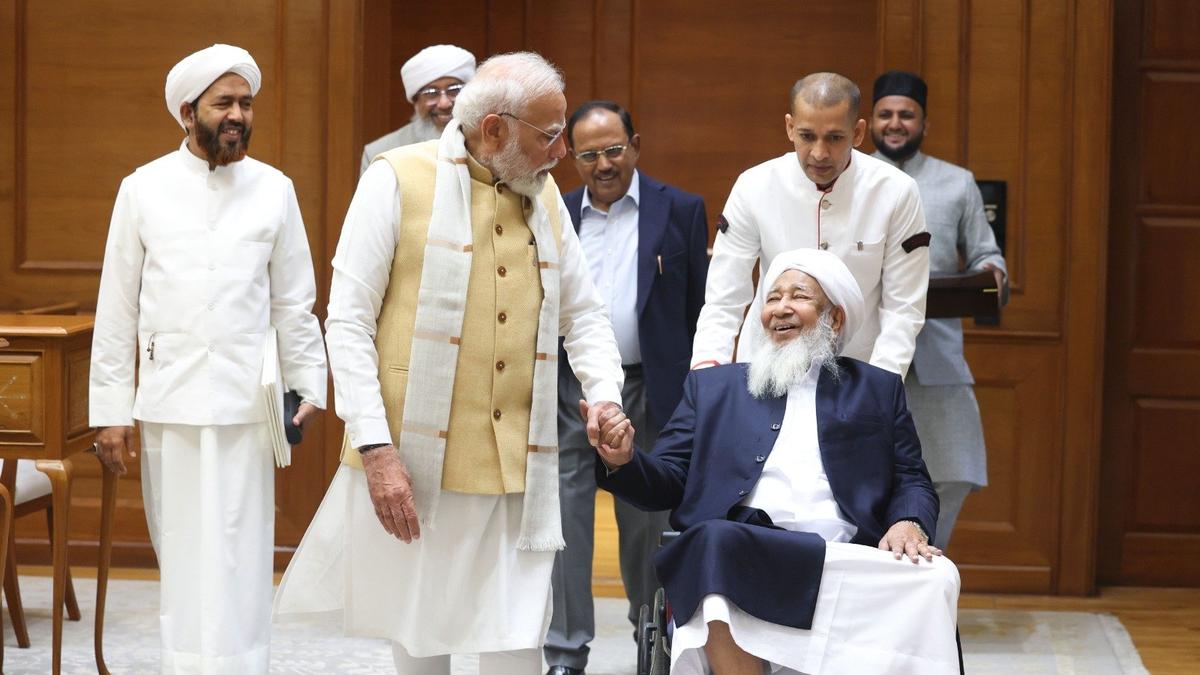
The recent meeting between Kanthapuram A.P. Aboobacker Musliar, Kerala’s prominent Sunni leader and general secretary of the All India Jamiyyathul Ulama, and Prime Minister Narendra Modi in New Delhi was no routine courtesy call.
The timing was significant: held ahead of Ramzan, the meeting also came just ahead of the Kerala Assembly elections and during the centenary year of the Samastha Kerala Jamiyyathul Ulama, the State’s largest body of traditional Islamic scholars. In this context, it appeared less about the “Grand Mufti of India” asserting his religious stature or extracting concrete assurances from the Bharatiya Janata Party (BJP)-led government and more about carefully calibrated optics.
The meeting reinforced Mr. Aboobacker Musliar’s standing as a powerful socio-political force within the Muslim community. In a State crowded with leaders claiming influence, his stature remains distinctive — not only within Kerala but also beyond it, where he is known as Sheikh Abubakr Ahmad.
The public relations exercise mattered for Mr. Modi too. Both the leaders shared multiple photographs and exchanged warm words on social media.
Mr. Aboobacker Musliar suggested that the meeting marked the capstone of his 16-day Kerala Yatra under the slogan “with humanity,” during which he interacted with people across social and political divides. He indicated that he shared the concerns and experiences gathered during that tour, including issues affecting minorities, with Mr. Modi. Yet little is known about the Prime Minister’s response to these concerns or any substantive outcomes. The half-hour interaction, by all accounts, was cordial.
In Kerala, reactions to the meeting were predictably divided. The 87-year-old Sunni scholar has been lauded for reaching out to the Prime Minister and for highlighting the concerns of minority communities, essential during a time of growing polarisation. But he has also been widely condemned for his remarks to the Urdu media, saying Muslims in India have been experiencing no major problems under the BJP government. This has been seen by many as a way of softening criticism of the government’s policies, widely viewed as unsettling to minorities. Among his critics were proponents of “political Islam,” a group he recently described in a resolution as a major threat to communal harmony in Kerala. His supporters were quick to defend him, however, arguing that leaders like him must exercise caution and strategic restraint, particularly in statements to the media.


India inaugurates its first private helicopter assembly line in Karnataka, enhancing aerospace capabilities and boosting employment opportunities.

Congress tally rises to 93 as polls postponed in Kyathanpally, Khanapur, Ibrahimpatnam amid tensions
Congress expands its lead to 93 municipalities as civic polls face postponements and tensions in Telangana.

Karnataka enhances security for SSLC and II PUC exams amid paper leak concerns, with free travel for students and helpline support.

Pinarayi Vijayan inaugurates AKG Museum, emphasizing its role in preserving history and resisting authoritarianism.

Join the third Dhamma Padayatra in Hyderabad on February 18 as monks promote peace and compassion at the Ambedkar statue.

Home Minister Parameshwara announces the extension of the Police Gruha project until 2030 to build homes for police personnel.

IT and Industries Minister D.Sridhar Babu has said Telangana government wants to transform Hyderabad into a global hub for innovation-led Life Sciences growth, a ‘laboratory of the future’.

Construction has started on the Vaduthala-Perandoor bridge, promising to ease traffic congestion in Kochi.

Over 700 persons with disabilities protest in Chennai for fifth day, demanding increased monthly assistance from the State government.

10,000 mangrove saplings were planted in the Sundarbans to celebrate KCR’s birthday and promote ecological restoration efforts.

President Droupadi Murmu to review 71 warships at the International Fleet Review 2026 in Visakhapatnam on February 18.

Andhra Pradesh sanctions ₹150 crore for Dowleswaram Barrage gate replacements, enhancing irrigation and flood management efforts in the region.

M.K. Stalin inaugurates Thozhi hostels, healthcare facilities, and housing units for Sri Lankan Tamils, enhancing welfare across Tamil Nadu.