A green synergy
The Hindu
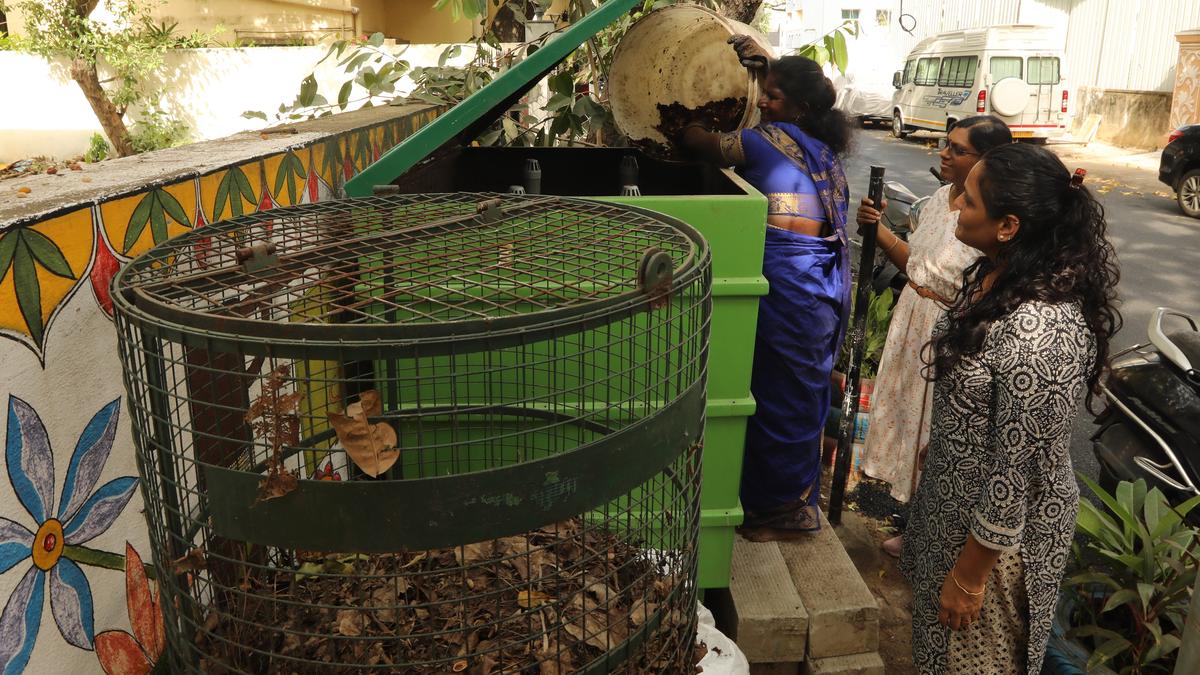
The latest batch of compost to emerge from the lane composters at Kasturba Nagar in Chennai is growing the greens at a farm in Kottivakkam, East Coast Road. Wasted 360 Solutions made this possible
In a case of synergy, three entities representing three different constituencies of the green economy recently carried out a “transaction” defined by an abundance of goodwill.
It is a loose equivalent of what one would call “entente” in international politics — gestures marked by friendship and support. Here, there were what appeared to be business moves, but they were aimed at offering support to the one who needed it, and were free of any intentions of profit. Thanks to this, the latest compost to emerge from the lane composters at Kastuba Nagar is growing the greens at a farm in Kottivakkam.
When Residents of Kasturba Nagar Association (ROKA) harvested its fifth cycle of composting, the compost was going into packets for sale. Down the line, ROKA realised it has to sell its compost to cover a part of the costs of running the lane composters.
“From the third cycle onwards, we started selling the compost at ₹10 per kg, each pack holding 10 kg of compost,” says Janani Venkitesh of ROKA.
ROKA has now harvested its fifth cycle of harvest. “Forty to fifty kg of compost was given to residents of Kasturba Nagar; they were on a priority list. And around 200 kg of compost went to Kazhani Native Farms in Kottivakkam on East Coast Road. Ann Anra of Wasted 360 Solutions bought the compost and donated it to Kazhani Farms. Wasted 360 Solutions has a dry waste drop off point at Kazhani Farms,” says Janani.
Ann Anra of Wasted 360 Solutions weighs in:
“At Wasted 360 Solutions, we focus more on dry waste sorting and collection and aggregation, whereas organisations like Namma Ooru Foundation and communities like ROKA that do decentralised waste management for expertise in wet waste. We also work with SWMS to give waste to the CNG plant. But why I particularly have always been interested in compost is that it is the perfect solution and Indians are already good at making it. We had taken a training programme for about 250 beneficiaries (from an unskilled labour constituency) to get them to become experts in composting, making bio enzymes and essentially impart to them the ability to work with both wet and dry waste, gain sorting capacity. Getting them started on these processes (composting and bio-enzyme making, sorting waste and reclaiming recyclables), which obviously have a money component attached to them, we were thinking about connecting and buying back the material (compost being one of them). While thinking in these terms, we heard about ROKA’s harvest being really good and when I was speaking to Kazhani Farms, they said they needed two to three tonnes of compost a month. So, we footed the bill, buying the 195 kg of compost from ROKA which offered it to us at a discount, for Kazhani Farms. Because Kazhani Farms has been nice enough to offer us a free space in Kottivakkam for our dry waste drop-off.”


India pledges 60% non-fossil fuel power by 2035, targeting 47% emissions reduction per GDP unit and enhanced carbon sinks.

Supreme Court rules land acquisition compensation and interest must uphold constitutional guarantees, unaffected by financial burdens.

Election officials accept 23 nominations for Bagalkot bypolls, rejecting three, with polling scheduled for April 9.

Students and women’s self-help groups in Madurai engage in vibrant voter awareness campaigns promoting 100% voting participation.

Congress signals a "friendly fight" with allies in select Puducherry Assembly seats ahead of the April 9 elections.

Airstrike in western Anbar kills 7 Iraqi soldiers, injures 13, prompting condemnation for violating international laws on medical facilities.

Plaque unveiled in Bengaluru honors 11 victims of RCB stampede, emphasizing safety responsibility for future events.

India and the U.S. reaffirm commitment to enhance strategic defense cooperation at the 18th Defence Policy Group meeting in New Delhi.

Chhattisgarh's Deputy CM reports only 30-40 Maoists remain in Bastar, highlighting recent surrenders and future development plans.

Explore the historical and industrial significance of Ariyalur constituency, highlighting its challenges, agriculture, and political landscape.

Dindigul and Madurai Collectors conduct joint inspection

In this episode, Kalki Subramaniam speaks to us about why the Transgender Persons Amendment Bill has sparked protests, and how these amendments threaten to push a marginalised community back into the shadows.

India's EU FTA is poised to attract more German companies, boosting bilateral trade and investment opportunities.