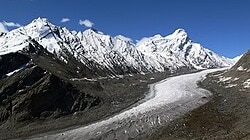
492 high-risk glacial lake sites mapped by IIT Guwahati in Eastern Himalayas
India Today
Researchers at IIT Guwahati have identified 492 locations in the Eastern Himalayas where new glacial lakes are likely to form, offering a crucial early warning tool for disaster preparedness in fragile mountain regions.
Researchers at the Indian Institute of Technology (IIT) Guwahati have developed a new predictive framework that can help identify where glacial lakes are likely to form in the Eastern Himalayan region, offering a crucial tool for disaster preparedness and long-term water management in high-altitude areas.
As climate change accelerates glacier melt across the Himalayas, water from retreating ice is collecting in natural depressions, creating new glacial lakes. These lakes can pose serious risks.
If their natural barriers fail, they can trigger glacial lake outburst floods (GLOFs), sudden floods that can destroy roads, hydropower projects, villages, and ecosystems downstream. Past disasters such as the Kedarnath floods of 2013 and the Uttarkashi floods in August 2025 have shown how devastating such events can be.
While earlier studies mostly focused on climate factors like temperature rise, the IIT Guwahati team took a different approach by closely studying the shape and structure of the land. The researchers found that landscape features play a major role in determining where glacial lakes form.
To do this, the team developed a probabilistic forecasting framework using high-resolution Google Earth images and digital elevation models.
This allowed them to capture complex terrain details such as valleys, bowl-shaped depressions, gentle slopes, and glacier retreat zones, features that strongly influence lake formation.


Short kurtas paired with loose pants and dupattas were a big trend in the 2000s Bollywood, and now, they seem to be catching on in the West too.

Pinterest CEO Bill Ready wants governments to ban social media for teenagers under 16, saying current platforms are harming young people's mental health and development.

Delhi is strengthening its push for UPSC success by recognising top achievers and improving support for aspirants. In a first-of-its-kind initiative, the government engaged directly with successful candidates to understand their preparation journey.

Paul McCartney's last solo album, McCartney III (2020), recorded during the pandemic, topped UK charts, marking his first solo number one since 1989, showcasing his creative freedom and personal musical expression.

ICAI CA Final January 2026 results have been declared today, March 1. Candidates who appeared for Group 1 and Group 2 exams can now check their scorecards, merit list and All India Rank holders on the official website, icai.nic.in. Direct result link is now active.

Pinterest CEO Bill Ready wants governments to ban social media for teenagers under 16, saying current platforms are harming young people's mental health and development.

Reddit is exploring biometric verification methods such as Face ID and Touch ID to ensure users are real humans, not bots, while pledging to maintain the platform's tradition of anonymity. CEO Steve Huffman said the company is planning to address the rising influence of AI-generated content and protect authentic user engagement.

Delhi is strengthening its push for UPSC success by recognising top achievers and improving support for aspirants. In a first-of-its-kind initiative, the government engaged directly with successful candidates to understand their preparation journey.

WhatsApp is reportedly working on a new privacy feature that will allow messages to automatically disappear shortly after being read. The upcoming feature, called "After reading," is expected to give users more control over their conversations, especially when sharing sensitive information.

RBSE Class 10 Result 2026 is expected to be declared soon, with students eagerly awaiting the official announcement date and time. The Rajasthan Board 10th result will be available online, making it important for students to stay updated on where and how to check their scores quickly.

In a push towards more inclusive school environments, the Central Board of Secondary Education has rolled out fresh directives on menstrual hygiene across its affiliated institutions. The move comes after a landmark ruling by the Supreme Court of India that places menstrual health within the framework of fundamental rights.

Tata Motors has introduced a more affordable dual-motor QWD variant of the Tata Harrier.ev, bringing all-wheel drive capability and strong performance to a wider audience at a lower entry price.