100 years of electroencephalography (EEG) in human medicine Premium
The Hindu
The marvel of EEG reveals brain activity non-invasively, aiding in diagnosis and research with simple, cost-effective technology.
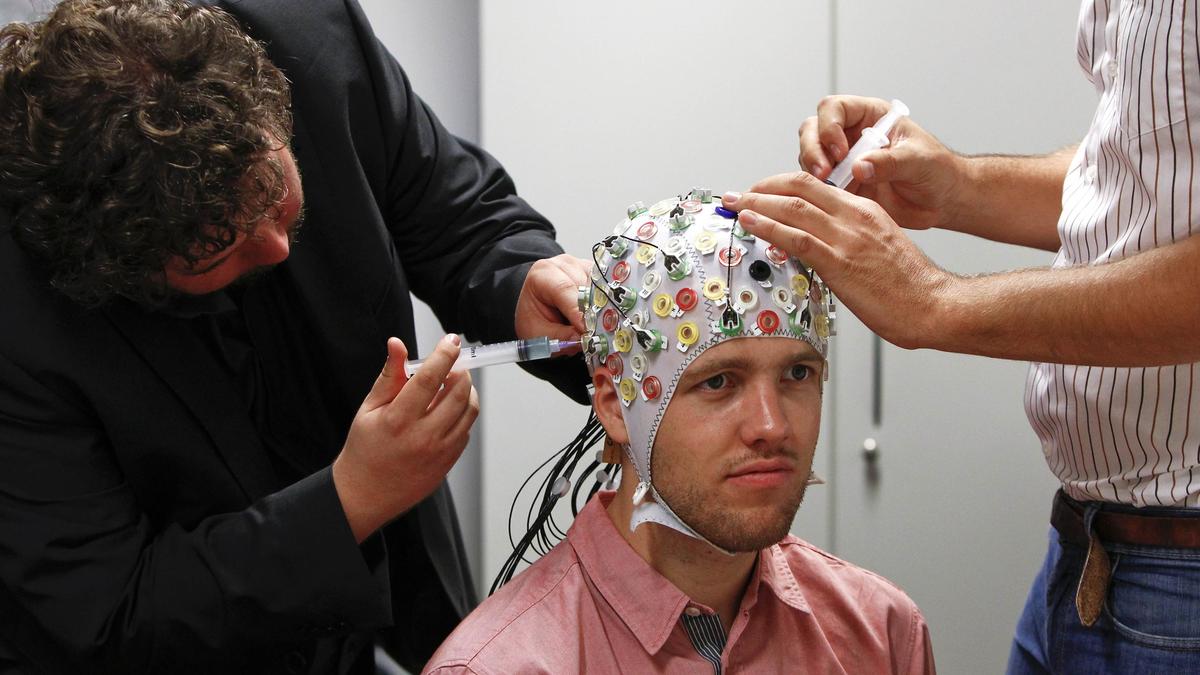
The EEG is a marvel of physics and neurobiology that opens a simple window into the human brain. This window is often small and yet it reveals so much. But not least is the wonder that it reveals anything at all without having to break open the skull first. This year is the centenary of the first human EEG, produced by German physiologist Hans Berger.
Berger’s feat was preceded by incremental but significant advances across Europe from the late 19th century. In 1875, British physician Richard Caton reported evidence of electrical activity in the brains of monkeys and rabbits. Fifteen years on, his Polish peer Adolf Beck found evidence of fluctuating activity in the brains of dogs and rabbits when he stimulated their senses.
In 1912, Vladimir Pravdich-Neminsky produced the first mammalian EEG, of a dog’s brain. Berger succeeded him in 1924 with the human counterpart. He is also credited with inventing the EEG, naming it, and introducing its utility in clinical settings.
EEG stands for electroencephalography. ‘Electro-’ pertains to electricity; ‘-encephalo-’ refers to the brain; and ‘-graphy’ is a suffix meaning to show or to represent.
Neurons in the brain perform various functions by moving electrically charged particles such as ions. The movement of these particles gives rise to electrical activity that a health worker can use an EEG test to visualise. Researchers have also been able to relate data obtained from an EEG with different levels and modes of brain activity, and can use it to distinguish reliably between normal and abnormal states.
EEG is not an uncommon diagnostic test in clinical settings. Among other applications, it is the reference standard — i.e. the best test available — to diagnose epilepsy. An EEG test can also reveal the effects of anaesthesia, sleeping patterns, neurological activity during a coma, and availability of oxygen. EEG can also help confirm brain death, one of the two legally recognised forms of death in India.
In research, scientists use EEG for neuroscience, cognitive psychology, neurolinguistics, and neuromarketing studies and to develop brain-computer interfaces.


The BMW X3 30 xDrive M Sport Pro blends sporty performance with everyday luxury, powered by a 258 hp 2.0-litre TwinPower Turbo engine and BMW’s xDrive all-wheel-drive system. With bold M Sport styling, a high-tech Curved Display running Operating System 9, advanced driver assistance features, and genuine off-road capability, the latest X3 delivers a versatile premium SUV experience that excels on city roads, highways, and beyond.

Explore the concept of 'snowball earth' and recent findings on climate variability during this ancient icy period.

A riot of capes, corsets, and carefully crafted armour took centrestage as Chennai Comic Con wrapped up at the Chennai Trade Centre, with cosplay emerging as the undisputed showstopper. From anime icons and gaming legends to beloved Indian comic characters, over 500 fans transformed the venue into a living, breathing multiverse, showcasing how Chennai’s fandom culture has evolved, placing the city on India’s pop culture map.

Warmer oceans and depleting food have affected the ubiquitous loggerhead turtle’s reproductive and migratory patterns — and even its size.

Toyota Urban Cruiser Ebella review: Explore design, range, features, ride comfort and safety of Toyota’s new electric SUV for India. Expected price ₹14–18 lakh, with up to 500 km claimed range and practical urban usability.

Explore India's potential in bio-based chemicals and enzymes, highlighting industry leaders and challenges in sustainable manufacturing.

Astronomers discover an unusual planetary system with a rocky planet formed outside its gaseous neighbors, challenging existing formation theories.

Four new astronauts arrive at the ISS to replace a crew evacuated due to a serious health issue.

Neurobehavioural therapy can transform brain connectivity in functional neurological disorders, highlighting the link between cognition, emotion, and behavior.

The centuries-long quest for synthetic diamonds, also known as lab-grown diamonds or human-made diamonds, came to an end in 1954-55. On February 15, 1955, the creation of the first synthetic diamonds were announced, and it was quickly picked-up by newspapers around the world. A.S.Ganesh tells you more about these diamonds and the man who first made it happen…

Kadhambari S. Viswanathan highlights online education's evolution and its coexistence with traditional methods at The Hindu Tech Summit 2026.

The Hindu science quiz on Charles Darwin on February 13 2026

Explore the immersive art exhibit "A Story in Red" in Fort Kochi, featuring 13 installations celebrating memory, culture, and emotion.