X chromosome revival in older women ups autoimmune disease risk Premium
The Hindu
The X chromosome's crucial role in genetic diseases, autoimmune conditions, and immune responses is explored in depth.
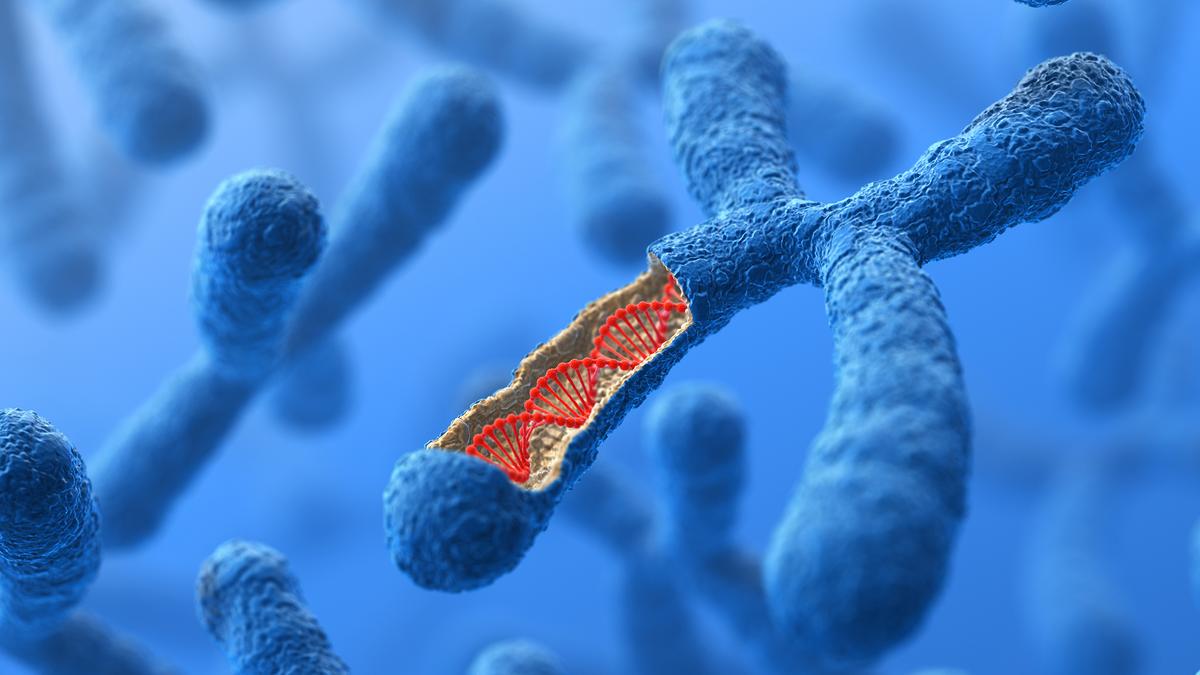
In mammals, the females have two copies of the X chromosome while the males carry a single copy. The X chromosome is more significant than for its role in determining sex. Recent genomic studies have shed light on the fundamental biological processes the X chromosome modulates and the genes it encodes. The gathering evidence suggests in fact that it plays a part in a variety of biological functions as well as controls the sex-specific susceptibility to certain diseases.
The human X chromosome encodes around 800 genes, which in turn code for proteins. A loss of function of these genes could thus lead to a variety of genetic diseases. Broadly, the diseases whose onset and/or progression the X chromosome influences can be grouped into three types: (i) X-linked genetic diseases, (ii) diseases influenced by XCI escape, and (iii) those linked to X-chromosome aneuploidy.
There are more than 500 X-linked genetic diseases , and they most affect males. Many of the X-linked traits and diseases are not uncommon in the general population. For example, red-green colour blindness is X-linked, and affects around 8% of males. Duchenne muscular dystrophy, caused by mutations in the dystrophin gene and affecting 1 in every 3,500-5,000 boys born in India and agammaglobulinemia, an immunodeficiency disorder that affects around 1 in 200,000 live births, are also X-linked.
Scientists are also aware of numerical abnormalities — or aneuploidies — of the X chromosome. For example, Klinefelter syndrome is characterised by an extra X chromosome (XXY) and Turner’s syndrome by a loss of one X chromosome in females (X instead of XX).
In mammalian species, the females typically carry two X chromosomes while males possess one X and one Y chromosome. Each of the X chromosomes is inherited from the parents. In 1961, an English geneticist named Mary Frances Lyon argued that since females have two copies of the X chromosome, one of the X chromosomes is randomly inactivated during early embryonic development, in a process called X chromosome inactivation (XCI), to prevent the overexpression of X-linked genes in females.
In this process, epigenetic changes silence most genes on one X chromosome (epigenetics refers to the processes by which genes are influenced by the environment in which they operate). XCI ensures a balance in the gene expression but scientists are also learning that it plays a role in various genetic disorders. Issues such as incomplete inactivation (a.k.a. escape) or skewed inactivation can lead to the abnormal expression of genes, which contributes to diseases including X-linked disorders, certain cancers, and autoimmune conditions.
Three decades after Dr. Lyon’s hypothesis, researchers unravelled the molecular mechanisms of X inactivation when they discovered Xist, a non-protein-coding RNA. The body deactivates the X chromosome with the help of Xist and another non-protein-coding RNA, called Tsix (reverse of Xist). The differential regulation of these two genes means, in the X chromosome that is to be deactivated, the Xist RNA is overexpressed such that it coats or covers the chromosome.


Want to up your breakfast game, but do not have the time to cook and prefer not to reach out for sugary supermarket cereals? Here are three home-grown, women-run brands trying to make it a little easier to get a nutritious, fibre-rich morning meal

Day 1 of BioAsia 2026 sees a panel discussion on advanced therapies highlighting India’s evolving role as a global manufacturing backbone for next-generation biologics.

The BMW X3 30 xDrive M Sport Pro blends sporty performance with everyday luxury, powered by a 258 hp 2.0-litre TwinPower Turbo engine and BMW’s xDrive all-wheel-drive system. With bold M Sport styling, a high-tech Curved Display running Operating System 9, advanced driver assistance features, and genuine off-road capability, the latest X3 delivers a versatile premium SUV experience that excels on city roads, highways, and beyond.

Explore the concept of 'snowball earth' and recent findings on climate variability during this ancient icy period.

A riot of capes, corsets, and carefully crafted armour took centrestage as Chennai Comic Con wrapped up at the Chennai Trade Centre, with cosplay emerging as the undisputed showstopper. From anime icons and gaming legends to beloved Indian comic characters, over 500 fans transformed the venue into a living, breathing multiverse, showcasing how Chennai’s fandom culture has evolved, placing the city on India’s pop culture map.

Warmer oceans and depleting food have affected the ubiquitous loggerhead turtle’s reproductive and migratory patterns — and even its size.

Toyota Urban Cruiser Ebella review: Explore design, range, features, ride comfort and safety of Toyota’s new electric SUV for India. Expected price ₹14–18 lakh, with up to 500 km claimed range and practical urban usability.

Explore India's potential in bio-based chemicals and enzymes, highlighting industry leaders and challenges in sustainable manufacturing.

Astronomers discover an unusual planetary system with a rocky planet formed outside its gaseous neighbors, challenging existing formation theories.

Four new astronauts arrive at the ISS to replace a crew evacuated due to a serious health issue.

Neurobehavioural therapy can transform brain connectivity in functional neurological disorders, highlighting the link between cognition, emotion, and behavior.

The centuries-long quest for synthetic diamonds, also known as lab-grown diamonds or human-made diamonds, came to an end in 1954-55. On February 15, 1955, the creation of the first synthetic diamonds were announced, and it was quickly picked-up by newspapers around the world. A.S.Ganesh tells you more about these diamonds and the man who first made it happen…

Kadhambari S. Viswanathan highlights online education's evolution and its coexistence with traditional methods at The Hindu Tech Summit 2026.