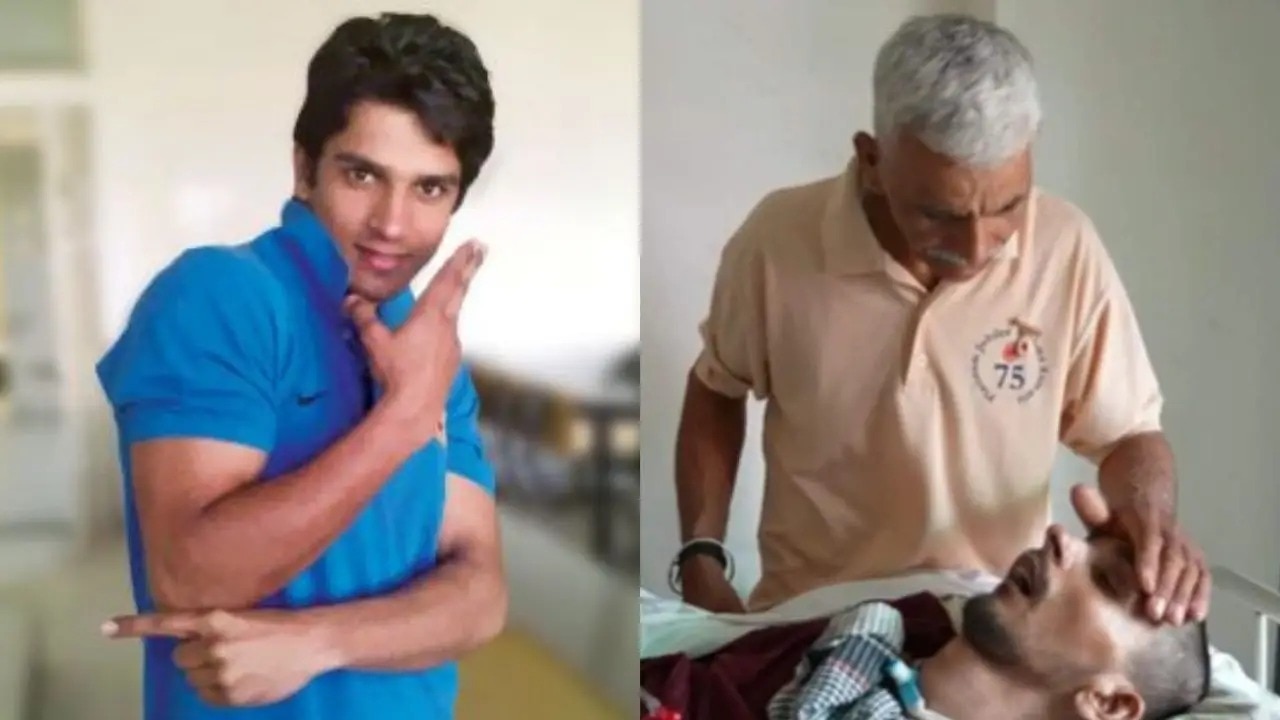
Will Harish Rana, in coma for 13 years, get right to die? Supreme Court verdict today
India Today
Harish Rana's parents have sought passive euthanasia after years of medical care and failed legal attempts, making the case a crucial test of India's right-to-die jurisprudence.
For 13 years, life has stood still for Harish Rana. The Delhi resident has remained in a permanent vegetative state since a devastating fall in 2013, dependent on medical tubes for breathing and nutrition. On Wednesday, the Supreme Court of India is set to decide whether Rana’s life-support treatment can be withdrawn – a ruling that could determine if he is allowed the right to die with dignity.
Rana’s parents, torn between hope and despair after years at his bedside, have approached the court seeking permission for passive euthanasia. The bench of Justices JB Pardiwala and KV Viswanathan had reserved its verdict on January 15, 2026, after examining medical reports that said his chances of recovery were negligible. The judgment is scheduled to be delivered today.
If the court allows the withdrawal of life-sustaining treatment, Rana’s case could become the first known instance of court-approved passive euthanasia in India since the right to die with dignity was formally recognised by the Supreme Court in 2018.
The tragedy dates back to August 20, 2013, on the festival of Rakhi. Rana, then a civil engineering student at Chandigarh University, fell from the fourth-floor balcony of his paying guest accommodation, suffering severe head injuries that left him with 100% disability.
Doctors said he was unable to open his eyes or move his limbs after the accident. Since then, he has remained in a permanent vegetative state and has been under long-term treatment at All India Institute of Medical Sciences in Delhi.
The prolonged medical care has taken a heavy toll on the family. Rana’s parents, who have two other children, sold their home in Delhi’s Mahavir Enclave and moved to Ghaziabad to cope with the mounting costs while remaining close to his hospital care.


The victim, identified as Naitik Kumar, allegedly rammed his speeding Bullet motorcycle into a scooter near Janeshwar Mishra Park in Lucknow, triggering a crash that left him dead and two others injured.

RJD MLA who skipped Bihar Rajya Sabha poll voting cites mother's illness

West Bengal Chief Minister Mamata Banerjee led a protest march in Kolkata against the alleged LPG shortage, accusing the PM Narendra Modi-led Centre of failing to ensure adequate supply.

Himayani Puri, daughter of Union Minister Hardeep Singh Puri, has moved the Delhi High Court over "false and malicious" reports linking her to convicted sex offender Jeffrey Epstein.

The family, a resident of Thyagaraju Street in Punganur town, had recently repaired the engine of their two-wheeler vehicle. A local mechanic advised the family to keep the engine running overnight to "set" the newly installed parts. However, this turned out to be fatal for the family.

The Supreme Court closed criminal proceedings against Ashoka University professor Ali Khan Mahmudabad after the Haryana government said it would not grant sanction to prosecute him over social media posts related to Operation Sindoor.

Three Congress MLAs in Bihar are reportedly out of contact as voting for five Rajya Sabha seats is underway, with the INDIA bloc and the BJP-led NDA locked in a tight contest for the fifth seat that could hinge on cross-voting.

Bunty Solanki stabbed his wife to death following a quarrel at their residence in Vadodara's Bakrawadi area. Rita died on the spot.

The girl's family members were angered over the friendship, and as a result, they called Jadhav last Saturday evening and allegedly beat him.

External Affairs Minister S Jaishankar has said that direct talks with Iran to restore shipping through the war-hit Strait of Hormuz have yielded results, stressing that direct engagement with Tehran is the most effective way to address the disruption.

This moment comes days after the Supreme Court allowed Harish Rana to die with dignity – a historic first court-ordered case of passive euthanasia in India. The court acknowledged the medical opinion that Rana will never recover and that the tubes that feed him and keep him alive are only prolonging his pain.


Ground videos from Shopian showed snow-draped pine trees as the weather brought joy for tourists. Speaking to reporters, a tourist from Bihar said she was unable to contain her happiness over the unexpected snowfall.