Why pension planning can no longer be optional Premium
The Hindu
Discover why pension planning is essential in modern India to ensure financial security and peace during retirement.
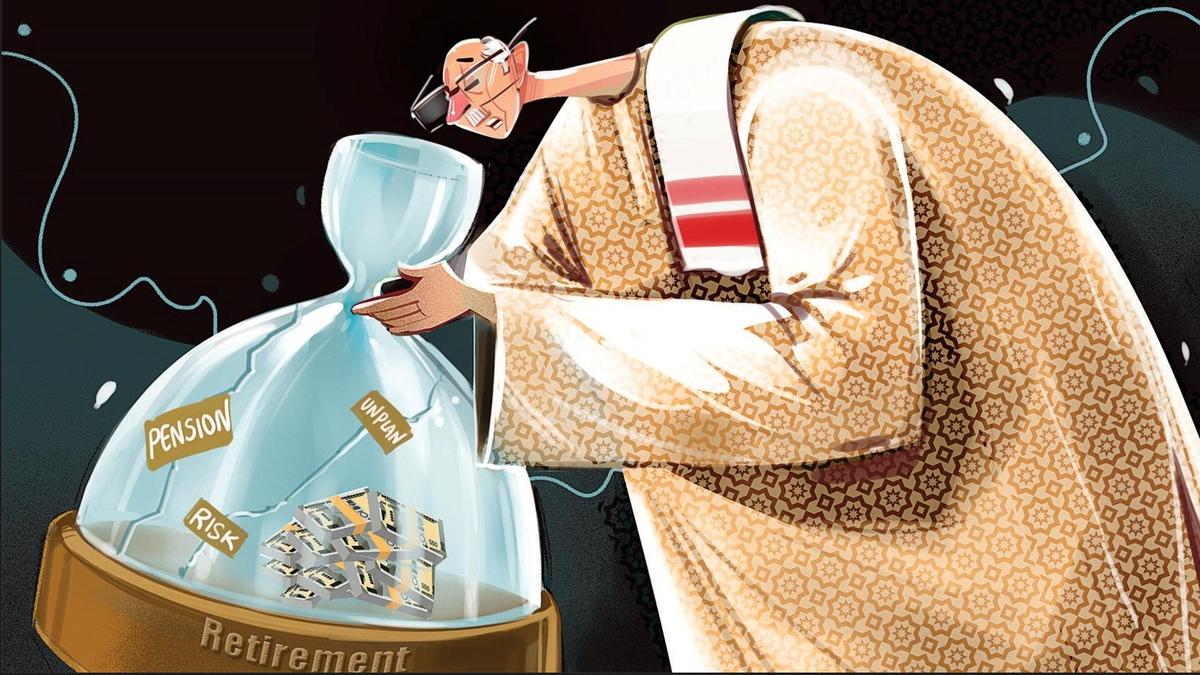
There was a time when retirement in India was largely someone else’s responsibility. A government pension or the comfort of a large joint family often filled the gap. That reality, however, has changed quietly but decisively. Today, the burden of retirement security is shifting squarely onto individuals and households. If we do not plan early and deliberately, the cost of delay can quickly become overwhelming.
The uncomfortable truth is simple. In modern India, growing old without being financially prepared is a risk many households can no longer afford.
India has made visible progress in financial inclusion. Bank account ownership is widespread, and market linked retirement products are gaining traction.
Yet beneath the surface, the pension safety net remains thin.
Recent analysis shows that formal retirement schemes such as EPFO, NPS and Atal Pension Yojana together cover less than 25% of the workforce. That means the vast majority of India’s working population is either underprepared or completely unprepared for retirement.
Even broader financial behaviour tells a similar story. While more than 78% of Indian adults have bank accounts, fewer than 14% participate in any formal pension or retirement scheme.


The U.S. has launched two investigations under Section 301 of the Trade Act of 1974 against India and other economies to examine practices that may be ‘unreasonable or discriminatory and burden or restrict U.S. commerce’. One probe examines whether countries, including India, are using excess manufacturing capacity to export to the U.S. in a manner that hurts American businesses, while another looks at whether countries have taken ‘sufficient steps’ to prohibit imports of goods produced with forced labour.

NHAI raises annual pass fee to ₹3,075 from April 1, 2026, streamlining toll payments for FASTag users.

The U.S. probes forced labour in global supply chains, scrutinizing China and India's exports, warns the Global Trade Research Initiative.

The Hindu collection of images of the LPG crisis: War lights a kitchen fire

The company, which launched its IPO in 2020, is now listed on the National Stock Exchange as well as the Bombay Stock Exchange.

Explore the Essential Commodities Act's role in addressing India's gas crisis and its impact on various sectors.

Star Health Insurance plans to boost AI-driven claim settlements from 20% to 50% within two years, investing heavily in technology.

The iron ore production has increased by nearly two-thirds since 2015

Benchmark indices fell 2% as high crude oil prices and FII selling pressures impacted market sentiment on March 14, 2026.

Follow The Hindu LIVE for updates on LPG crisis and crude oil prices due to the escalating Iran-Israel war in West Asia.

ICRA projects integrated sugar mills will see 5-8% revenue growth in FY26 due to improved cane supply and stable prices.

Benchmark indices fell 2% as high crude oil prices and FII selling pressures impacted market sentiment on March 14, 2026.

Tecumseh Products plans to introduce new compressor platforms in India, targeting significant growth and enhanced energy efficiency in refrigeration.