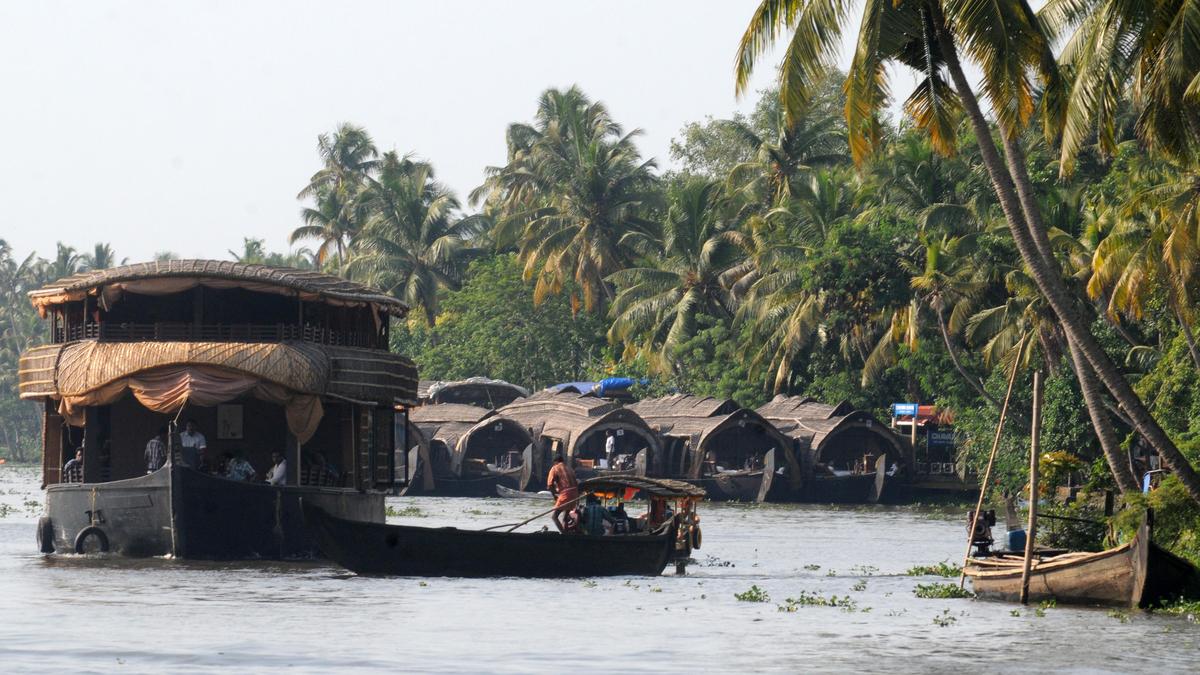
Kerala wellness sector stares at uncertainty as West Asian crisis continues
The Hindu
Kerala's wellness sector faces uncertainty due to the West Asian crisis, impacting tourism and threatening economic stability.
As neighbouring Colombo has introduced fuel rationing amid a drop in tourist arrivals following the escalating war between Iran and the combined forces of the United States and Israel, the hospitality sector in Kerala, which contributes around 10% of the State’s Gross Domestic Product, is staring at a bleak future with a large number of cancellations, including in the medical tourism segment.
Kerala is considered the cradle of wellness tourism in the country, and nearly 70% of the foreign tourists visiting the State belong to this category.
Read: Iran-Israel war LIVE
Around 85% of the foreigners visiting the State use either Doha or Dubai as transit points to reach Kerala, in the absence of direct flights connecting the State with Europe. This movement has come to a complete halt following the outbreak of the war, leading to cancellations and postponements of trips. According to Sajeev Kurup, general secretary of the Confederation of Kerala Tourism Industries (CKTI) and chairman of the Ayurveda Task Force of FICCI’s National Tourism Committee, the sector is facing an unprecedented crisis with travel restrictions coupled with an energy crisis.
“Despite the foreign tourist season nearing its fag end in Kerala, which usually begins in October-November and ends by March, the sector has already lost around 20–25% of its business. There have also been no bookings for the next season since the war began. Further, the hospitality sector is unable to operate smoothly due to the shortage of commercial LPG, and the issue is likely to snowball into a major crisis if the war continues, especially once the Assembly elections in the country are over,” said Mr. Kurup.
The crisis is likely to lead to layoffs and cost-cutting measures once the upcoming domestic tourist season in April and May is over. According to James Kodianthara, former chairperson of the Kerala chapter of the Indian Association of Tour Operators (IATO), the domestic tourism sector will also be impacted by the disruption of global energy supply chains with closure of restaurants. The next financial year will be a difficult period for the sector unless the Centre introduces support measures such as the Emergency Credit Line Guarantee Scheme (ECLGS), which it rolled out during the COVID-19 pandemic, he said.


The U.S. has launched two investigations under Section 301 of the Trade Act of 1974 against India and other economies to examine practices that may be ‘unreasonable or discriminatory and burden or restrict U.S. commerce’. One probe examines whether countries, including India, are using excess manufacturing capacity to export to the U.S. in a manner that hurts American businesses, while another looks at whether countries have taken ‘sufficient steps’ to prohibit imports of goods produced with forced labour.

NHAI raises annual pass fee to ₹3,075 from April 1, 2026, streamlining toll payments for FASTag users.

The U.S. probes forced labour in global supply chains, scrutinizing China and India's exports, warns the Global Trade Research Initiative.

The Hindu collection of images of the LPG crisis: War lights a kitchen fire

The company, which launched its IPO in 2020, is now listed on the National Stock Exchange as well as the Bombay Stock Exchange.

Explore the Essential Commodities Act's role in addressing India's gas crisis and its impact on various sectors.

Star Health Insurance plans to boost AI-driven claim settlements from 20% to 50% within two years, investing heavily in technology.

The iron ore production has increased by nearly two-thirds since 2015

Benchmark indices fell 2% as high crude oil prices and FII selling pressures impacted market sentiment on March 14, 2026.

Follow The Hindu LIVE for updates on LPG crisis and crude oil prices due to the escalating Iran-Israel war in West Asia.

ICRA projects integrated sugar mills will see 5-8% revenue growth in FY26 due to improved cane supply and stable prices.

Benchmark indices fell 2% as high crude oil prices and FII selling pressures impacted market sentiment on March 14, 2026.

Tecumseh Products plans to introduce new compressor platforms in India, targeting significant growth and enhanced energy efficiency in refrigeration.