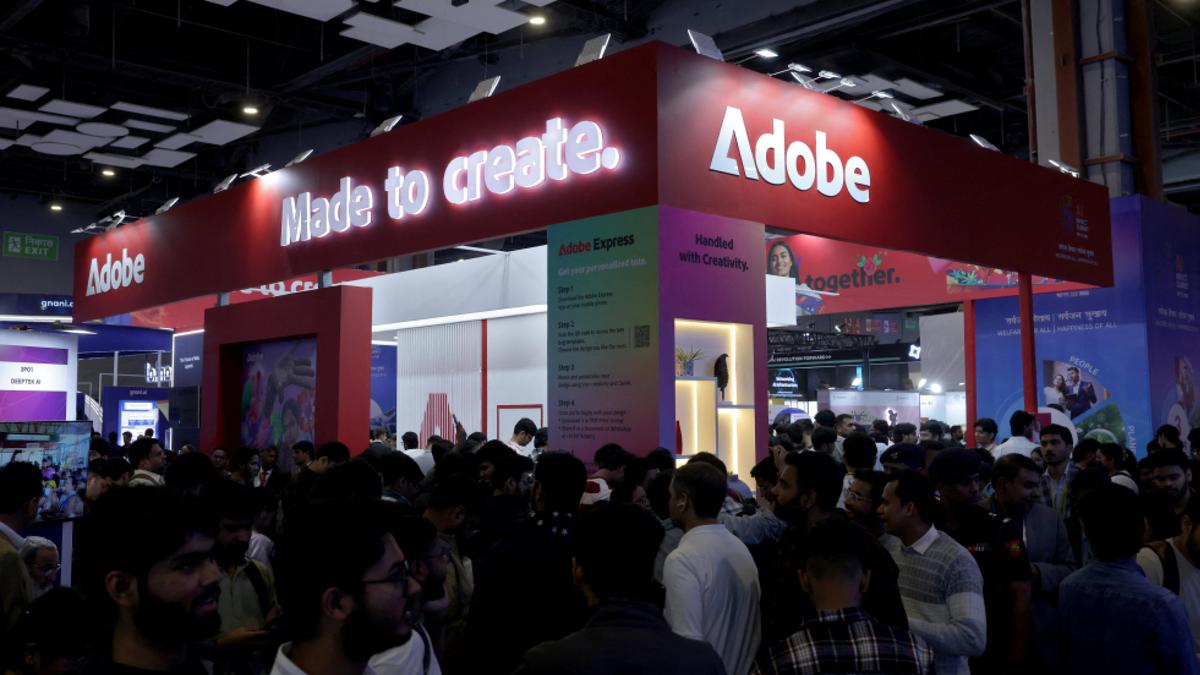
Adobe reaches $150 million settlement of US lawsuit over termination fees, subscription cancellations
The Hindu
In a statement on its website, Adobe said it has in recent years streamlined its sign-up and cancellation processes and made them more transparent.
Adobe reached a $150 million settlement to resolve a U.S. government lawsuit accusing the Photoshop and Acrobat maker of harming consumers by concealing hefty termination fees and making it difficult to cancel subscriptions, the Department of Justice said on Friday.
The accord requires Adobe to pay a $75 million civil fine, and provide $75 million in free services to customers. Court approval is required. In a June 2024 complaint, the Justice Department and Federal Trade Commission accused Adobe of burying termination fees for its popular “annual paid monthly” subscription plan, sometimes reaching hundreds of dollars, in the fine print or behind text boxes and hyperlinks.
They also said the San Jose, California-based company made cancelling subscriptions a hassle, forcing subscribers who wanted to cancel online to wade through numerous pages, and subscribers who wanted to cancel by phone to repeat themselves to multiple representatives and encounter “resistance and delay.”
Adobe was accused of violating the Restore Online Shoppers’ Confidence Act, a 2010 law barring merchants from imposing charges, including for automatic subscription renewals, without disclosing material terms clearly and obtaining customer consent.
The settlement also resolved government claims against two Adobe executives.
“American consumers deserve the right to make informed choices when deciding where to spend their hard-earned money,” Brett Shumate, head of the Justice Department’s civil division, said in a statement.


The U.S. has launched two investigations under Section 301 of the Trade Act of 1974 against India and other economies to examine practices that may be ‘unreasonable or discriminatory and burden or restrict U.S. commerce’. One probe examines whether countries, including India, are using excess manufacturing capacity to export to the U.S. in a manner that hurts American businesses, while another looks at whether countries have taken ‘sufficient steps’ to prohibit imports of goods produced with forced labour.

NHAI raises annual pass fee to ₹3,075 from April 1, 2026, streamlining toll payments for FASTag users.

The U.S. probes forced labour in global supply chains, scrutinizing China and India's exports, warns the Global Trade Research Initiative.

The Hindu collection of images of the LPG crisis: War lights a kitchen fire

The company, which launched its IPO in 2020, is now listed on the National Stock Exchange as well as the Bombay Stock Exchange.

Explore the Essential Commodities Act's role in addressing India's gas crisis and its impact on various sectors.

Star Health Insurance plans to boost AI-driven claim settlements from 20% to 50% within two years, investing heavily in technology.

The iron ore production has increased by nearly two-thirds since 2015

Benchmark indices fell 2% as high crude oil prices and FII selling pressures impacted market sentiment on March 14, 2026.

Follow The Hindu LIVE for updates on LPG crisis and crude oil prices due to the escalating Iran-Israel war in West Asia.

ICRA projects integrated sugar mills will see 5-8% revenue growth in FY26 due to improved cane supply and stable prices.

Benchmark indices fell 2% as high crude oil prices and FII selling pressures impacted market sentiment on March 14, 2026.

Tecumseh Products plans to introduce new compressor platforms in India, targeting significant growth and enhanced energy efficiency in refrigeration.