Why north Karnataka’s under-nutrition burden stays high Premium
The Hindu
Explore the persistent under-nutrition crisis in north Karnataka, driven by inter-generational and structural challenges affecting child health.
Malli (name changed), an agricultural labourer from Yadgir, is unsure about her age. “I must be in the late 20s… may be 26,” she says coyly.
A mother of four, her eldest son is 10 years old. The middle children – five and three – go to the nearby anganwadi. The youngest, who is in his fifth month now, occasionally coos as she speaks. She is not familiar with terms such as under-nutrition, stunting or wasting, but she recollects that her third son started experiencing health issues soon after birth.
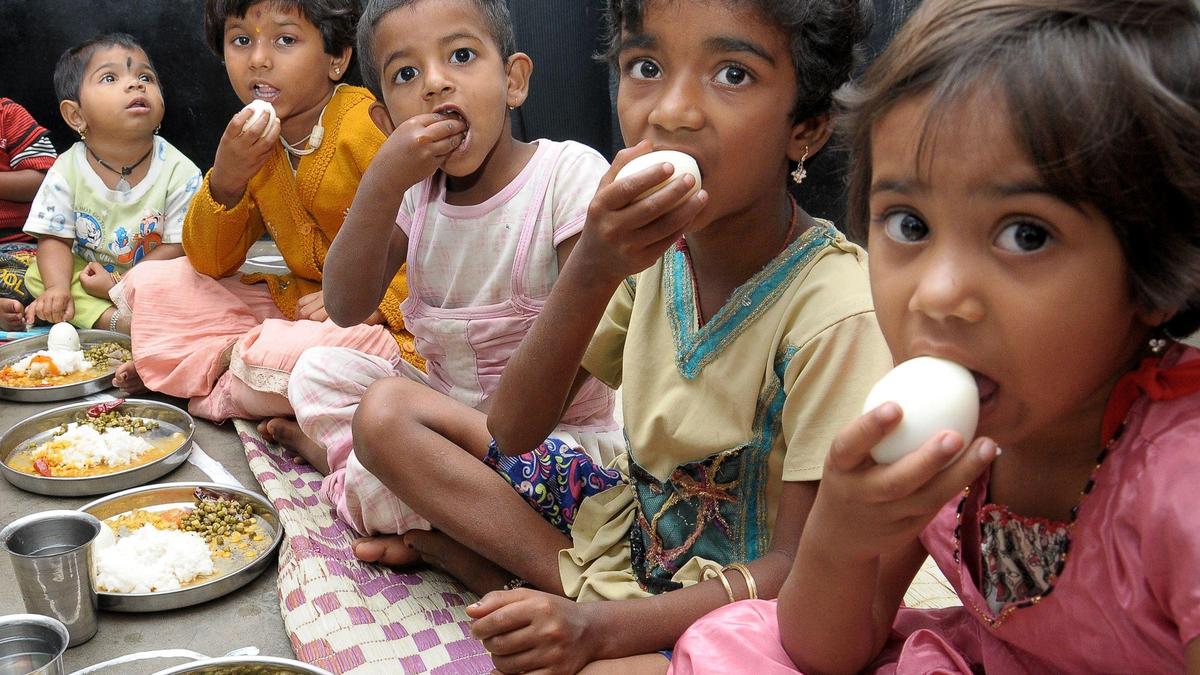
Going by Malli’s estimation, she probably was a teenager when she conceived first; and, possibly, a child bride when she got married. A household of seven, Malli’s family gets supplements, including eggs and pulses from the Anganwadi centre, facilitated by Central guidelines and State schemes to battle child malnutrition.
Activists of Jagruti Mahila Okkoota weigh children to assess malnutrition, in Belagavi district of Karnataka. | Photo Credit: File photo
In north Karnataka districts, child malnutrition – specifically undernutrition – has long remained a persistent and entrenched problem. More than a function of food scarcity, it is an outcome of overlapping issues – some of them inter-generational and some structural.
From a spate of hunger and malnutrition-related child deaths in Raichur that shook the State’s conscience in 2011 and 2012, things do seem to have improved in north Karnataka districts 15 years down the line.


AAP criticizes Modi for his silence on the U.S. attack on an Iranian warship amidst a controversial trade deal.

Bombay HC prioritizes airport security over religious practices, dismissing plea for prayer space near Chhatrapati Shivaji Maharaj International Airport.

Study finds higher temperatures during pregnancy lead to fewer male births, highlighting urgent maternal health risks in vulnerable populations.

Explore the persistent under-nutrition crisis in north Karnataka, driven by inter-generational and structural challenges affecting child health.

A massive demolition drive in Khammam leaves over 1,800 residents homeless, igniting political controversy and protests over Bhoodan lands.

Morning Digest: Key updates on new governors, Sri Lanka's Iranian ship evacuation, IAF crash, and T20 World Cup highlights.

Explore the vital roles women played in the Self-Respect Movement through K. Srilata's insightful anthology, "The Other Half of the Coconut."

Explore the Kumbakonam connection of MGR, M.K. Nambyar, and M.S. Swaminathan, shaping icons of Tamil Nadu's history.

Transform diabetes prevention by screening in early pregnancy, safeguarding future generations from metabolic diseases.

Martin has to keep believing in himself: Miranda on striker’s slow start to ISL

Congress nominates newcomer Christopher Manickam for Tamil Nadu's Rajya Sabha seat, highlighting fresh leadership and grassroots dedication.

Chennai Corporation to enhance junctions with improved signage and road markings, supporting an intelligent transport system for better mobility.

West Bengal Governor C.V. Ananda Bose resigns unexpectedly, with R.N. Ravi appointed as his successor ahead of assembly polls.