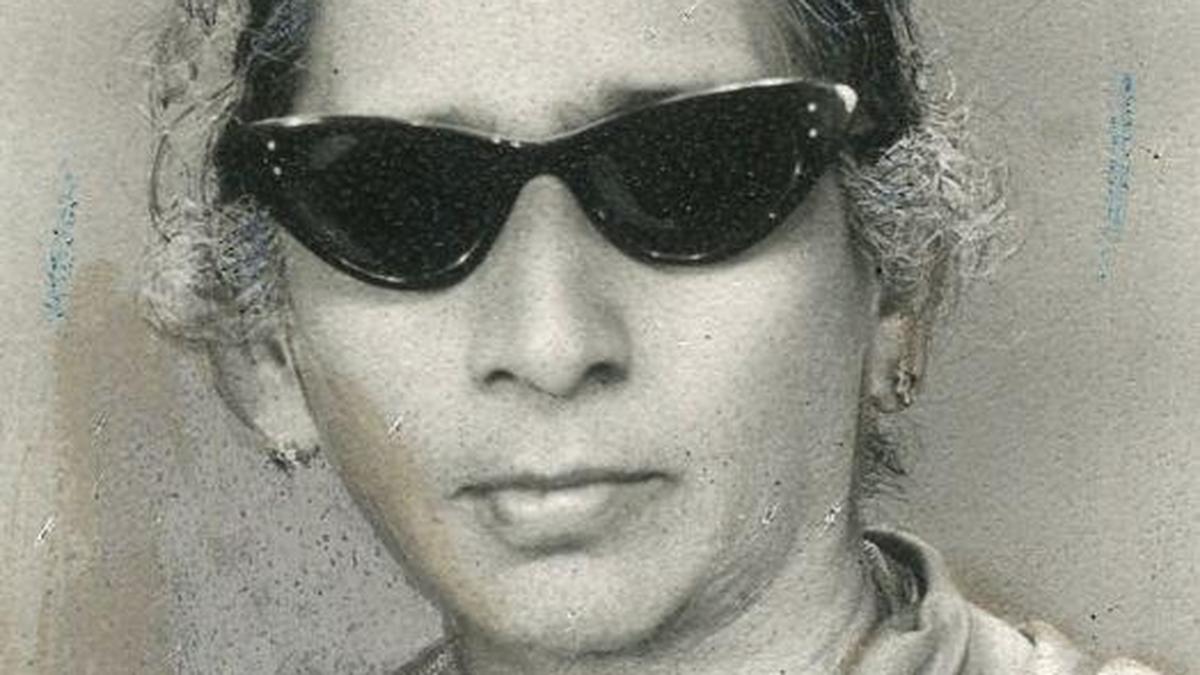
A trailblazer for the rights of Dalits and the empowerment of women Premium
The Hindu
Discover the inspiring legacy of Meenambal Sivaraj, a pioneering advocate for Dalit rights and women's empowerment in India.
On a December evening in 1933, at the YMCA in Madras, Meenambal Sivaraj rose to speak about untouchability, unemployment, and the future of India’s “backward communities”. She did not soften her words. Caste had to be subordinated. Temple doors had to open. Women had to step into public life. Meenambal Sivaraj was a pioneering figure in the fight for the rights of the Scheduled Castes (SCs) and women’s empowerment. Born on December 12, 1904 in Rangoon, Burma, to V.G. Vasudeva Pillai and Minakshi, she was part of a family that placed great importance on education, service, and leadership. Her father was a prominent SC leader and businessman in Burma. He became the first SC member of the Madras Legislative Council. This was said to have a profound impact on Meenambal’s world-view and social consciousness. Educated in her grandfather’s school in Rangoon, Meenambal became fluent in English, Tamil, Telugu, and Hindi. In 1917, she graduated from the Rangoon College of Fine Arts. Her upbringing in an intellectual and progressive environment prepared her for the many challenges she would face in her own life.
In 1918, Meenambal married Sivaraj, a law graduate from Madras and a vocal advocate for SC rights. Sivaraj’s involvement in politics and social reform greatly influenced Meenambal. In the book Trailblazers: The First Women of South India, author Nivedita Louis wrote that as her husband became more involved in politics and social movements, “she too began to engage with the issues affecting the Dalit community”.
In 1928, when the Simon Commission arrived in India, Meenambal supported it, believing it would better serve the interests of the SCs. This marked the beginning of her own political activism. She grew disillusioned with Congress leaders who were hesitant to address the concerns of the SCs, especially when it came to caste-based discrimination. Over the time, Meenambal became closely connected to leaders such as B.R. Ambedkar, Periyar E.V. Ramasamy, and Jawaharlal Nehru. She was a regular speaker at rallies and a key figure in the Self-Respect Movement, a radical initiative led by Periyar to challenge the caste system.
One of Meenambal’s most significant contributions was her work with the All India Scheduled Castes Federation (AISCF), founded by Dr. Ambedkar. She became the first Dalit woman to join the AISCF, and the first woman president of the South India Scheduled Castes Federation, advocating for greater rights and opportunities for the SCs. Her association with national movements like the Indian National Congress also brought her into the fold of those working for India’s Independence. Through all of this, Meenambal remained fiercely committed to gender equality and the rights of Dalit women, who were oppressed by both caste and patriarchy. She served as a magistrate for Madras Province, and a member of several important boards and committees, such as the Film Censor Board and the Madras State Advisory Committee.
A report in The Hindu on April 20, 1939, said she no longer wished to be addressed by her given name, Meenambal Sivaraj, which she believed had “Aryan origins”. Instead, she chose to be called Angiarkanni Siva Arasu, a name she felt better represented her identity, free from the caste and colonial influences.
Meenambal’s public life was marked by her advocacy for SC women. She was a key figure in the National Women’s Conference of Dalits, where she worked closely with Dr. Ambedkar. Together, they sought to address the economic, educational, and social issues of the SC women.


BJP accuses Karnataka's Congress government of misusing ₹39,000 crore of SCSP-TSP funds for non-targeted schemes, urging accountability.

Formula 1 kicks off its 2026 season at the Australian GP, raising questions about race safety, team performance, and new regulations.

ASHA workers protest in Vijayawada for better pay and benefits; government promises to address their demands and improve conditions.

Hyderabad's food safety raids uncover widespread adulteration, leading to significant seizures and heightened community concerns about food quality.

Explore the structural barriers in India's education system that limit the availability of qualified naval talent for the Indian Navy.

Explore Ana Paula Maia's chilling novella, "On Earth As It Is Beneath," a harrowing reflection on violence and survival in a brutal prison.

Discover the transformative experience of Theyyam in North Kerala, witnessing the vibrant rituals and rich cultural heritage at Sree Kathivanoor Veeran Temple.

Taranjit Singh Sandhu appointed as Delhi's lieutenant governor, succeeding V.K. Saxena after his tenure of four years.

403 Forbidden Bar in Indiranagar brings together science and theatre with its drinks, with sous-vides and botanical distillation. We check out whether it is worth the hype

Explore the emotional depth of Mirza Waheed's Maryam & Son, examining loss and identity in a Muslim-immigrant context.

Discover the inspiring legacy of Meenambal Sivaraj, a pioneering advocate for Dalit rights and women's empowerment in India.

Explore the decline of Janata Parivar and the rise of Sangh Parivar in Bihar's complex political landscape.

AAP criticizes Modi for his silence on the U.S. attack on an Iranian warship amidst a controversial trade deal.