Why Iran's killer Shahed drones have moped-like sound
India Today
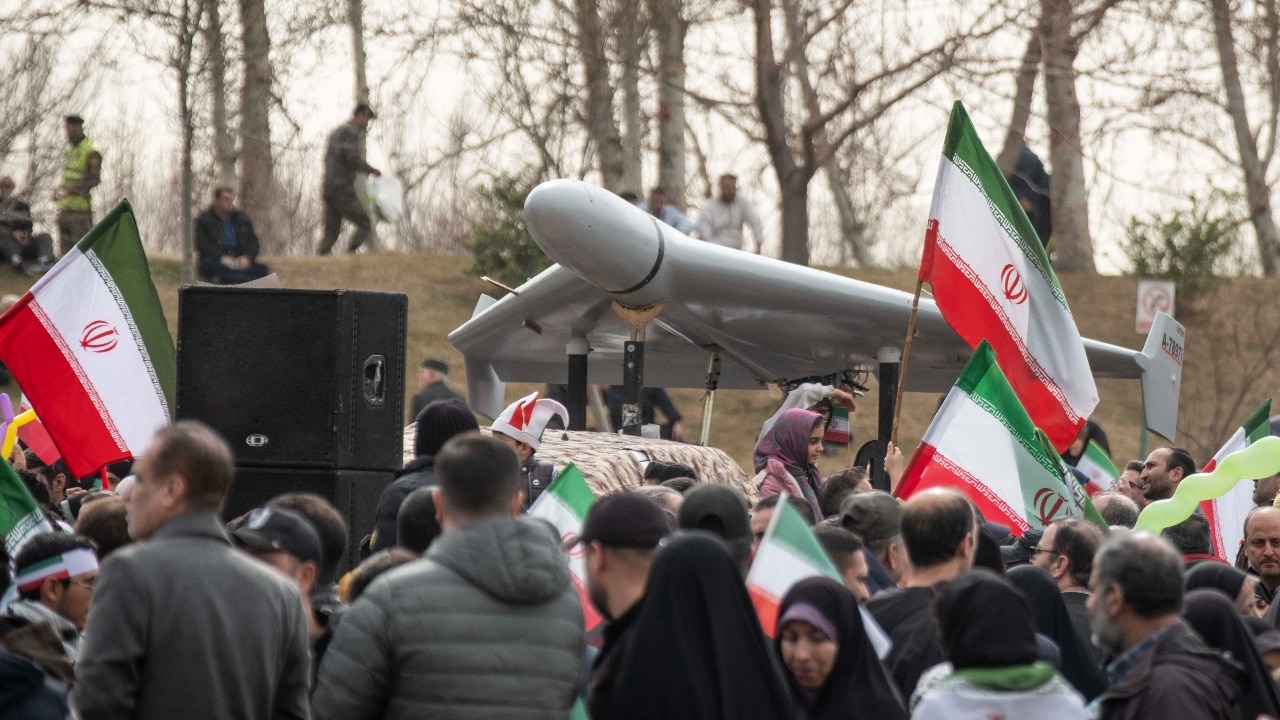
The Shahed-136 drone has emerged as Tehran's weapon of choice in the ongoing war in the Middle East. It was used by Russia in the Ukraine war. The Ukrainians call the Shahed-136 "a moped" because of the sound it makes. Here's more about Shahed-136's unique journey and the reason behind the distinctive sound.
"Mopeds," said the Ukrainians, when they heard and saw a new kind of Unmanned Aerial Vehicle (UAV)'s buzzing over their skies. That was mid-2022. Others in Kyiv compared the sound to a lawnmower. Some called it a scooter. By 2023, Western media picked up the term while describing the drone swarms attacking Ukraine. These drones were actually the Iranian Shahed-136 drones, which senior journalist and defence expert Sandeep Unnithan says, "appeared over a decade ago". The Shahed-136 drones were procured by Russia for its war on Ukraine. Since then, the sound of the "moped" has stayed the same. The theatre of its flights has shifted to another war zone, the Middle East.
Four years later, the same Iranian Shahed-136 drones are raining fire and death in the Middle East, with the Islamic Republic locked in an intense war with the US and Israel. Tehran is also launching the long-range "kamikaze" loitering drones on its neighbours in the Gulf. In fact, Iran's opening salvo in the war comprised thousands of Shahed-136 drones that it fired on Israel following the killing of its Supreme Leader, Ali Khamenei, on February 28.
Shahed-136's distinctive buzzing sound, which became common in downtown Kyiv, is also being in the ongoing war in the Middle East. But why do the Shahed-136 drones sound like mopeds, or lawnmowers or scooters? Why don't they have a clean whoosh sound? Are the low-cost drones really fitted with moped engines, as many on social media claim?
The reality is a little different. The answer lies in the technology Iran uses to mass-produce these drones. It is an engine which traces its roots back to West Germany during the Cold War era, and is the root cause of the buzzing sound, earning the moniker "moped". It came from a platform that was developed to target Russian missiles, which Unnithan calls an "irony".
He calls the Shahed-136 an aerial equivalent of the AK-47. But why?
In the ongoing war, Shahed-136 and the drones of the family have become Iran's weapon of choice.


A man surprised his mother by arranging a meeting with her childhood crush Jonty Rhodes, capturing her emotional reaction in a heartwarming video that went viral online.

Reacting to reports of the F-35 aircraft being damaged, Mohammad Bagher Ghalibaf mocked the reputation of the F-35 as an "untouchable" platform and framed the episode as a turning point.


A video from Kolkata showed a chaotic interaction between a man and a cop after he hurled stones at his vehicle, which left social media users jaw-dropped.

On March 18, Israel struck a gas field in Iran. Tehran responded in a matter of hours, striking refineries in several Gulf countries. What explains this sharp, quick counter-attack capability of a country whose military infrastructure has supposedly been severely degraded? The answer lies in a cheap drone and a dispersed military.

The truck, loaded with straw beyond its capacity, began swerving dangerously while moving towards the temple stretch. Eyewitness visuals show the vehicle tilting and rolling sideways on the road as bystanders shouted for it to stop.

How Benjamin Netanyahu handed Donald Trump a war and a bill he may never stop paying

A video showed a man calmly eating popcorn while a heated argument broke out outside a screening of Dhurandhar The Revenge, with his reaction stealing the spotlight online.

From Eli Cohen to AI-driven espionage, Israel has turned infiltration into its sharpest weapon. For Iran, the real threat isn't missiles at its borders, but invisible enemies within, quietly mapping targets and striking with precision.

A Gurgaon housing society decided to publicly name maintenance defaulters on a board at the main gate. They also plan to block services like domestic help and deliveries, sparking debate over strict recovery measures.

Canada had previously accused India of interference and transnational repression, including threats and alleged killings. RCMP Commissioner Mike Duheme now says current probes no longer support that conclusion.

A man from Florida has clarified that he is not Jeffrey Epstein after a video went viral last week in which viewers claimed he resembled the late sex offender.
